The best UV lamp for builder gel is not the one with the biggest wattage number printed on the box. It is the dual-wavelength LED lamp whose 365nm + 405nm output actually matches the photoinitiators in the gel you bought. Most 36W lamps under-cure builder gel. Most "180W" lamps lie about their real output. This page is the cure-wattage math behind the four lamps I actually keep on my bench, and the brand claims I have learned to ignore.
I have plugged probably forty different nail lamps into the same outlet over the last few years — clients bring them in, brands send them, I buy the cheap ones to test. What sorts the working lamps from the failing ones is rarely the wattage rating. It is whether the lamp emits at 365nm at all, or whether it is a single-wavelength 405nm cheap LED array masquerading as full-spectrum.
Why Most Nail Lamps Fail Builder Gel
Builder gel is thicker than regular gel polish. A 60-second cure on a thin gel-polish coat ignores the bottom 70% of the bead — there is barely anything to cure at depth. Builder gel beads can be 1-2mm thick at the apex, which means the light has to penetrate through gel to reach the bottom layer that bonds to your nail plate. If the lamp's output is weak, or only one wavelength fires, the bottom layer stays uncured and the manicure lifts within a week.
The single biggest mistake I see at-home users make: they buy a $20 36W lamp that came with a gel polish kit, then assume it will cure builder gel too. It will not. The lamp cures the surface, the surface lies, and the manicure peels off in a week with a clean shape — because the bottom layer was never solid. If you are still choosing a kit, the best builder gel kits page flags which ones ship a lamp that is strong enough.
What the Wattage Number Actually Means
A 48W lamp is not necessarily twice as powerful as a 24W lamp. Wattage measures electrical input, not light output. What matters for curing is irradiance — how many milliwatts per square centimeter (mW/cm²) of usable UV/LED light reach the nail surface at the position you place your hand.
A well-built 48W LED lamp typically delivers 60-90 mW/cm² at the nail. A cheap "120W" lamp can deliver as little as 30 mW/cm² because the LEDs are weak even though there are many of them. The honest test is irradiance, not box wattage.
I do not own a radiometer at home and you probably do not either. So the practical heuristic I use:
- Under $25 lamp, regardless of wattage claim = assume it is closer to 24W actual cure output. Use only for thin gel polish.
- $30-$50 LED with 48W rating from a known nail brand = generally a real 48W. Safe for builder gel with a 60-second cure.
- $60-$120 dual-source LED with 365nm + 405nm callouts and a known brand = pro-grade, will cure anything including hard gel.
- $150+ "salon" lamp with 180W or 220W claims = sometimes real, sometimes inflated. Read pro reviews before paying.
Five Standalone Lamps Worth Buying for Builder Gel
A lamp that only comes "free" inside a gel polish kit is the usual reason builder gel fails, so this list is standalone lamps only. I checked each Amazon listing on 13 October 2026 and recorded what the manufacturer itself states — timer settings, LED count, and whether it names builder or hard gel — plus its Amazon Best Sellers Rank in Beauty, which shows how many people are actually buying it. Where a listing does not state a number, the table says so rather than guessing.
| Lamp | Timer settings (per listing) | What the listing says about builder/hard gel | Beauty rank, 13 Oct 2026 |
|---|---|---|---|
| Beetles UV nail lamp (pink) | 30 s / 60 s / 120 s + 5-min mode | Recommends the 120 s setting "for builder and extension gels"; 30 LEDs | #3,735 |
| JODSONE UV LED lamp | 30 / 60 / 90 / 120 s, LCD display | Cures "hard gels, sculpture gel"; dual light source | #380 |
| SUNUV SUNONE | Not stated in the listing bullets | Says it cures "all your favorite nail gel brands"; 30 LED beads, removable base for toes | #694 |
| SUNUV SUN2C | Multiple timers (values not stated in the bullets) | Lists "hard gels, builder gels" as compatible; smart sensor | #4,850 |
| GAOY big-cavity lamp | 30 / 60 / 99 / 120 s | 6.2 × 6.2-inch cavity — the one to pick for long extensions or press-ons | #3,852 |
Standalone lamps for builder gel
Five lamps, checked against their listings
Each one states a 120-second (or longer) setting or names builder/hard gel on its listing. Prices are live from Amazon.
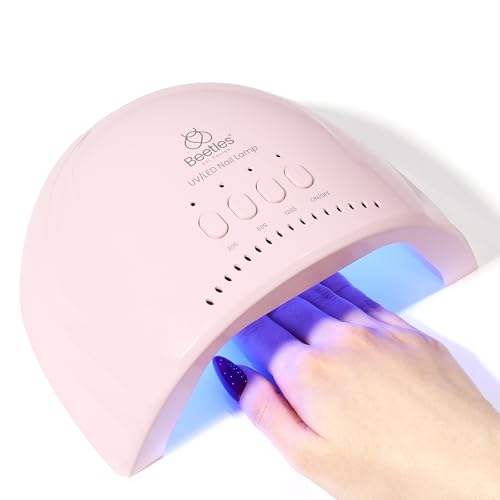
Beetles UV Nail Lamp with 3 Timers & Smart Sensor
$19.99
Amazon price as of Oct 19, 2026

Jodsone UV LED Nail Lamp with Auto Sensor
$9.99
Amazon price as of Oct 19, 2026

SUNUV UV LED Nail Lamp, Gel Light for Nail Polish UV Dryer with 3 Timers SUNone White
$29.99
Amazon price as of Oct 19, 2026

SUNUV SUN2C UV Light for Nails, UV LED Nail Lamp with 4 Timer Settings, Curing Lights Compatible with All Gel Polish Rose
$39.99
Amazon price as of Oct 19, 2026

GAOY Professional UV Nail Lamp, Big Cavity for Long Nails
$19.99
Amazon price as of Oct 19, 2026
Scroll →
Product prices and availability are accurate as of Oct 19, 2026 and are subject to change.
How to choose between them
On a tight budget: the JODSONE is one of the best-selling nail lamps on Amazon and its listing gives the full 30/60/90/120-second ladder, which is what you want for builder gel: thin gel polish layers at 30–60 seconds, builder beads at the longest setting.
If you are buying your first builder gel setup: the Beetles lamp is the only one here whose listing explicitly tells you to use 120 seconds for builder and extension gel. It matches the Beetles gels many beginners start with, which removes one variable when you are learning.
For pedicures as well as manicures: the SUNUV SUNONE has a removable base, so you can slide a foot in — useful if you plan to do builder gel on toes.
For long extensions: the GAOY's cavity is wide enough to fit long sculpted or tipped nails without the far edge sitting in shadow, which is where under-cured extensions usually start lifting.
Whichever lamp you choose, a full cure matters for your skin as well as for wear. The FDA's nail care products guidance notes that traces of reactive monomers in artificial-nail products "could result in an adverse reaction", and that avoiding skin contact minimises the chance of an allergic reaction. Under-cured gel is exactly that: monomer that never fully reacted.
Prefer a kit that already includes a lamp?
Two kits on this site come with a lamp in the box: the Beetles HEMA-free builder gel kit (with a handheld lamp — fine for flash-curing and small areas, but give full builder layers a longer cure or use a full-size lamp) and the OPI GELement starter kit, which includes OPI's LED curing lamp. If you are still choosing a kit, the best builder gel kits page compares them.

Beetles Builder Gel Nails Kit HEMA-Free 8-in-1
$21.98
Amazon price as of Oct 19, 2026
The Marketing Claims I Ignore
Six lamp marketing claims that are usually noise:
"180W professional salon lamp." Real 180W lamps are rare at consumer prices. Most 180W claims are 60-80W actual cure output with marketing inflation. If the lamp is under $60, the 180W number is almost certainly fake.
"Smart sensor auto-on." Convenient but irrelevant to cure quality. A lamp with a manual button cures just as well.
"Painless cure mode." This is a slow-ramp timer that fades the LEDs up over the first 15 seconds, designed to reduce the heat spike sensitive nails feel. Useful for some users but does not affect final cure as long as total cure time is correct.
"LCD display." Cosmetic. The screen does not cure your gel.
"Rechargeable battery." Portable lamps trade cure power for portability. Most rechargeable lamps are 24-36W and under-cure builder gel. Travel-only.
"UV + LED dual technology." Technically true for any modern LED lamp because LEDs are emitting UV-A wavelengths. The honest version of this claim names the actual wavelengths (365nm + 405nm). If the box does not list nm, the claim is marketing.
The Wavelength Test Every Lamp Should Pass
For builder gel specifically, the lamp needs to emit at both 365nm and 405nm. Single-wavelength 405nm LEDs cure most modern gels but miss the older photoinitiators in some pro-grade builder gels. Single-wavelength 365nm cures the older photoinitiators but struggles with newer LED-only gels.
The safe lamp is dual-source: it has separate LED arrays for each wavelength, and both fire during a cure cycle. Cheap lamps often have a single LED type that nominally covers both bands but biases toward one. Pro-grade lamps have visibly different colored LEDs in the head — some white-ish (405nm) and some deeper blue-violet (365nm).
If you can see only one color of LED inside the lamp head, it is single-wavelength. Treat it as gel-polish-only.
What I Would Buy at Each Budget
Under $30: Pick a lamp whose listing gives a 120-second setting and a dual light source — the JODSONE and Beetles lamps in the table above both do. Use the longest setting for builder layers and keep each layer thin.
$30-$60: A brand-name lamp with a removable base (for toes) or a larger cavity (for long extensions) — the SUNUV models and the GAOY big-cavity lamp sit here.
$60-$120: Pro-style lamp with a step timer, removable bottom plate for pedicures, and visibly distinct LEDs in both wavelengths. Check the listing for a stated builder or hard gel setting before paying the premium.
$150+: Dedicated pro lamps from established salon brands. Worth it only if you are doing nails daily.
Lamp Lifespan and When to Replace
LED lamps lose irradiance over time. Even a good lamp drops 10-20% of output by year three because the LED diodes age. The signal that your lamp is dying is not that it stops working — it is that gel that used to cure perfectly in 60 seconds now needs 90. If you find yourself doubling cure times on the same product, the lamp is fading, not the gel.
The other lamp failure mode: dust and gel splatter on the LED windows. Wipe the interior plate with 99% isopropyl alcohol monthly. A film of cured gel on the LEDs cuts irradiance noticeably.
When to Skip the Lamp Question Entirely
Three situations where the lamp does not matter much:
- You are using gel polish (not builder gel). Any 36W+ lamp will cure modern gel polish.
- You are using a no-light builder gel (Polygel, dip powder hybrids). These use a slip solution and air-cure or chemical-cure, not light.
- You are doing extremely thin overlays with light pressure. Sub-millimeter beads cure on almost any lamp because there is barely anything to cure.
For everything else — sculpted extensions, thick beads, colored builder, hard gel — the lamp question is the difference between a manicure that lasts three weeks and one that peels off in four days.
How This Pairs With the Gel You Already Have
If you already own builder gel and you are shopping for just a lamp, the gel brand will narrow the choice:
- Beetles, Modelones, SAVILAND, Makartt = any 48W+ dual-source LED. Their photoinitiators are forgiving.
- OPI GELement = the LED lamp included in OPI's GELement kit, for predictable cure.
- The GelBottle BIAB = their own LED or a dual-source 48W+. Their initiator mix needs both wavelengths.
- Light Elegance, Akzentz, Kokoist = brand-specified lamp only. Pro builder gels often require their own lamp for full cure under warranty.
For more on cure problems and how to diagnose under-cure specifically, see builder gel not curing and the broader Builder Gel Atlas pillar. For starter kits where the lamp is bundled correctly, best builder gel kit with lamp covers the full set.
Read next
Builder Gel Not Curing? The 5 Real Causes and How to Fix Each (2026)
Builder gel not curing is almost always one of five specific causes — lamp wattage, bead thickness, pigment density, finger geometry, or bulb degradation. Diagnose which one and the fix is direct.
Continue readingRead next
Best Builder Gel Kit with Lamp in 2026: 6 Bundles That Don't Make You Buy a Second Lamp
The best builder gel kit with lamp is the one whose lamp is actually strong enough to cure the included gel. Most bundles fail that test. Six that pass — ranked, with the cure-wattage math behind the picks.
Continue readingA Two-Minute Lamp Check You Can Do Tonight
You do not need a UV meter to find out whether the lamp you already own is strong enough for builder gel. You need a practice tip and two minutes.
Put a deliberately thick bead of clear builder on the tip — apex thickness, not overlay thickness — and cure it for the time on your gel bottle with the tip positioned where your thumb would sit, at the edge of the lamp, not dead center. Wipe the tacky layer. Then press a cuticle pusher into the dome. Glassy and unmarked: your lamp is fine for builder at that time. Dents or drags: cure a second identical bead for double the time. If the second bead passes, keep the lamp and double every builder cure time; if it also fails, the lamp does not have the output for builder gel, no matter what the box says.
The thumb position matters because that is where lamps are weakest — the diodes are concentrated over the four fingers, and a thumb cured at the edge gets a fraction of the output. It is why so many "my thumbs never cure properly" complaints exist and why I always cure thumbs separately, centered in the lamp. Do the check once when you buy a lamp and again roughly every eighteen months, because LED output falls off quietly with age and the first symptom is builder gel that suddenly starts lifting on day five.
Where to Buy
Lamps are a category where Amazon stocking is solid for budget and mid-tier, while pro lamps are better through authorized salon distributors. For deeper context on Amazon-specific buying patterns, best builder gel on Amazon covers the listings I trust.
Read next
Best Builder Gel on Amazon in 2026: What I Actually Order When the Salon Runs Out
The best builder gel on Amazon is not the most-reviewed one. It is the one whose viscosity, cure consistency, and ingredient list I can predict before I open the package. Eight products that meet that bar — with the ones I avoid called out by name.
Continue readingLast updated October 2026 (lamp listings and Amazon ranks re-checked 13 October 2026). This article uses AI assistance for research and structure, and is edited before publication.