Builder gel for nail growth is one of the most misunderstood phrases in my chair, so let me say the honest version first: builder gel does not make your nails grow faster — your matrix decides that, not a bottle of gel. What builder gel actually does is far more useful than the myth. It armors the fragile free edge so the length you grow stops snapping, peeling, and tearing back to the quick before you ever see it. If your nails grow plenty but never get anywhere, that's not a growth problem. That's a retention problem, and that's exactly what a thin builder overlay is built to fix.
I've spent eight years watching the same scene play out: a client swears her nails "won't grow," then admits they break at the corner every two weeks. Her nails grow fine. They just never bank the progress. Builder gel doesn't accelerate the growth — it lets you keep it. Once you reframe the goal from "grow faster" to "stop losing length," everything about how you choose and apply the gel changes, and the results stop feeling random.
Gentle picks — Amazon
The soft, soak-off builder gels I use for growth-protection overlays
Flexible, natural-nail-friendly formulas that protect the free edge while nails grow out.

Beetles Builder Gel for Nails-Cover Nude Translucent 8 in 1 Nail Thickening Strengthening Building Instant Apex for Beginner DIY Salon at Home,Natural Nude Builder Nail Gel, UV & LED Lamp Cured Needed
$7.49
Amazon price as of Sep 23, 2026

modelones Builder Nail Gel, 7-in-One Clear Builder for Nails, LED Lamp Cured Color Rubber Base Gel Polish Coat Strengthener Thickening Extension Rhinestone Glue in a Bottle for DIY Home Salon Gifts
$8.48
Amazon price as of Sep 23, 2026

BTArtboxnails Nail Tips Builder Gel - Long Lasting 15ml Builder Gel with Portable Nail Lamp for French XCOATTIPS, 30+Days French Protection Duo Nail Extension Tool for Nail Art
$25.99
Amazon price as of Sep 23, 2026
Scroll →
Product prices and availability are accurate as of Sep 23, 2026 and are subject to change.
The Honest Truth: Gel Doesn't Grow Nails, It Banks Length
Your nail grows from the matrix, the tissue tucked under the cuticle at the base of the plate. Nothing you paint on top reaches it. Diet, circulation, genetics, age, and general health drive the speed — roughly 3mm a month for fingernails, give or take. No gel, oil, or "growth serum" changes that rate in any meaningful way.
So when someone asks me whether builder gel for growing nails is real, I tell them the truth: the gel never touches the factory. It works downstream, at the loading dock. The reason most people feel like their nails "grow faster" in builder gel is that they finally stop losing length to breakage. Three months of uninterrupted retained growth looks like a miracle when you're used to resetting to stubs every fortnight. It isn't faster growth. It's zero loss. And honestly, zero loss beats faster growth for almost everyone I treat. For the full nail-health picture, my is builder gel good for your nails breakdown goes deeper into the trade-offs.
How a Builder Gel Overlay Actually Protects Length
Picture a natural free edge as a thin sheet of laminated keratin. It bends, it catches on pockets and car doors, and it splits along the layers — that's the peeling you see. A builder gel overlay laminates a flexible, slightly thicker shell over the top, reinforcing the edge so impact energy spreads across the shell instead of cracking the plate.
The keyword is flexible. A good growth-protection overlay flexes with your natural nail rather than fighting it. Too rigid and the gel becomes a splint — the nail flexes, the gel doesn't, and the plate fractures underneath where you can't see it until it's too late. That's why I steer growth clients toward soft-to-medium soak-off builders, not hard sculpting gels. Applied thin, under about 1.5mm at the apex, the overlay is barely thicker than two coats of polish but dramatically tougher at the stress point.
Week-by-Week: What to Realistically Expect
Here's a timeline I walk clients through so nobody expects centimeters in a fortnight. These are typical growth-protection outcomes for someone with chronically breaking nails who commits to an overlay and oil routine.
| Weeks | What's happening | What you'll notice |
|---|---|---|
| 0–2 | First overlay sets; old breakage points sealed | Edges stop catching; nails feel "solid" for the first time |
| 2–4 | New growth pushes from the matrix; first rebalance | A few millimeters of real retained length at the cuticle |
| 4–7 | Length banking; second rebalance keeps apex thin | Nails noticeably past the fingertip, no fresh breaks |
| 7–10 | Plate visibly longer; you stop "babying" your hands | Length you've literally never had before |
| 10–12+ | Maintenance rhythm established | The new normal — long is just where your nails live now |
Notice there's no row that says "nails grow twice as fast." There never will be. Every gain on that table comes from not losing what your body was already producing.
A Bitten Thumbnail, Tracked Over 10 Weeks
In February 2026 I started tracking a regular client — a chronic nail-biter who'd never gotten her right thumbnail past the fingertip in her adult life. We did a thin HEMA-free builder overlay on all ten, rebalanced every 18–21 days, and she oiled the cuticles twice daily. I photographed the thumb each visit against a millimeter ruler.
Week 0 the free edge was bitten below the fingertip. By week 4 she had 3mm of clean edge she physically could not bite through the gel to reach. Week 7, 7mm. Week 10 the thumbnail had a 9mm free edge with a clean smile line — the first time in her life it had grown out. Her matrix wasn't working any harder than before. The gel just stood between her teeth and the nail long enough for biology to do its slow, ordinary thing. That's the whole mechanism, and it's why I'm allergic to "grow your nails fast" marketing.

Beetles Builder Gel Nails Kit HEMA-Free 8-in-1
$21.99
Amazon price as of Sep 23, 2026
Choosing a Gel That Protects Without Damaging
For growth work I want three things: soak-off removal (no aggressive e-file needed), a soft-to-medium flex, and ideally a HEMA-free option for anyone with sensitive skin or a history of reactions. Rigid hard gels and "dip-style" acrylic systems can hold length too, but removal is harsher and the rebalance is less forgiving on thin natural plates.
A clear, self-leveling builder is my default starter because it's hard to apply too thick and it sands down forgivingly at the next fill. If you want my full vetted shortlist with the criteria spelled out, see best builder gel for natural nails. And if you're brand-new to overlays, builder gel on natural nails walks through the overlay-only approach from scratch.
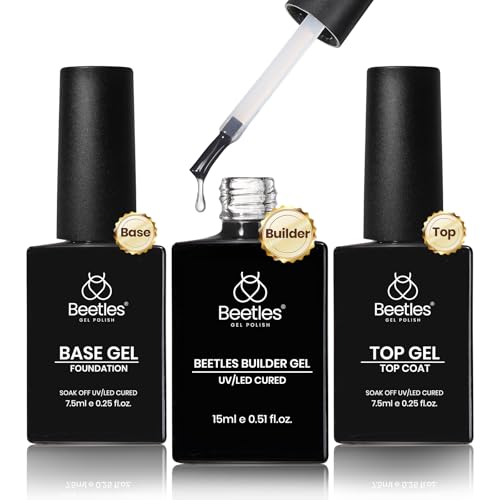
Beetles 3-Piece Clear Builder Gel with Base & Top
$11.99
Amazon price as of Sep 23, 2026
Prep Is Where Growth Plans Live or Die
The fastest way to ruin a growth-protection set is bad prep. Lifting at the edge lets water and bacteria under the gel, and the moment a client picks at a lifted corner she rips off a layer of her own nail — undoing weeks of banked length in one frustrated second. Clean prep keeps the overlay sealed for the full three weeks so growth never gets interrupted.
My non-negotiables: push back and tidy the cuticle, gently remove shine from the plate (light buff, not a deep grind), dehydrate, and cap the free edge with every layer. Capping the edge is the single biggest retention move for growth — it wraps the gel over the most vulnerable millimeter of nail. I lay out the whole sequence in how to prep nails for builder gel, and it's worth reading before your first set.
Read next
Is Builder Gel Good for Your Nails? 7 Real Benefits Backed by Salon Practice (2026)
Yes — when applied and removed correctly, builder gel is genuinely good for your nails. Seven specific benefits I see across long-term clients, plus the conditions where the benefit is biggest.
Continue readingKeeping Your Skin and Nails Healthy Under the Gel
Honesty cuts both ways: a poorly applied or over-worn overlay can cause problems. The most common is allergic contact dermatitis from uncured gel monomers touching skin — itching, redness, or tiny blisters around the nail folds. The American Academy of Dermatology's contact dermatitis overview is a solid plain-language reference if you ever see those signs. If you react, stop, remove the product, and consider switching to a HEMA-free formula or seeing a dermatologist before continuing.
Day to day, the protective routine is simple: oil the cuticles twice daily so the surrounding skin and matrix stay supple, never peel or pry a set off (always soak off properly), and give the plate the occasional breather between sets if it feels thin. Healthy skin and a healthy matrix are what produce the growth the gel then protects — neglect them and no overlay will save you.
When Builder Gel Won't Help Your Growth Goals
Builder gel is not a fix for every "my nails won't grow" complaint, and pretending otherwise is how people get disappointed. If your nails are breaking because of an underlying issue — thyroid problems, iron deficiency, a fungal infection, certain medications, or a damaged matrix from trauma — an overlay only masks the symptom. The nail will still struggle underneath.
It also won't help if you treat the overlay as armor for abuse. Using your nails as tools, picking at the gel, or skipping rebalances will out-damage any product. And if you genuinely can't commit to a soak-off removal every few weeks, builder gel isn't the right call — improper removal does more harm than the overlay ever prevents. Builder gel rewards consistency. It punishes shortcuts.
Frequently Asked Questions
Does builder gel help nails grow faster?
No, and any product claiming it does is selling you a myth. Builder gel doesn't touch the matrix where growth happens, so it can't change your biological growth rate. What it does is stop the breakage that was erasing your growth, so the length finally accumulates. People perceive that as "faster" because they're used to constantly resetting to short, broken nails.
Does builder gel promote nail growth in any way?
Indirectly, yes — by protecting what grows. A flexible overlay shields the free edge from the impacts and peeling that normally cost you length. It also discourages biting and picking, two of the biggest growth killers. So while it doesn't promote growth at the source, it protects the output so effectively that the practical result is longer nails.
How long until I see results with builder gel?
You'll feel the difference immediately — the edges stop catching from day one. Visible retained length usually shows around weeks 2 to 4, once new growth from the matrix isn't being lost to breakage. By weeks 7 to 10 most of my growth clients have length they've never managed before, assuming they keep up rebalances and cuticle oil.
Is builder gel better than nail hardeners for growth?
For most people, yes. Many traditional hardeners contain formaldehyde-type ingredients that over-harden the nail and make it brittle over time — strong but snappable. A flexible builder gel overlay reinforces the edge while still flexing with the nail, which protects length better than a rigid, brittle plate does.
Will my natural nails be damaged underneath?
Not if it's applied thin, removed by soaking rather than peeling, and you don't over-buff the plate during prep. Damage almost always comes from picking gel off or aggressive filing, not from the gel itself. Done correctly, you'll often find healthier-looking nails underneath because they've been protected from daily wear.
Can I use builder gel to grow bitten nails?
Absolutely — this is one of its best use cases. The overlay creates a physical barrier you can't easily bite through, and the smooth, attractive surface tends to break the picking habit on its own. The bitten-thumbnail client I tracked over ten weeks went from a bitten edge to a clean 9mm free edge purely on this principle.
How thick should a growth-protection overlay be?
Thin — under about 1.5mm at the apex, only marginally thicker than two coats of polish. The strength comes from capping the free edge and proper structure, not from piling on product. A thick, heavy overlay is uncomfortable, looks unnatural, and is more likely to crack the nail underneath when it can't flex.
Do I need to take breaks between sets for my nails to grow?
You don't strictly need to, but I often suggest a short breather if the plate feels thin, mainly to keep the surrounding skin and matrix happy. Growth happens at the matrix regardless of whether there's gel on top, so a break doesn't "let nails grow" — it just gives you a chance to assess plate health and oil thoroughly. For the full strength-vs-rest discussion, the Builder Gel Atlas pillar covers it.
Last updated June 2026. This article uses AI assistance for research and structure; all growth-protection observations come from hands-on client work over 8 years.