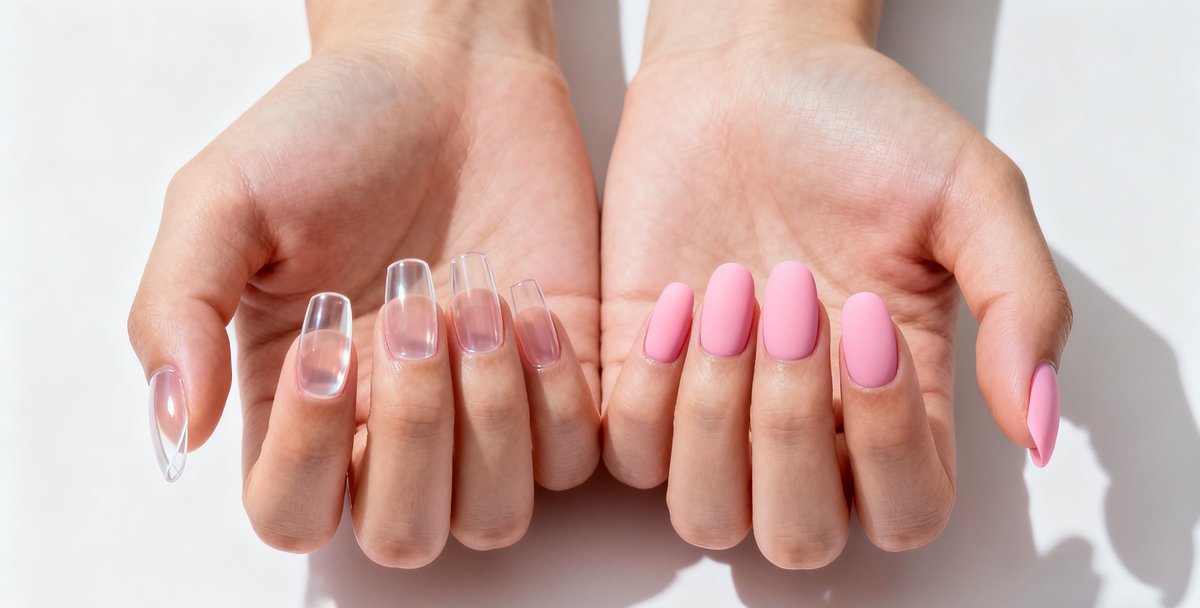
Editor Picks — Amazon
Top picks for builder gel vs acrylic
Curated from current Amazon ratings and review counts.

Makartt Hema-Free Poly Nail Gel Clear 50ML Gel Builder for Natural-Looking Strengthener 3D Molding Gel for Trendy Nail Art Long-Lasting and Easy to Use for Home Salon
$7.59
Amazon price as of Oct 19, 2026

modelones Builder Nail Gel, 7-in-One Clear Builder for Nails, LED Lamp Cured Color Rubber Base Gel Polish Coat Strengthener Thickening Extension Rhinestone Glue in a Bottle for DIY Home Salon Gifts
$8.49
Amazon price as of Oct 19, 2026

IBD Hard Gel LED/UV Builder Gel – Clear, Nail Extension & Overlay Gels, Strong Acrylic Finish, Professional Quality, 2 oz, 1 Pack
$19.15
Amazon price as of Oct 19, 2026

Beetles Builder Gel for Nails,0.51 oz 8 in 1 Strengthening Nails Enhancement Building Apex for Beginners & DIY Salon Manicure,Clear Builder Nail Gel,LED & UV Lamp Needed,Gifts for Women
$6.18
Amazon price as of Oct 19, 2026
Scroll →
Product prices and availability are accurate as of Oct 19, 2026 and are subject to change.
The Big Picture
Builder gel vs acrylic is decided by your life, not by chemistry. Builder gel and acrylic both produce strong, durable enhanced nails. They use different chemistry but the end result is similar in many ways. The right choice is rarely "which is objectively better" — it is "which fits your hands, your schedule, and your goals." After eight years of recommending one or the other to clients, I have noticed they tend to map onto five clear lifestyle profiles.
This guide skips the chemistry rundown (you can find that anywhere) and instead matches each system to the people who actually thrive with it.
If you are still deciding between gel-based systems, the builder gel vs Gel-X and builder gel vs polygel comparisons cover those.
Quick Reference — At a Glance
| Factor | Builder Gel | Acrylic |
|---|---|---|
| Chemistry | Photo-cured (LED/UV) gel | Powder + liquid monomer (EMA) |
| Cure | LED 60s / UV 2min | Air-dry, 1-3 minutes |
| Feel | Lighter, slightly flexible | Rigid, heavier |
| Strength at long length | Good (firm formulas) / Limited (soft) | Excellent |
| Strength at short length | Excellent | Excellent |
| Odor during application | Mild | Strong, distinctive |
| Filing dust generated | Moderate | High |
| Removal | Soak-off (15-25 min) or file | File-off (full filing required) |
| Skill ceiling | Moderate | Steeper |
| Sensitization risk | HEMA-related | EMA-related |
| Typical salon price | $50-$80 (overlay), $80-$120 (extension) | $40-$70 (overlay), $60-$100 (extension) |
The 5 Lifestyle Profiles
Profile 1 — The Office Professional Who Wants "Done But Not Obvious"
Picks: Builder gel.
You want strong, polished, professional-looking nails that do not scream "I had work done." You sit at a keyboard most of the day. You have meetings where appearance matters but bold extensions feel out of place.
Builder gel as a thin overlay (or short overlay-with-tip) gives you a strong, smooth, natural-looking result. Lower odor means you can do them yourself at lunch break. Lower bulk means typing feels normal.
Acrylic on this profile feels heavy, looks more obvious, and the air-dry odor is harder to hide if you are doing them at home.
Profile 2 — The Long-Length Devotee Who Wants Maximum Drama
Picks: Acrylic.
You want long. You want sculpted shapes. You want stiletto, coffin, or extreme almond at lengths past 8mm beyond the free edge. You are willing to fill every 2-3 weeks and you do not flex your hands hard enough to break the structure.
Acrylic at extreme length is structurally superior. Soft soak-off builder gel will crack at this length range. Even firm builder gel formulas (Light Elegance, Kokoist) are right at the edge of what they can support — acrylic is comfortable there.
For dramatic length plus art, acrylic is still the pro choice in 2026.
Profile 3 — The Hands-On Worker (Cleaner, Trades, Healthcare)
Picks: Acrylic OR firm builder gel.
You wash your hands 20+ times a day. You handle chemicals, tools, or wet work. Your nails take impact constantly.
Acrylic resists impact and chemical exposure better than soft soak-off builder gel. But it also loses gloss faster — you will need a top coat refresh every 7-10 days.
Firm builder gel formulas (Kokoist Excel, Light Elegance) split the difference: nearly the impact resistance of acrylic, but easier to refresh with a top coat at home.
If your work involves frequent acetone exposure (cleaners, mechanics), neither system works well — both soften under repeated solvent contact.
Profile 4 — The Sensitivity-Aware User (Past Reactions or Worried)
Picks: HEMA-free builder gel.
You have reacted to a gel manicure before, or your skin is generally sensitive. Standard builder gel and acrylic both contain monomers that can sensitize over time — for builder gel that is HEMA, for acrylic that is EMA.
Of the two, HEMA-free builder gel is the only widely-available option that materially reduces monomer exposure. EMA-free acrylic exists but is rare and pricey.
The American Academy of Dermatology has flagged acrylate contact dermatitis as a growing concern tied to repeated gel and acrylic exposure. If you have ever reacted, talk to a dermatologist before continuing with either system.
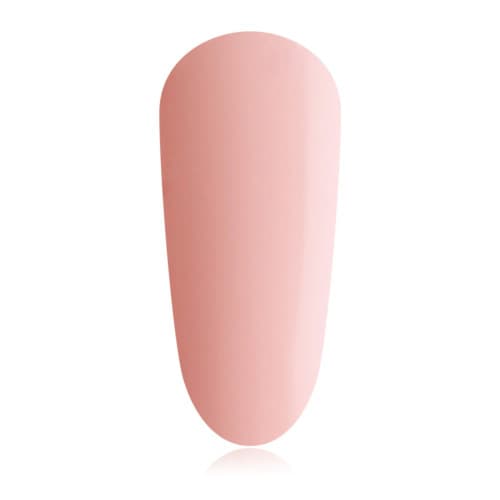
Au Lait HEMA-Free BIAB™
$50–$120
Profile 5 — The Beginner DIYer Learning at Home
Picks: Builder gel.
You want to learn to do your own nails at home. You have never done either system before. You are price-sensitive on initial setup.
Builder gel learning curve is moderate — most beginners can do a respectable first set within 3-5 attempts. Lower odor means home application is feasible. The initial cost is also lower ($30-$80 starter kit) vs acrylic ($60-$120 starter kit plus mandatory ventilation considerations).
Acrylic has a steeper learning curve and the application chemistry (mixing liquid and powder bead) is unforgiving. Most home DIY-ers who try acrylic first quit before they get good. Most who start with builder gel stay with it.
For the beginner-specific kit picks, see the best builder gel kits guide.
Health and Safety — The Real Differences
This section is more important than feel or look:
Builder gel concerns:
- HEMA monomer in most formulas (sensitization over time)
- LED/UV exposure to skin around nails (cumulative)
- Heat spike during cure (can be uncomfortable)
Acrylic concerns:
- EMA monomer (also a sensitizer)
- MMA monomer (banned for nail use in most US states — if a salon uses it, leave)
- Strong solvent vapors during application (ventilation matters)
- Filing dust inhalation (mask important)
The MMA red flag: If an acrylic application has a sharp, chemical smell that makes your eyes water, the salon may be using methyl methacrylate (MMA). MMA was banned by the FDA for nail product use in 1974 due to severe allergic reactions and natural nail damage. State boards continue to enforce against it. Legitimate salons use ethyl methacrylate (EMA) instead.
Honest takeaway: No nail enhancement system is "safe forever." Both can sensitize you over years of repeated use. The goal is to minimize unnecessary exposure (good ventilation, full cure, gentle removal) and listen to your skin if it starts reacting.
Skill Investment — How Long to Get Good
Self-applying either system at home takes practice:
| Skill | Builder gel | Acrylic |
|---|---|---|
| First respectable set | 3-5 attempts | 8-15 attempts |
| Salon-quality DIY | 20-30 sets | 50+ sets |
| Time per full set (proficient) | 60-90 min | 75-120 min |
| Time per fill (proficient) | 30-45 min | 45-60 min |
Builder gel forgives more mistakes during application — the gel self-levels (in soft formulas) or stays where you place it (in firm formulas), giving you predictable behavior. Acrylic is unforgiving — bead consistency, work speed, and brush technique all matter, and bad beads are very hard to fix mid-set.
Cost Over a Year
For DIY at home, including consumable replacement:
Builder gel year 1: $30-$80 starter kit + $15-$30 in replacement gel = $45-$110 Acrylic year 1: $60-$120 kit + $40-$70 in powder/liquid replacement = $100-$190
For salon visits (every 3 weeks): Builder gel: $50-$80 × 17 visits = $850-$1,360 yearly Acrylic: $40-$70 × 17 visits = $680-$1,190 yearly
Acrylic is meaningfully cheaper at the salon. Builder gel is meaningfully cheaper at home. The math reverses depending on where you do them.
Hybrid Approach — When Pros Combine Both
Pros sometimes apply acrylic for the structural extension and builder gel for the smooth top layer. This gives:
- Acrylic strength on the free edge
- Builder gel finish (smoother, less filing)
- Slightly faster fill cycles than pure acrylic
This is rare at home — too many products and steps. Useful to know exists but not a recommended starting point for DIY.
Acrylic vs Builder Gel — The Reverse View
If you currently use acrylic and are considering builder gel:
You will gain: Lower odor application, lighter feel on the nail, faster fill cycles, easier removal, lower learning curve, lower at-home cost.
You will lose: Maximum impact resistance for long lengths, the precision of advanced acrylic sculpting, slightly cheaper salon visits.
For most acrylic users moving to builder gel, the trade is worth it — unless your length is truly extreme or your nails take constant heavy impact.
When Builder Gel Is the Better Choice
- Short to medium length, natural-looking sets
- Low-odor at-home application
- Faster fills, less filing
- Easier soak-off removal
- Lower cost when self-applied
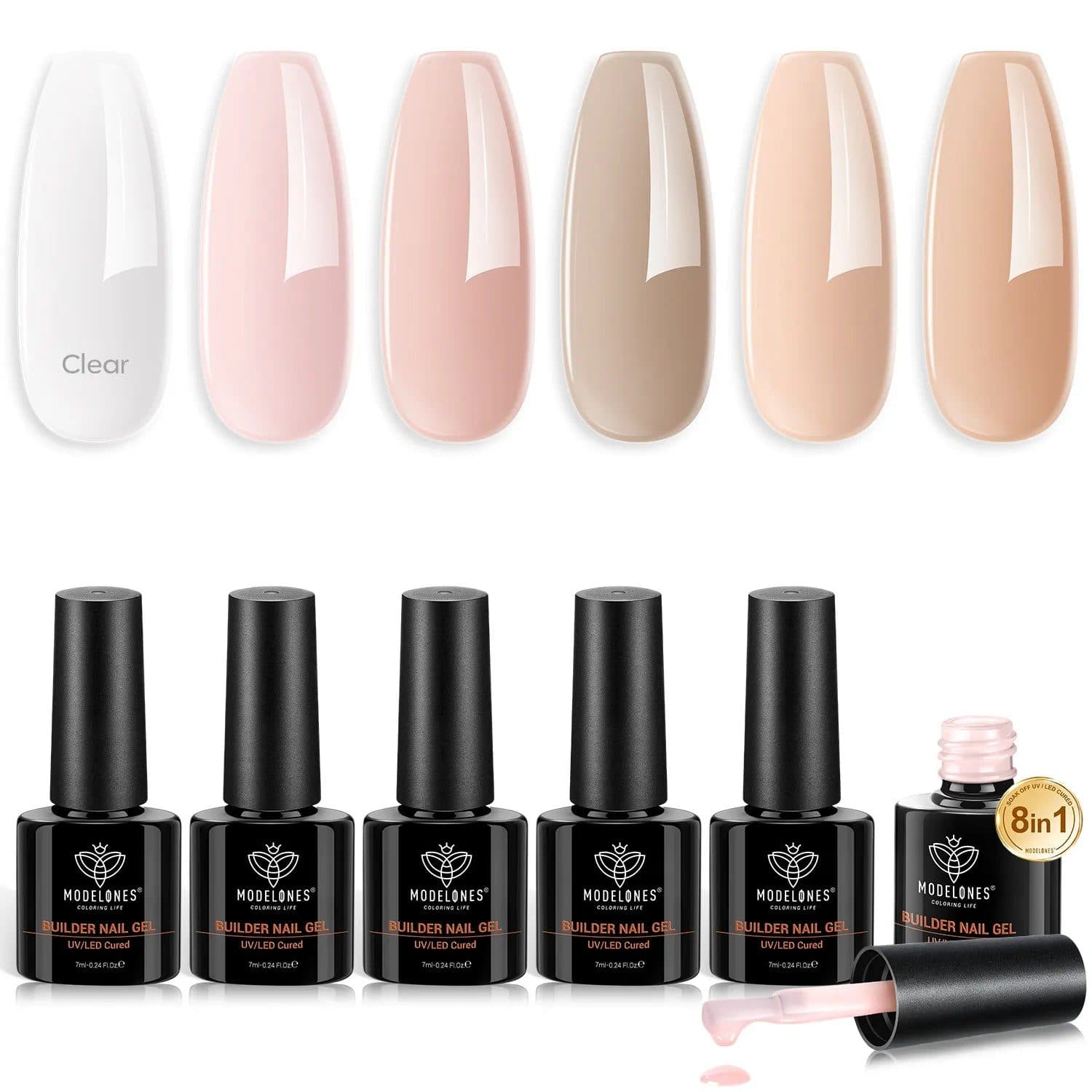
Modelones Builder Nail Gel Kit
Under $25
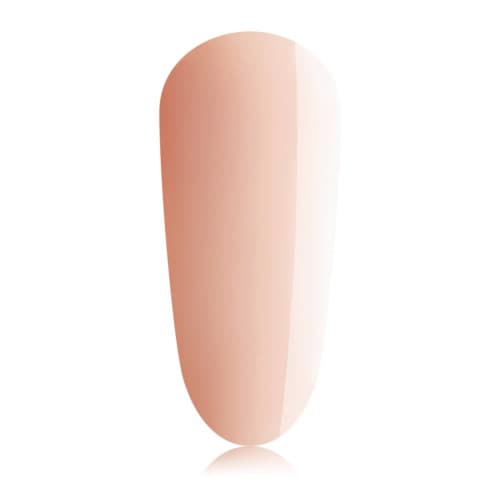
The GelBottle BIAB™ Builder In A Bottle
$50–$120
Also on Amazon
Beetles 3-Piece 15ml Builder Nail Gel Set
$11.99★ 4.6
When Acrylic Is the Better Choice
- Maximum impact resistance for long extensions
- Heavy-impact lifestyles (sports, manual labor at long lengths)
- Salon-only application where odor and ventilation are professional
- Lowest per-visit salon cost
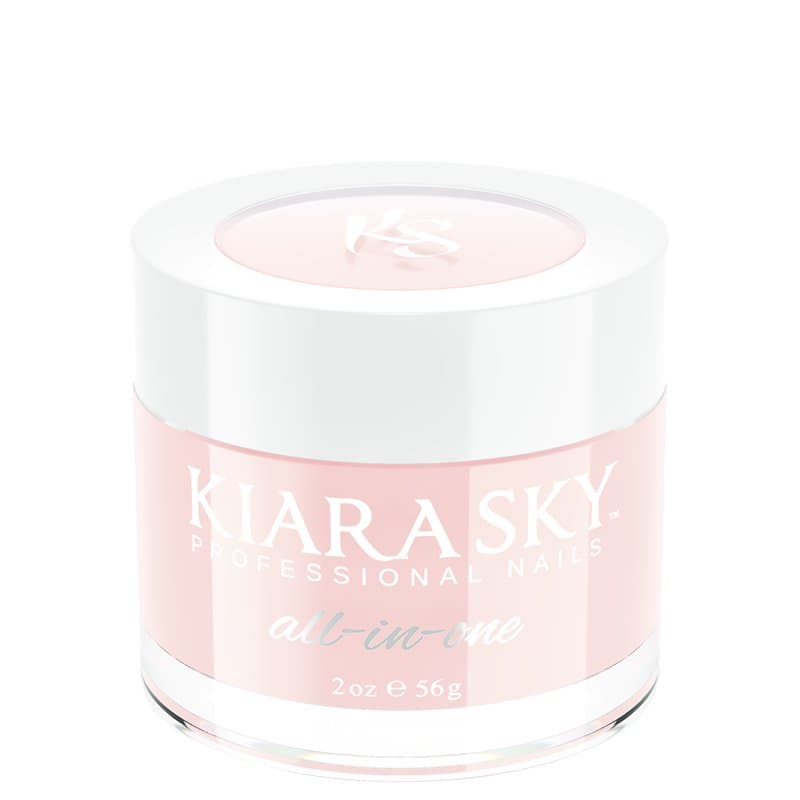
Kiara Sky Cover Acrylic Powder
$25–$50
Also on Amazon
Beetles Hard Gel for Nails Kit (3 Colors)
$29.99★ 4.4
Read next
How to Use Builder Gel: Salon-Tested 8-Step Application for Beginners (2026)
The exact 8-step builder gel routine I use on clients — prep, base, slip layer, apex placement, cure, refine, top coat, finish. With timing, common mistakes, and per-step troubleshooting.
Continue readingThe Removal Day Test: 25 Minutes vs 45
If you only compare the two systems on the day they go on, acrylic looks like the stronger, better-value choice. Compare them on the day they come off and the picture changes, which is why I make clients think about removal before they choose.
A soak-off builder gel overlay comes off in about 22 to 25 minutes: file the top coat, foil-wrap in acetone, push the softened gel off in flakes, and buff. The plate underneath is usually intact enough that you can apply the next set the same day. Acrylic removal, done properly, is 40 to 45 minutes of the same process, and acrylic does not flake — it turns to a sticky paste that has to be scraped, and every scrape takes a little plate with it. Done improperly, which is how most home acrylic removal goes, it is a fifteen-minute pry job that leaves the nail visibly thinner and white-patched.
Across a year of monthly appointments, that is roughly four extra hours in acetone for acrylic, plus a plate that has been scraped twelve times instead of flaked twelve times. It is the single biggest reason the natural-nail condition of my long-term builder gel clients is better than that of my long-term acrylic clients, and it is not a difference you can see on application day.
Frequently Asked Questions
Is builder gel better than acrylic? Better for natural-feel overlays, low-odor at-home application, and easier removal. Worse for extreme length and maximum impact resistance. "Better" depends entirely on what you want.
Is builder gel stronger than acrylic? Acrylic is stronger at long lengths. Builder gel (especially firm pro formulas) is comparable up to medium lengths. At short overlay lengths, both are effectively equivalent.
Is builder gel safer than acrylic? Roughly equivalent risk profiles, different specific concerns. Builder gel: HEMA sensitization. Acrylic: EMA sensitization plus MMA risk if a sketchy salon uses banned formulas. Neither is risk-free over years.
Does builder gel last longer than acrylic? Wear time is similar — both reach 14-21 days before needing fill. Acrylic at long lengths edges builder gel slightly. At short lengths, builder gel often wears slightly longer.
Is builder gel cheaper than acrylic? At home: yes. At salon: no. The systems flip depending on where you do them.
Builder gel vs acrylic overlay — which for natural nails? Builder gel by a wide margin. Easier soak-off removal, lighter feel, faster application, less filing. Acrylic for natural-nail overlays is overkill in 2026.
Does builder gel or acrylic last longer on a fill? Both fill 2-3 weeks comfortably. Builder gel fills are faster (less dust, less filing). Acrylic fills last very slightly longer due to formula rigidity.
Final Notes from Sara
Match the system to your life, not to whatever is trending on Instagram. The best system is the one you will actually maintain.
If you are starting from scratch, builder gel is the lower-risk learning curve. If you have specific length or impact requirements, acrylic earns its place. If you have ever reacted, HEMA-free builder gel is the safest entry point.
For builder gel application technique, walk through the how to use builder gel guide. For the foundational principles, the Builder Gel Nails pillar is the reference.
If your sets keep cracking regardless of system, the issue is structure not chemistry. See builder gel cracking fixes.
Last updated September 2026. This article uses AI assistance for research and structure; all comparisons and observations come from my own client work across both systems.