Builder gel for weak nails is the single most common reason new clients first walk into my chair — not for length, not for art, just for nails that stop tearing off at the slightest knock. The honest truth up front: builder gel does not chemically heal a weak nail. What it does is far more useful day to day — it lays a thin, flexible shield over the natural plate so the nail underneath can finally grow out past the fingertip instead of peeling, splitting, or snapping the moment it gets any length.
That distinction matters, because the internet is full of claims that builder gel "fixes" weak nails. It doesn't fix them. It protects them long enough for your own healthy nail to grow in. Used right, that's transformative. Used wrong — too thick, over-filed, slapped on an already-damaged plate — it can make a fragile nail worse. This page is the careful version.
For fragile nails — Amazon
The gentlest builder gels I reach for on weak, peeling nails
Soft, flexible, soak-off-friendly formulas — less stress on a thin nail plate than firm sculpting gels.

Beetles Gel Nail Polish Kit with U V Light - 80Pcs Color Enchantment 55 Colors Gel Nail Kit with Everything Base Top Coat Beginner Starter at Home Nails Kit Manicure DIY Salon Tools Gifts for Women
$28.99
Amazon price as of Sep 30, 2026

modelones Builder Nail Gel, 7-in-One Clear Builder for Nails, LED Lamp Cured Color Rubber Base Gel Polish Coat Strengthener Thickening Extension Rhinestone Glue in a Bottle for DIY Home Salon Gifts
$8.48
Amazon price as of Sep 30, 2026
Scroll →
Product prices and availability are accurate as of Sep 30, 2026 and are subject to change.
What "Weak Nails" Actually Means
"Weak" is a catch-all that hides three very different problems, and the right approach depends on which one you have:
- Thin nails — the plate itself is shallow, so it bends and flexes too easily. These respond beautifully to a builder gel overlay because the gel adds the rigidity the plate lacks.
- Brittle nails — the plate is dry and snaps rather than bends, often from acetone overuse, harsh winters, or aggressive filing. Builder gel protects the free edge here, but the real fix is moisture and gentler removal habits.
- Peeling nails — the plate delaminates in layers at the tip. This is the trickiest case. If the peeling is active and mid-plate, gel can lock moisture under the lifted layer and make it worse. You apply only once the peeling edge has been gently buffed flush.
Knowing your category before you pick up a brush is the whole game. A thin-nail person and a peeling-nail person should not prep or apply the same way.
How a Builder Gel Overlay Protects a Fragile Plate
A natural weak nail fails at the point where it leaves the fingertip — the free edge has nothing supporting it, so it flexes with every keystroke and grab until the bond between nail layers gives out. A thin builder gel overlay turns the top of your nail and that vulnerable free edge into a single semi-rigid unit. Load that used to concentrate at one weak spot now spreads across the whole overlay.
The result isn't a stronger natural nail — it's a natural nail that's protected long enough to grow. Most clients see real length within two to three growth cycles simply because the nail stops breaking before it can get anywhere. Builder gel is the gentlest enhancement option for this job, far less stressful on the plate than acrylic or hard gel, which is exactly why I steer weak-nail clients toward it over is builder gel bad for your nails-style worries about heavier systems.

Beetles Builder Gel Nails Kit HEMA-Free 8-in-1
$21.99
Amazon price as of Sep 30, 2026
Who Builder Gel Helps — and Who Should Wait
Builder gel for weak nails is a strong yes if:
- Your nails are thin and flexible but otherwise intact
- You break nails at length but the plate is smooth and attached
- You're recovering from acrylic or dip damage and want a gentle bridge while real nail grows in
- You're a former biter whose nails are finally growing but still fragile
It's a wait, not yet if:
- You have active mid-plate peeling that hasn't been buffed flush
- There's any green discoloration, lifting with odor, or pain — that's a possible infection, and gel over it traps the problem
- The skin around the nail is inflamed, cracked, or reacting
For that last group, the safest move is to pause all enhancements. The American Academy of Dermatology's contact dermatitis overview covers the allergic-reaction category that nail-product acrylates fall under — if your skin is reacting, treat that before you put anything else on the nail.
Maya's 90 Days: A Real Weak-Nail Recovery
In January 2026 a client I'll call Maya came in with classic post-dip damage — nails so thin they were translucent at the tips and peeling in two visible layers on both thumbs. She'd been getting dip every three weeks for two years and the e-file removal had shredded her plates.
We did not apply builder gel on day one. For the first visit I buffed the peeling edges flush, oiled the nail folds, and sent her home with cuticle oil and a two-week no-polish reset. At the two-week mark the worst of the loose peeling had grown out enough to buff smooth, and then we did a thin HEMA-free overlay — one slip layer, one thin structured layer, cured gently, no apex stacking.
By day 45 she had real free-edge length for the first time in two years. By day 90 — across three gentle fills, never a full soak-off — her natural nails underneath had grown in measurably thicker because they'd stopped tearing. The setback came around week six when she picked at one thumb and lifted the overlay; we soaked it off properly rather than letting her peel it, which would have taken natural layers with it. That picking lesson is the one most weak-nail clients have to learn the hard way.
Application Adjustments for Thin, Weak Nails
The standard builder gel routine is too aggressive for a fragile plate. Five changes I make every time:
- Hand-file prep, never an e-file. A weak plate cannot afford to lose thickness to a drill. A gentle 180-grit hand buff to break the shine is all you want.
- Thinner layers. Two thin layers beat one thick bead. A heavy dome on a thin nail creates a flex point at the edge of the gel and invites lifting.
- Skip the aggressive dehydrator soak. A light swipe is plenty; over-dehydrating an already-dry brittle nail makes it more prone to cracking.
- Lighter apex. Weak nails don't need a dramatic structural apex — a low, even dome distributes protection without adding strain.
- Gentle removal, always soak-off. Never let a weak-nail client pick or peel. Pure-acetone soak with a light buff first, every time.
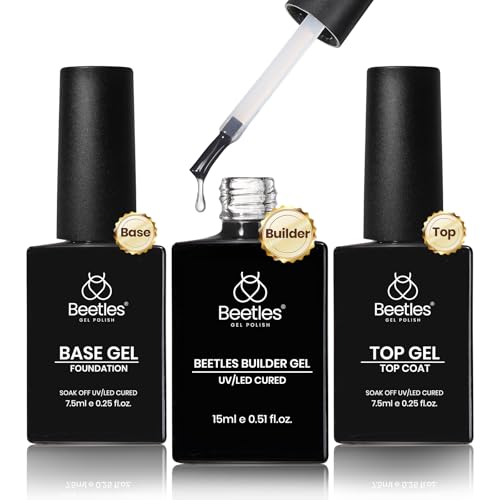
Beetles 3-Piece Clear Builder Gel with Base & Top
$9.99
Amazon price as of Sep 30, 2026
For the full step order these adjustments slot into, walk through how to prep nails for builder gel and the natural-nail-specific version in builder gel on natural nails. If you'd rather have the product shortlist chosen for fragile plates already, the best builder gel for natural nails guide overlaps heavily with weak-nail picks.
Read next
Best Builder Gel for Natural Nails 2026: The Overlay-First Picks That Don't Wreck Your Plate
The best builder gel for natural nails isn't the same gel that pros pile onto extensions. Natural nails need a softer, soak-off-friendly formula applied as a thin overlay — here are the four gels that work and the two that will damage your plate.
Continue readingPicking the Right Gel for Weak Nails
The instinct is to grab the strongest, firmest gel — that's backwards. Firm sculpting gels are designed to hold long extensions; on a thin natural nail their rigidity creates a hard edge the flexible plate fights against, and that mismatch is a top cause of lifting. For weak nails you want a soft, self-leveling, soak-off builder gel: flexible enough to move with the plate, removable without filing into your nail. HEMA-free formulas are the smart default here too, because weak-nail clients are often the same people whose skin has been sensitized by years of product exposure. The same logic carries over for recovering nail-biters in best builder gel for nail biters, whose plates are just as fragile during regrowth. When in doubt, start gentle — you can always step up firmness once your nails are healthier, and the whole system makes more sense once you've read the Builder Gel Atlas.
Habits That Keep Weak Nails Strong Between Fills
The overlay does the protecting, but what you do between appointments decides whether your natural nails actually recover underneath it — or just keep getting shielded while staying fragile. The clients who graduate off builder gel entirely are the ones who paired it with these habits:
- Cuticle oil twice a day, every day. This is the single highest-impact thing on the list and the one most people skip. A weak nail is usually a dry, dehydrated nail. Jojoba or squalane oil worked into the nail fold keeps the new growth flexible instead of brittle. Builder gel doesn't seal moisture out — oil still reaches the matrix where growth happens.
- Gloves for wet and chemical work. Dishwashing, cleaning sprays, and prolonged water exposure are what made most weak nails weak in the first place. Water repeatedly swelling and shrinking the plate breaks down the layers. Gloves are unglamorous and they work.
- Stop using your nails as tools. Opening cans, scratching labels, prying lids — the overlay can take more abuse than a bare weak nail, but it's protection, not a license. The picking-and-prying habit is what lifts overlays and undoes progress.
- Be realistic about supplements. Biotin has modest evidence for brittle nails in people who are actually deficient, but it's not a miracle and it won't outpace damage from bad habits. Diet, hydration, and not destroying your nails day to day matter far more than any pill.
A builder gel overlay buys you the months of uninterrupted growth that these habits then capitalize on. One without the other is half the result.
Frequently Asked Questions
Does builder gel actually strengthen weak nails?
It strengthens the unit of nail-plus-overlay, not the natural nail itself. Your real nail isn't chemically changed — but because it stops breaking, it grows out longer and the new growth often comes in healthier simply from being protected. People read that as "stronger nails," and functionally it is.
Will builder gel make my weak nails worse?
Only if applied wrong: over-filed prep, layers too thick, or applied over active peeling or infection. Applied gently on a clean, buffed-flush plate, it protects rather than harms. The damage people blame on gel almost always comes from picking it off instead of soaking it off.
How thin should builder gel be on weak nails?
Thin enough that the nail still looks natural in profile, just with a smooth low dome. Two thin layers cured separately are far better than one thick one. You're shielding the plate, not building a sculpture.
Can I use builder gel on peeling nails?
Not while they're actively peeling mid-plate. Buff the loose layers flush first and wait until the worst has grown out. Sealing gel over a lifted layer traps moisture and accelerates delamination.
How often should I refill builder gel on weak nails?
Every two to three weeks as the nail grows and a gap opens at the cuticle. Refilling (rather than full soak-off each time) is gentler — fewer acetone exposures means a happier plate over the long run.
Is HEMA-free builder gel better for weak nails?
For most weak-nail clients, yes — not because HEMA is weaker, but because fragile-nail people frequently have a history of product sensitivity, and HEMA-free removes the most common sensitization pathway with no real loss in protection.
Last updated June 2026. This article uses AI assistance for research and structure; the weak-nail protocols here come from hands-on client work.