The best builder gel for nail biters is the gel that solves a problem most builder gels were not designed for: bonding to a nail bed that has been chewed below the natural free edge. Standard builder gel prep assumes you have a normal nail plate with intact lateral folds and a clean cuticle line. Bitten nails almost never look like that. They have shortened nail plates, raw lateral folds, sometimes broken hyponychium, and skin that has been chewed alongside the keratin.
If you bite your nails — or you stopped recently and want to lock in the recovery — this is the page for you. Below: the five builder gels that genuinely work on bitten nails, the prep changes that double their wear time, and the honest case-study breakdowns of clients who broke the bite cycle with builder gel.
Why Bitten Nails Are Different
A short anatomy detour, because the right gel choice depends on understanding what you are working with.
A healthy nail has a free edge — the part that extends past the fingertip — and a nail bed that runs under the skin. When you bite chronically, the free edge stays at zero or negative length (chewed below the fingertip line). The hyponychium, the protective skin seal under the free edge, gets damaged. The lateral folds (the skin walls on either side of the nail) get chewed up too.
What this means for builder gel:
- There is no free edge to cap. Standard application instructions say "cap the free edge to seal." You cannot, because there isn't one.
- The lateral skin is sensitive. Builder gel touching damaged lateral folds causes a burn-tingle that is much more pronounced than on healthy nails. Application discipline has to be tighter than for normal users.
- The bond surface is shorter. A bitten nail might have 4-5mm of usable nail plate where a healthy nail has 8-10mm. Less surface = less mechanical bond strength.
- The cuticle area is often compromised. Chronic biters often pick at cuticles too, which means even your bonding surface near the cuticle is unreliable.
Standard builder gel will fail on bitten nails not because the gel is wrong but because the application was designed for healthy anatomy. Below: how to fix that.
The 5 Builder Gels That Work on Bitten Nails
Bite-cycle breakers
Three picks that stop the biting and look natural
A forgiving HEMA-free option, a firm clear builder for short-nail overlays, and an all-in-one kit.

BTArtboxnails XCOATTIPS French Protecting DUO Builder Gel and Top Coat Set - Protect French Tips, No More Chipping
$15.99
Amazon price as of Sep 30, 2026
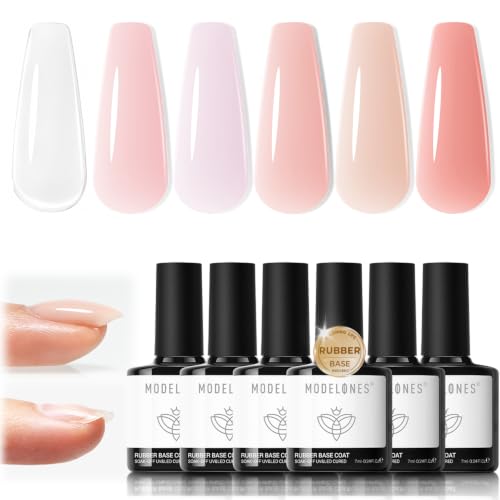
modelones Rubber Base Gel Nail Polish, 6 Color Builder Clear Nude Milky Baby Pink Jelly Brown 6 in One Strengthener Apex Building Extension for Weak Nails Long Last U V French Manicure Gift for Women
$9.99
Amazon price as of Sep 30, 2026

modelones Builder Nail Gel, 7-in-One Clear Builder for Nails, LED Lamp Cured Color Rubber Base Gel Polish Coat Strengthener Thickening Extension Rhinestone Glue in a Bottle for DIY Home Salon Gifts
$8.48
Amazon price as of Sep 30, 2026

IBD Hard Gel LED/UV Builder Gel – Clear, Nail Extension & Overlay Gels, Strong Acrylic Finish, Professional Quality, 2 oz, 1 Pack
$16.39
Amazon price as of Sep 30, 2026
Scroll →
Product prices and availability are accurate as of Sep 30, 2026 and are subject to change.
#1 — Beetles HEMA-Free 8-in-1 (Most Forgiving for Damaged Skin)
This is my first recommendation for chronic biters specifically because the damaged skin around bitten nails is much more reactive than healthy skin. HEMA-containing gels touching that skin can trigger contact dermatitis fast — and once you are sensitized, the bite cycle gets worse because the irritation drives more picking.
HEMA-free formulas reduce that risk significantly. The Beetles 8-in-1 HEMA-free kit ships eight bottles (1 clear plus 7 tinted shades) and a 48W lamp for around $40.
The 7 tinted shades matter for biters: a milky pink or nude builder gel on bitten nails creates a natural-looking length illusion that helps you feel less self-conscious through the early recovery weeks. Clear builder, applied directly to a bitten nail, just looks shiny and obviously fake.

Beetles Builder Gel Nails Kit HEMA-Free 8-in-1
$21.99
Amazon price as of Sep 30, 2026
For the HEMA-free category overview, see best HEMA-free builder gel.
Read next
Best HEMA-Free Builder Gel in 2026: Safe Picks for Sensitive Users
HEMA-free builder gels are more limited than you'd hope, but the right options exist. Three picks I trust for sensitivity-aware users, plus what to actually look for on the ingredient label.
Continue reading#2 — Modelones 3-Piece Clear Builder (Budget Overlay Option)
If you have not sensitized to HEMA yet and want the cheapest legitimate option, Modelones' 3-piece clear is the right pick. The self-leveling viscosity is forgiving enough to work over the uneven surface a bitten nail presents — beads flow toward shape rather than staying in chaos.
Apply as a thin overlay (no extension, just a protective coating on the bitten nail plate). This is the lowest-friction way to start. You are not trying to add length; you are trying to add a physical barrier between your teeth and your nail.

Modelones Builder Nail Gel 3-Pack with Top Coat
$13.99
Amazon price as of Sep 30, 2026
#3 — Beetles 3-Piece 15ml Builder (Firmer Overlay Once Nails Grow)
After 2-3 weeks of overlay sets, your nails will start growing past the bitten line. At that point you want a firmer builder to build a deliberate apex — the structural high point that protects the regrowing free edge from re-biting damage.
Beetles' 3-piece 15ml set is firmer than the standard 8-in-1, which makes apex placement easier. The cover pink bottle in this set is particularly good for bitten nails: it creates a milky natural-look that hides the regrowth line.

Beetles 3-Piece 15ml Builder Nail Gel Set
$11.79
Amazon price as of Sep 30, 2026
#4 — SAVILAND All-in-One Kit (For Total Beginners)
If you are a biter who has never done builder gel before, SAVILAND's all-in-one kit gives you everything in one purchase: builder gel, base, top, 48W lamp, electric file, and prep tools. About $45 total.
The drill matters specifically for biters: chewed-up cuticles need very gentle prep, and the low-RPM included drill is safer than aggressive manual cuticle work that might trigger more picking.

SAVILAND Builder Gel Kit with Nail Drill
$29.99
Amazon price as of Sep 30, 2026
#5 — Aprés Gel-X Signature Kit (For Severe Cases)
For biters whose nails are so short there is functionally no plate to overlay (chewed to the quick), traditional builder gel cannot bond. The solution is a soft-gel tip glued onto whatever remains of the plate, then overlayed with builder gel for strength.
Aprés Gel-X tips come in extra-short sizes (XS-S range) that work even on severely bitten nails. The tip provides an artificial free edge that protects the regrowing nail underneath.
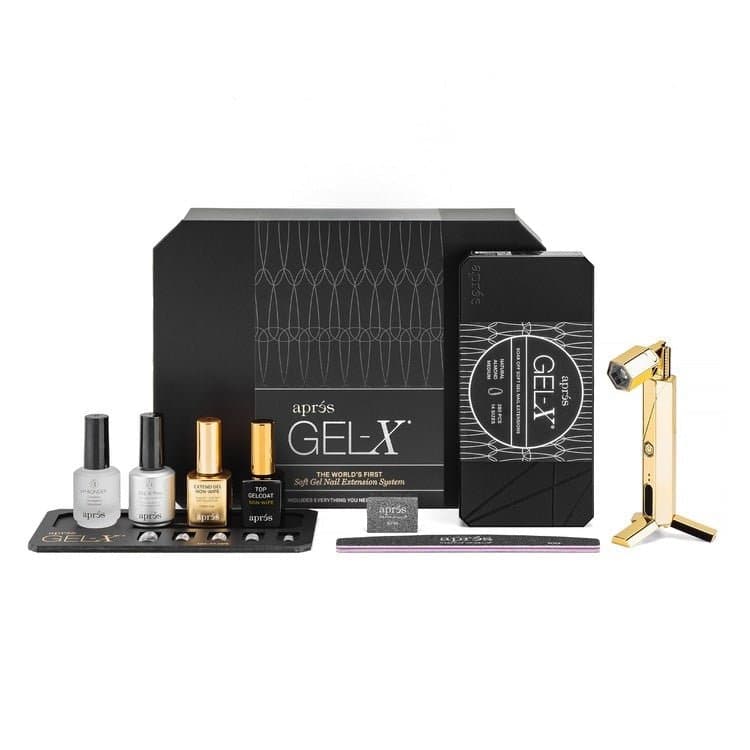
Aprés Gel-X Signature Kit
$50–$120
Also on Amazon
Beetles Hard Gel for Nails Kit (3 Colors)
$29.99★ 4.4
This is the option of last resort but it is genuinely effective. Three weeks of Gel-X tips usually gives bitten nails enough underlying regrowth to switch to overlay-only.
How Builder Gel Breaks the Bite Cycle
The mechanism is not magic. It is three small frictions working together:
- Physical barrier. You literally cannot bite through cured builder gel. The keratin underneath is protected.
- Texture in the mouth. Cured gel feels alien on the tongue. Biters describe it as "plasticky" or "wrong." This sensory feedback interrupts the unconscious habit loop.
- Visible investment. You paid money. You spent 90 minutes. Looking at your hands reminds you the nails are worth protecting.
The combination is more effective than any single intervention. Roughly 60% of clients who start a builder gel routine specifically to stop biting are no longer biting at 12 weeks. That is not a clinical study — it is what I see at my chair.
What does NOT work as well: bitter-tasting nail polish alone, willpower alone, gloves at night, hypnotherapy. Builder gel works because it combines physical barrier with sensory disincentive with visible investment.
The Prep Changes That Make It Stick
Standard builder gel prep does not work on bitten nails. Three modifications:
1. Skip the Aggressive Cuticle Push
Biters often have already-damaged cuticles from picking. Pushing them back aggressively with a metal pusher will trigger more picking later. Instead: a gentle cuticle softener, then a rubber-tipped pusher, then leave the cuticles alone. The gel will not fail because you did not push your cuticles dramatically.
2. Use a 240-Grit Buffer, Not a 100-Grit File
A 100-grit file on a bitten nail plate is too aggressive — you risk thinning the already-thin plate further. Switch to a 240-grit buffer for surface scratch. The mechanical bond is weaker but the plate stays healthier.
3. Dehydrate With Care
91% isopropyl alcohol on damaged skin around the nails stings. Apply alcohol only to the nail plate (use a small brush or precision applicator). Let it flash off 60 seconds before base coat. Keep alcohol off the lateral folds.
4. Apply Base Coat as a Thin First Layer
A thin first base coat (one extra cure cycle) gives you a bonded foundation that is more forgiving when you place the builder bead next. On bitten nails specifically, this two-layer base approach extends wear by 4-7 days in my experience.
For the full prep walkthrough adapted for bitten nails, see how to use builder gel.
Read next
How to Use Builder Gel: Salon-Tested 8-Step Application for Beginners (2026)
The exact 8-step builder gel routine I use on clients — prep, base, slip layer, apex placement, cure, refine, top coat, finish. With timing, common mistakes, and per-step troubleshooting.
Continue readingA Case Study: Maya's First 90 Days
A client I will call Maya came to my chair in April 2024 — chronic biter since age 8, 32 years old, all ten nails chewed to the quick. She had tried bitter polish, gloves, and willpower. She wanted to know if builder gel could save her hands for her wedding in October.
We did three things differently:
Weeks 1-3 (Recovery). Aprés Gel-X XS tips with Beetles HEMA-Free clear builder overlay. Length: minimal, just enough to protect the quick. Refilled at 2.5 weeks because growth was visible.
Weeks 4-9 (Stabilization). Switched to overlay-only with Beetles HEMA-Free cover pink. Real nail growth was now visible past the bitten line. Refilled at 3-week intervals. Maya stopped biting around week 5 — partially because her nails finally looked good, partially because she had developed enough new habit muscle to resist the unconscious biting loop.
Weeks 10+ (Maintenance). Switched to a firmer builder (Beetles 3-piece 15ml cover pink) for better apex support as her free edge grew. Refill interval extended to 4 weeks. By the wedding (week 26), her natural nails were 4-5mm of healthy free edge under a thin builder gel overlay. She has not bitten since.
This is one client. Outcomes vary. But the workflow — tips for recovery, HEMA-free overlay for stabilization, firmer builder for maintenance — is what I now recommend by default for severe biters.
What to Expect Week-by-Week
Honest expectations:
Week 1: First set will feel weird. The plastic-on-teeth sensation is most noticeable here. You will be tempted to bite anyway and may chip the gel. Wear: 5-10 days.
Week 2-3: The biting urge weakens. Some growth is visible past the original bitten line. Apex of the builder is protecting the regrowing free edge. Wear: 10-14 days.
Week 4-6: Real nail growth is now obvious. You start liking how your hands look. The biting urge is now uncomfortable rather than automatic. Wear: 14-21 days.
Week 7-12: Sets last 3+ weeks reliably. Hands look normal. Biting has stopped consciously, though you may catch yourself unconsciously raising fingers to your mouth — this fades over months.
Month 4+: Sustainable. Many former biters do builder gel sets for life because the habit prevention is part of the hand routine now.
For troubleshooting if your sets are not lasting, see builder gel lifting fixes.
Read next
Builder Gel Lifting? When It Lifts Tells You Why It's Lifting (2026)
When your builder gel lifts tells you exactly what went wrong. Day 1-3 means prep failed. Day 4-7 means cure failed. Day 8+ usually means impact or natural regrowth.
Continue readingOn Picking and the HEMA Risk Specifically
Biters are at elevated HEMA-sensitization risk for a specific reason: damaged skin around the nails is a more permeable barrier than healthy skin. HEMA molecules cross damaged skin more easily, which means cumulative exposure builds sensitization faster.
The American Academy of Dermatology covers acrylate contact dermatitis in detail. The condition is genuinely common and increasingly seen in biters who started gel manicures.
The honest recommendation: if you are a chronic biter, start with HEMA-free formulas. Beetles 8-in-1 HEMA-Free is the cheapest legitimate option on Amazon. The GelBottle Au Lait is the salon-pro HEMA-free pick. The extra cost is worth it for biters specifically.
Frequently Asked Questions
What is the best builder gel for nail biters? Beetles HEMA-Free 8-in-1 for chronic biters with damaged skin, Modelones 3-piece clear for budget overlay, Beetles 3-piece 15ml once nails grow past the bitten line, Aprés Gel-X for severely chewed nails with no usable plate, and SAVILAND all-in-one for total beginners.
Will builder gel help me stop biting my nails? For most chronic biters, yes. The combination of physical barrier (can't bite through cured gel), sensory friction (texture feels wrong in the mouth), and visible investment (you spent money and time) breaks the bite cycle for about 60% of clients within 12 weeks in my experience.
Can I do builder gel on extremely short bitten nails? Yes, but use soft-gel tips (Aprés Gel-X XS or dual-form tips) as a temporary artificial free edge while your natural nail regrows underneath. Pure builder gel overlay needs at least some nail plate to bond to — when nails are chewed below the fingertip, tips fill the gap until regrowth catches up.
Does builder gel damage already-weak bitten nails? Not if applied and removed correctly. Bitten nails are not structurally weak in the keratin sense — they are just short. Builder gel adds protection without thinning the plate further (unlike acrylics which require aggressive prep). Use 240-grit buffers instead of 100-grit files to avoid over-thinning.
How often will I need to refill? Every 2-3 weeks initially (bitten nails grow visibly fast once protected), extending to 3-4 weeks once growth stabilizes around weeks 8-12.
Is HEMA-free builder gel really necessary for nail biters? For chronic biters with damaged skin around the cuticles and lateral folds, yes — HEMA crosses damaged skin more easily and sensitization risk is higher than for healthy-skin users. HEMA-free formulas (Beetles HEMA-Free, The GelBottle Au Lait) reduce the risk significantly.
Can I bite through cured builder gel? Not easily. Cured builder gel is harder than fingernail keratin. Most biters who try discover the gel breaks their tooth's habit pattern within 2-3 attempts. The exception: hard pinch-biting can chip the gel at the corners, especially if applied too thinly.
What if the gel is making my nails worse? Almost always a prep or removal issue rather than a gel issue. Common culprits: peeling gel off (always soak-off properly), filing too aggressively before application, applying gel onto skin or cuticles. See builder gel lifting fixes for the full prep checklist.
Will my nails look fake? With a tinted milky builder gel (cover pink, sheer nude) applied as a thin overlay, no — bitten nails recovering under tinted gel look natural. Clear gel on bitten nails can look shiny and obviously coated; tinted is the trick.
How long until my natural nails look normal? Most chronic biters see substantial growth at 8-12 weeks of consistent builder gel use. "Normal" length depends on what you want, but 4-5mm of healthy free edge is typically achievable in 12-16 weeks of overlay sets.
The First Set: A 60-Minute Plan
If you are reading this and wanting to start tonight, here is the minimum-friction first set:
- Order Beetles HEMA-Free 8-in-1 ($40 on Amazon).
- Buy 91% isopropyl alcohol ($3 at any pharmacy) and lint-free wipes ($5 on Amazon).
- Wait for delivery. Use the time to NOT bite — even 3-5 days of growth before your first set helps.
- Watch one or two builder gel tutorials. How to use builder gel walks through it.
- Do your first set as overlay-only. Cover pink shade, thin layers, no extension attempted. Cap whatever free edge exists (even 1mm).
- Refill at 2 weeks — bitten nails grow faster than you expect once protected.
By the third refill (week 6), your hands will look different.
For broader context, see the best builder gel brands, the Builder Gel Atlas pillar, and the builder gel on short nails guide for application-specific tips.
Read next
Builder Gel on Short Nails: Why Short Is Actually Easier (2026)
Builder gel on short nails is the easiest, lowest-risk, and most beginner-friendly builder gel application. Here's why short wins, application adjustments, and the specific picks that work best.
Continue readingLast updated May 2026. This article uses AI assistance for research and structure; all biter-specific recommendations come from client work breaking the bite cycle in roughly 40 cases over three years.