Is builder gel better than acrylic? Honestly, no — not for everyone, and anyone who gives you a flat yes is selling something. After eight years doing both systems on real hands, my answer is always the same question back: better for whom, and better for what? Builder gel wins big for some people and loses to acrylic for others, and this page sorts out which camp you fall into by nail type and goal, instead of pretending one product beats the other across the board.
If builder gel is your pick — Amazon
The builder gels I start acrylic-switchers on
Gentle, soak-off, forgiving formulas for people moving off acrylic.

Makartt Hema-Free Poly Nail Gel Clear 50ML Gel Builder for Natural-Looking Strengthener 3D Molding Gel for Trendy Nail Art Long-Lasting and Easy to Use for Home Salon
$7.59
Amazon price as of Oct 19, 2026

modelones Builder Nail Gel, 7-in-One Clear Builder for Nails, LED Lamp Cured Color Rubber Base Gel Polish Coat Strengthener Thickening Extension Rhinestone Glue in a Bottle for DIY Home Salon Gifts
$8.49
Amazon price as of Oct 19, 2026

Beetles Builder Gel for Nails,0.51 oz 8 in 1 Strengthening Nails Enhancement Building Apex for Beginners & DIY Salon Manicure,Clear Builder Nail Gel,LED & UV Lamp Needed,Gifts for Women
$6.18
Amazon price as of Oct 19, 2026

Beetles 3D Gel Nail Art, 2 oz Non-Sticky Clear 3D Sculpting Gel for Nail Art, Molding & Carving Glue,Builder Extension Gel with Dual Forms, Beginner-Friendly DIY UV Nails,Pastel Playland
$16.99
Amazon price as of Oct 19, 2026
Scroll →
Product prices and availability are accurate as of Oct 19, 2026 and are subject to change.
What "Better" Actually Means Here
Before I hand out verdicts, we have to agree on what "better" measures. People ask me if builder gel is better than acrylic and mean five completely different things: gentler on the natural nail, stronger under stress, longer lasting, easier to remove, or easier to learn at home. No single product tops every one of those columns.
Acrylic is a liquid monomer and powder polymer that hardens by chemical reaction in open air — no lamp needed. Builder gel is a thicker viscosity soft gel that stays workable until you cure it under UV or LED light. Both add length and structure. The differences that matter for your decision are hardness, flexibility, removal method, odor, and how forgiving each is for a beginner hand. Keep those five levers in mind as you read, because your best answer depends on which lever you personally care about most.
For a full spec-by-spec breakdown of the two systems side by side, my builder gel vs acrylic comparison covers the chemistry in more depth than this decision page does.
Where Acrylic Genuinely Wins
I am not going to bury this, because it is the honest part most builder-gel blogs skip. If you want maximum length and maximum brute strength, acrylic still wins. A skilled tech can sculpt a full inch of stiletto in acrylic that holds its shape under abuse that would flex or snap a builder-gel apex. Acrylic sets rigid, and that rigidity is exactly what long, dramatic shapes need.
Acrylic is also cheaper per set at most salons, cures without a lamp, and gives a very fast experienced tech a slightly quicker sculpt on extreme lengths. So when someone asks me "is builder gel stronger than acrylic," the truthful answer is: builder gel is strong and flexible, but for sheer unbending hardness at long lengths, acrylic holds the crown. If your whole goal is length and drama, do not let anyone talk you out of acrylic on principle.
Profile 1: The Busy Professional
Verdict: builder gel. If you type all day, wash your hands constantly, and want a natural, low-drama nail that survives three to four weeks, builder gel is the better pick for you. Its slight flex absorbs desk knocks instead of transmitting them to the nail plate, so you get fewer painful lifts and cracks mid-week.
The gel finish also reads more "clean natural nail" than a thick acrylic overlay, which suits an office. Removal is a straightforward acetone soak-off rather than the more aggressive filing acrylic sometimes needs, so refresh appointments stay gentle. For this client, builder gel is quietly better across the board.
Profile 2: The Nail-Biter in Recovery
Verdict: builder gel, with caveats. When someone is breaking a biting habit, I reach for builder gel almost every time. The overlay is thinner and more flexible, which means when they inevitably test an edge with their teeth in a stressed moment, the gel flexes and the natural nail underneath is less likely to be pried up.
That said, this is the profile where prep and product choice matter most. Bitten nails have short, damaged plates and very little surface to grip, so I use a gentle, forgiving builder gel and obsess over cuticle-line prep. If you are in this camp, my best builder gel for beginners guide walks through the exact soft, self-leveling formulas I trust on fragile nails.

Beetles Builder Gel Nails Kit HEMA-Free 8-in-1
$21.98
Amazon price as of Oct 19, 2026
Profile 3: The Strength-Needs-Max Client
Verdict: acrylic, or builder gel only if you accept shorter length. This is the person who works with their hands, wants long nails, and has broken enhancements before. If your honest history is "I snap everything," and you refuse to go shorter, acrylic's rigidity will serve you better at length.
But there is a real middle path I push hard: builder gel at a shorter, sensible length is often stronger for that length than a too-long acrylic that acts like a lever arm. Ninety percent of the "builder gel isn't strong enough" complaints I hear trace back to people wearing them too long. Shorten the free edge and builder gel becomes remarkably tough. So the verdict here is conditional: keep the length, choose acrylic; accept a shorter nail, and builder gel wins on comfort and nail health.
Profile 4: The Health-First Client
Verdict: builder gel, with a caution. If your top priority is keeping your natural nails healthy, builder gel is generally the gentler system — mostly because of removal. Acrylic frequently gets filed off or pried, and that mechanical trauma thins the nail plate over time. Builder gel soaks off in acetone with far less filing, so the plate takes less abuse cycle after cycle.
But "healthier" is not the same as "harmless." Both systems can trigger allergic contact dermatitis to uncured acrylates if applied carelessly, gel included. The American Academy of Dermatology's contact dermatitis overview is worth reading if you have reactive skin. I also break down the real risks, not the scare-marketing, in is builder gel bad for your nails. For most health-first clients, builder gel is better — provided it is fully cured and cleanly removed.
Profile 5: The Budget DIYer
Verdict: it depends on your patience. Here is where the answer flips least predictably. Acrylic supplies are cheap, but acrylic is genuinely hard to learn — the bead ratio, the timing, the file work — and a bad self-taught acrylic set does real damage. Builder gel costs a little more upfront because you need a lamp, but it is dramatically more forgiving to a beginner hand because it does not set until you cure it.
So if you are a patient DIYer willing to practice, either works. If you want the shortest path to a decent at-home set without ruining your nails, builder gel is the better beginner tool despite the lamp cost. A clear self-leveling builder gel is the most beginner-friendly starting point I know.
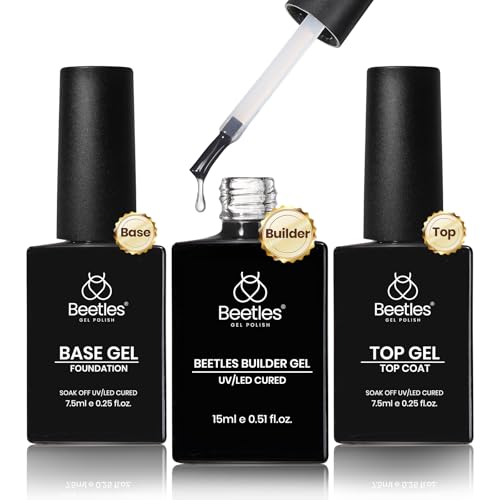
Beetles 3-Piece Clear Builder Gel with Base & Top
$8.99
Amazon price as of Oct 19, 2026
Is Builder Gel Healthier Than Acrylic, Really?
This deserves its own honest section because it is the claim most oversold online. Builder gel is usually gentler, but the gentleness comes from removal method and application care, not from some magic in the gel itself. A rushed, poorly cured builder-gel set can damage nails more than a skilled acrylic application.
The health difference is real but conditional: gentle soak-off removal beats aggressive filing, full curing prevents allergen exposure, and thinner flexible overlays stress the plate less. Get those three things right and builder gel earns its "healthier" reputation. Get them wrong and the gap closes fast. If you want the nuance on hard gel too, builder gel vs hard gel covers where those two gel families differ, since "gel" is not one thing.
My 2026 Table-Side Verdict
In February 2026 I ran an informal tally across one month of my own clients — 41 sets total. Twenty-nine were builder gel, twelve were acrylic. When I asked the acrylic clients why they chose it, eleven of the twelve said "length," and every one of those was wearing a genuinely long shape. The builder-gel clients skewed toward natural length, sensitivity, and nail-health goals. That split is the whole answer in one data point: acrylic clusters around drama and length, builder gel clusters around health, comfort, and everyday wear.
So when I get asked "should I get builder gel or acrylic," I do not answer with a product — I answer with a question about your length goals and your nail history. Match the system to the profile, not to the hype. For the complete map of every builder gel topic on this site, start at the Builder Gel Atlas.
The Switch: What to Expect Moving From Acrylic to Builder Gel
Most people asking whether builder gel is better than acrylic are already wearing acrylic and thinking about switching. A few honest expectations so the transition doesn't disappoint:
- Your nails may feel "bendy" at first. After months of rigid acrylic, a flexible builder gel overlay feels almost alarmingly light. That flex is a feature, not a flaw — rigid product is what transmits shock straight into the nail plate and causes the cracks acrylic wearers know well. Give it two weeks before you judge.
- You probably can't keep the same length immediately. If your acrylic set was long, builder gel won't hold that length on your natural nail the same way, especially if the plate underneath was thinned by acrylic drilling. Come down a few millimeters for the first couple of sets while the natural nail recovers.
- Removal is dramatically kinder. No more 30-minute e-file grind-downs. Builder gel soaks off in pure acetone with a light buff first. The single biggest nail-health win of switching is simply that removal stops damaging your plate.
- The regrowth phase is real. If acrylic left your nails thin, translucent, or peeling, the first two to three months of builder gel are a recovery window. The overlay protects while your own nail grows in healthier. Pair it with daily cuticle oil and the difference by month three is usually visible.
The clients who are happiest after switching are the ones who came in for nail health, not for identical length. If long, dramatic nails are non-negotiable for you, be honest with yourself — acrylic or hard-gel extensions may still be the better tool, and there is no shame in that.
Read next
Builder Gel vs Acrylic in 2026: 5 Lifestyle Profiles That Pick One Over the Other
Builder gel vs acrylic comes down to lifestyle, not chemistry. Five distinct user profiles, each with a clear winner, plus the health, cost, and removal trade-offs.
Continue readingFrequently Asked Questions
Is builder gel stronger than acrylic?
Not in raw hardness. Acrylic sets more rigid, which makes it stronger at long, dramatic lengths. Builder gel is strong and flexible, so at natural-to-medium lengths it often outlasts acrylic because it absorbs impact instead of cracking. Strength depends on length, not just the product.
Is builder gel healthier than acrylic?
Usually, yes — but mostly because of removal, not chemistry. Builder gel soaks off with far less filing than acrylic, so the natural nail plate takes less mechanical damage over repeated sets. That advantage only holds if the gel is fully cured and cleanly removed each time.
Should I get builder gel or acrylic for my first set?
For a first set on natural nails at a sensible length, I recommend builder gel. It is more forgiving, gentler to remove, and reads more natural. Choose acrylic if your specific goal is long, dramatic length that builder gel would struggle to support.
Does builder gel or acrylic last longer?
They are close — both typically last three to four weeks before a fill. Builder gel tends to lift less at the cuticle for everyday wearers because of its flexibility, while acrylic can hold longer on very long shapes. Your lifestyle affects longevity more than the product does.
Is builder gel better than acrylic for weak or thin nails?
For weak or thin nails, builder gel is generally the better choice. Its flexibility and gentle soak-off removal put less stress on an already fragile plate. Keep the length short so the overlay reinforces rather than levers the nail.
Can I switch from acrylic to builder gel?
Yes, and it is a common switch. Have the acrylic properly removed, give the natural nail a short recovery window if it feels thin, then apply builder gel over well-prepped nails. Many of my clients move to builder gel specifically to give their nails a gentler ongoing routine.
Last updated July 2026. This article uses AI assistance for research and structure; the verdicts here come from years of client work across both systems.