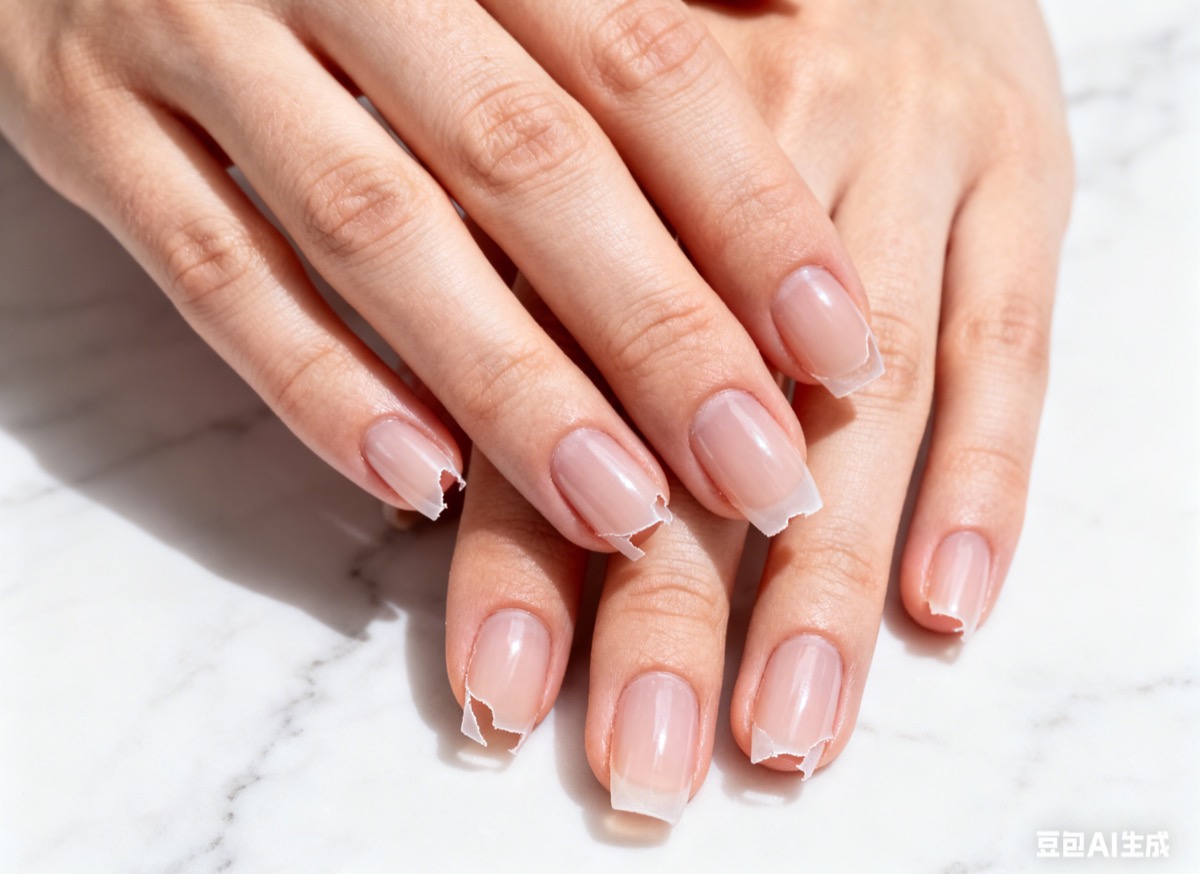
Builder gel cracking tells you what went wrong by where the crack is. A crack is not a failure of the product — it is a diagnostic message. The type of crack tells you what went wrong. Hairline surface cracks mean one thing. Free-edge cracks mean a completely different thing. Get the diagnosis right and the fix takes 5 minutes. Get it wrong and you will redo the same crack in two weeks.
This guide covers the four crack types I see most in client work and at-home practice, the root cause for each, and the salon-grade repair process for each — without full removal in most cases.
If your gel is also peeling, lifting, or feeling soft, the diagnostic is different — see builder gel lifting fixes or why builder gel is sticky.
Crack-Repair Toolkit
What I reach for during a crack repair
The standalone builder gels I refill specifically for spot-repair work — thin viscosity, fast cure, clean finish.

BTArtboxnails XCOATTIPS French Protecting DUO Builder Gel and Top Coat Set - Protect French Tips, No More Chipping
$15.99
Amazon price as of Oct 19, 2026

modelones Builder Nail Gel, 7-in-One Clear Builder for Nails, LED Lamp Cured Color Rubber Base Gel Polish Coat Strengthener Thickening Extension Rhinestone Glue in a Bottle for DIY Home Salon Gifts
$8.49
Amazon price as of Oct 19, 2026

IBD Hard Gel LED/UV Builder Gel – Clear, Nail Extension & Overlay Gels, Strong Acrylic Finish, Professional Quality, 2 oz, 1 Pack
$19.15
Amazon price as of Oct 19, 2026

Beetles Builder Gel for Nails,0.51 oz 8 in 1 Strengthening Nails Enhancement Building Apex for Beginners & DIY Salon Manicure,Clear Builder Nail Gel,LED & UV Lamp Needed,Gifts for Women
$6.18
Amazon price as of Oct 19, 2026
Scroll →
Product prices and availability are accurate as of Oct 19, 2026 and are subject to change.
The 60-Second Crack Diagnostic
Look at your nail in good light and answer these in order:
- Where is the crack?
- Surface only (visible from above) → Type 1 (Hairline Surface)
- At the free edge / tip → Type 2 (Free-Edge)
- Along the sidewall / cuticle → Type 3 (Sidewall)
- Across the apex / mid-nail → Type 4 (Apex/Stress)
- Does it go through to the natural nail?
- No → repair without removal usually works
- Yes → partial removal of the affected zone needed
- Are multiple nails cracking the same way?
- Same nail same way → isolated structural error
- Multiple nails same way → systemic prep, cure, or product issue
That diagnostic alone narrows the problem. Below: each crack type, what causes it, and how to fix it.
Type 1 — Hairline Surface Cracks
What it looks like: Fine, almost invisible cracks visible only at certain light angles. Often appear as a network rather than one line. The structure underneath is fine.
Root cause: Top coat or surface layer cured incorrectly — usually thermal stress from a heat spike during cure. Can also happen when builder gel was cured under a thin top coat that contracted differently as it set.
The fix without removal:
- Buff the surface lightly with a 220-grit file to flatten the cracked layer
- Wipe with alcohol, let dry
- Apply a fresh thin layer of top coat
- Cure 60 seconds LED, full duration
This works because Type 1 cracks are surface-only. The structural builder underneath is fine.
Prevention: Do not over-apply top coat. Two thin coats beats one thick coat. If your nails feel hot during cure, pause the lamp at 10-15 second intervals — heat spikes are a major cause of hairline cracking.
Type 2 — Free-Edge Cracks
What it looks like: A crack at the tip of the nail, often vertical (running back from the free edge toward the cuticle). Sometimes a chip rather than a crack.
Root cause: Length exceeds what your apex can structurally support. The free edge is the stress lever — every time you tap, type, or grab, the bend force concentrates there. If the apex is not strong enough, the free edge cracks first.
The fix without removal:
- File the cracked free edge back by 1-2mm — the goal is to remove all crack material
- Reshape the free edge to your preferred shape
- Cap with a small bead of fresh builder gel
- Cure
- File smooth, top coat
Prevention:
- Match length to product strength. Soak-off builder gels work for short to medium overlays. Long extensions need a firmer formula or a different system entirely.
- Cap the free edge every layer. The tip should be sealed with builder, not just polish.
- Build the apex over the stress point — about 1/3 of the way back from the free edge.
If the same finger keeps cracking at the free edge, you are over-extending that nail. Shorten it by 2-3mm permanently.
Type 3 — Sidewall Cracks
What it looks like: Crack running along the side of the nail, sometimes near the cuticle area.
Root cause: Almost always over-filing during the previous fill or shaping. The sidewall has been thinned to where it cannot resist normal flex. Less commonly, the issue is product flooding the sidewall during application — flooded gel has no structural integrity.
The fix without removal:
- File any flooded gel away — the sidewall should be smooth, not bumpy
- Apply fresh builder gel only to the sidewall area, not the full nail
- Cure
- Refile the sidewall to a clean curve
- Top coat
Prevention:
- Do not file the sidewall area aggressively — most refining should happen on the surface and free edge, not the sides
- Avoid flooding the sidewall during application — keep gel 0.5-1mm away from skin contact
- If you keep flooding, your bead is too large for the nail width
Type 4 — Apex / Stress-Point Cracks
What it looks like: Crack across the highest point of the nail, often horizontal across the apex. The most worrying type because it usually means the structural plan is wrong.
Root cause: Apex is in the wrong location, or apex is too thin. The "apex" is the highest point of the builder gel — it should sit just behind the stress point of the natural nail, which for most fingers is roughly 1/3 back from the free edge. If the apex is too far back (under the cuticle area), the free edge flexes too much and stress concentrates at the apex line. If too far forward, the cuticle area flexes.
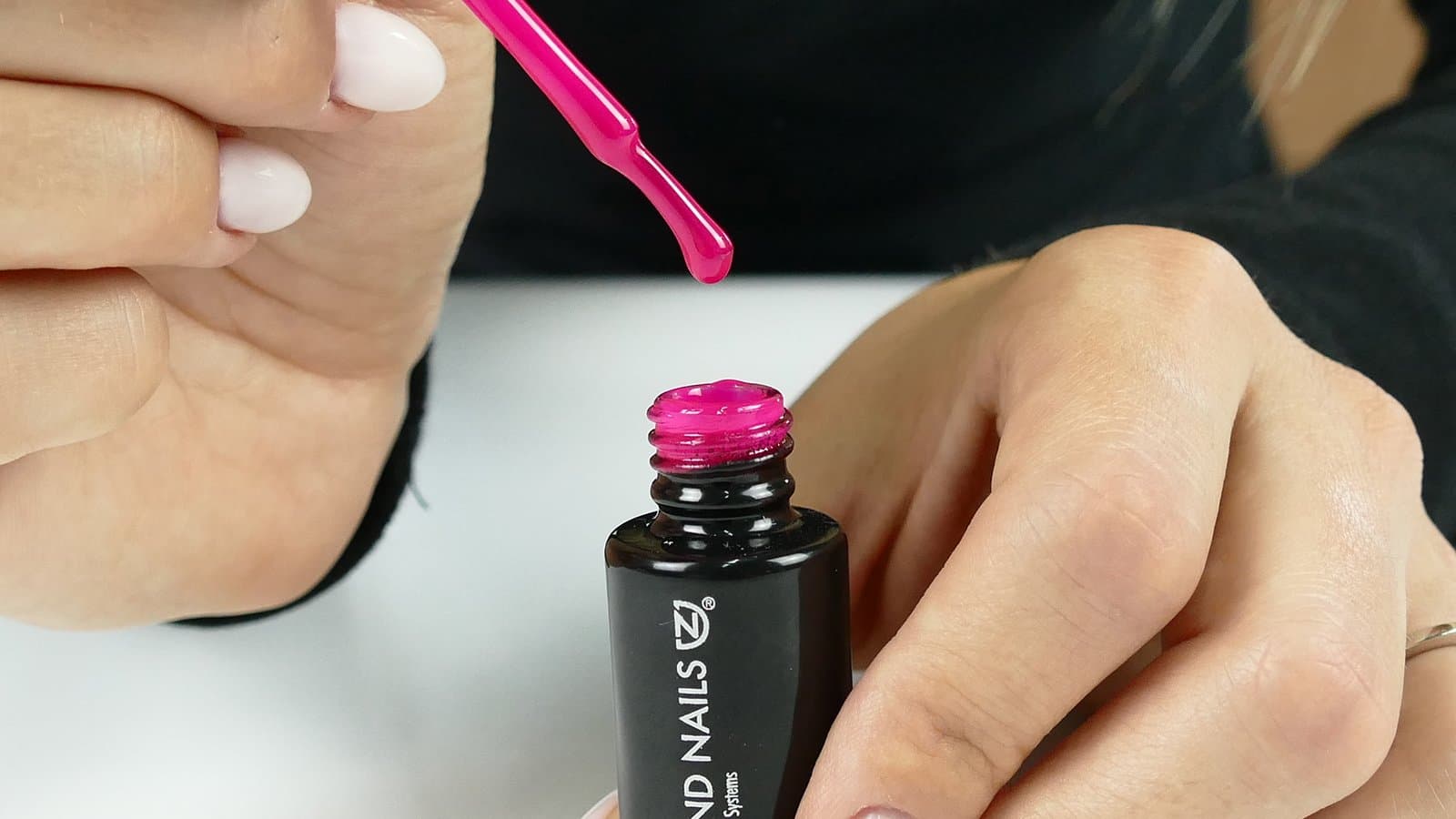
The fix: This one is harder to repair without partial removal. The structural error is built into the set.
- File down the cracked area to thin gel (do not go to natural nail)
- Rebuild the apex in the correct location with fresh builder gel
- Cure thoroughly — 90 seconds for thumbs, 60 for other fingers
- Refine the apex shape with file
- Top coat
If the crack goes through to the natural nail, do a partial removal of that nail and rebuild from scratch with proper apex placement.
Prevention: Watch the how to use builder gel guide for apex placement. Practice apex placement on a nail wheel or training hand before doing it live. Apex is the single most important structural element of a builder gel set.
The 3 Real Root Causes Behind Most Cracks
Across all four crack types, three underlying issues account for ~90% of cracking I see in client work:
1. Under-Cured Layers
Soft, partially-cured gel cracks under any flex. This is especially common on:
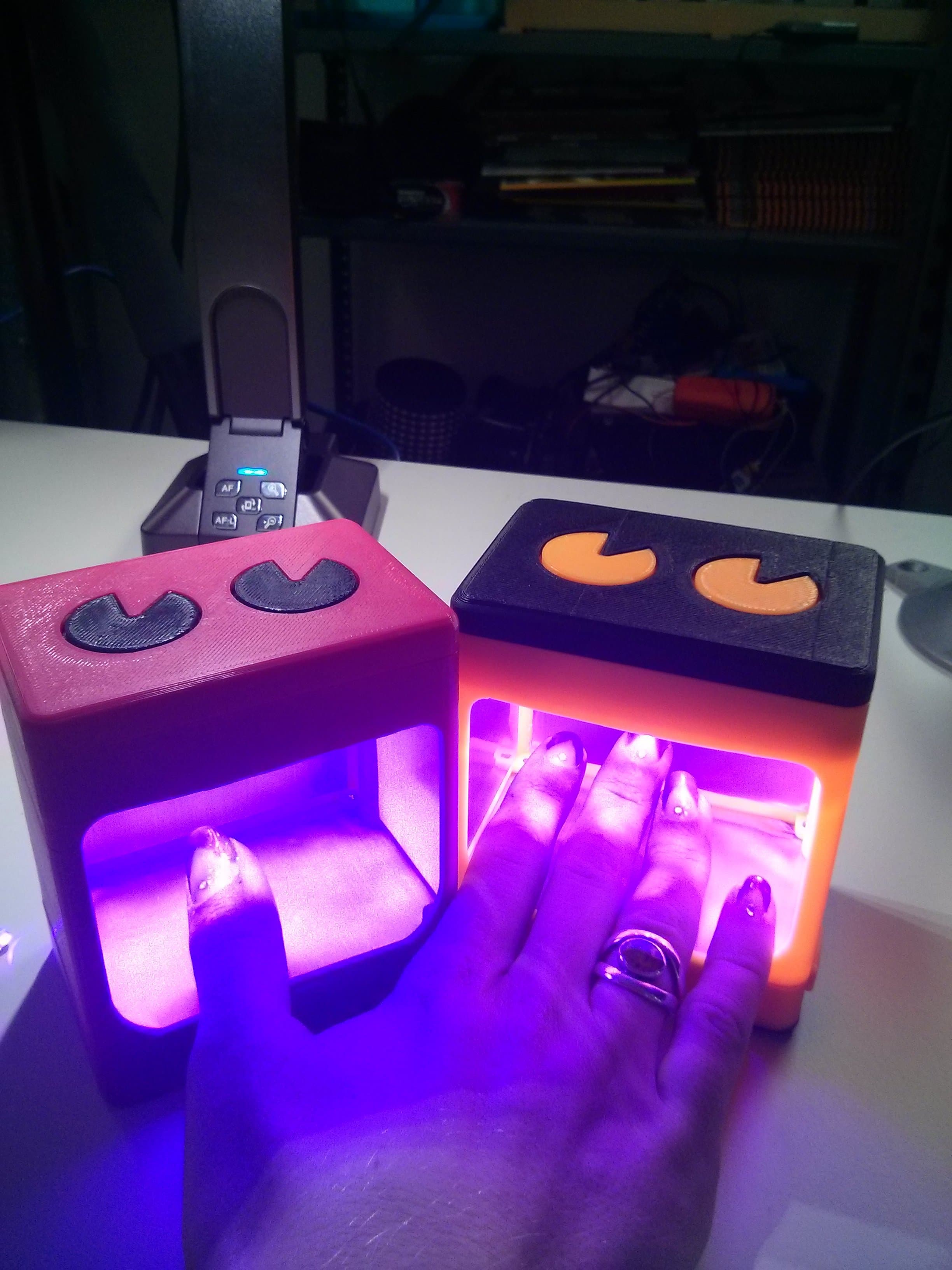
- Thumbs — they are at a different angle from the rest of the hand under the lamp, and they often under-cure on the side facing the lamp wall
- Long lengths — gel further from the LED bulb gets less photon dose
- Thick beads — bottom of the bead under-cures even when the top is hard
The fix: cure thumbs separately at 90-120 seconds. Use a 48W+ lamp. Build in thinner layers if you tend to over-bead.
2. Length Mismatched to Product
Soak-off builder gels are flexible by design. Flexible is great for nail health and overlays — bad for resisting bend at long lengths. If you are running 5mm+ past the free edge with a soft soak-off builder, cracks are coming.
The fix: either shorten the length by 2-3mm, or upgrade to a firmer formula like Light Elegance or Kokoist Excel Builder.
3. Apex in the Wrong Place
This is the technique error that compounds the other two. A correctly-placed apex distributes flex stress so the rest of the nail can be thinner. A misplaced or absent apex concentrates stress in the wrong spot, causing surface and free-edge cracks too.
Watch your nail in profile when you finish a set. The highest point should be just behind where you tap with your finger. If it is in the middle of the nail or under the cuticle, the apex is wrong.
Salon-Grade Rebuild Without Full Removal
When the crack is repairable without removal, here is the full process I use in chair:
- Diagnose the crack type (60 seconds with the diagnostic above)
- File the cracked material with a 180-220 grit file — remove all visible crack
- Wipe with alcohol to dehydrate the surface
- Apply a thin slip layer of fresh builder gel to bond old to new
- Flash cure 5-10 seconds (LED) to set the slip layer
- Build the structural fix — apex bead, free-edge cap, or sidewall fill depending on crack type
- Full cure 60-90 seconds LED
- Refine the shape with file
- Top coat and full cure
Total time: 8-12 minutes per nail. Sets up for another 2-3 weeks of wear if the original prep was good.
When to Do Full Removal Instead
Some sets are not worth saving. Full removal is the right call when:
- 3+ nails are cracking with the same root cause
- Cracks reach the natural nail on multiple fingers
- Apex is structurally wrong on most nails (rebuild from scratch is faster than 10 partial fixes)
- Lifting is also present (means prep failed; rebuild over fresh prep)
- Gel feels soft or rubbery anywhere (means systemic under-cure)
For removal, see how to remove builder gel or how to remove builder gel without a drill.
Read next
How to Remove Builder Gel at Home Safely: 3 Methods Compared (2026)
Three methods to remove builder gel — file-and-soak, file-only, and salon e-file — compared on time, safety, and nail-health impact. Plus a detailed step-by-step for the safest at-home method.
Continue readingLong-Term Prevention Strategy
Once you know your crack patterns, fix them at the source:
- If you crack at the free edge consistently → shorten by 2-3mm permanently or upgrade to a firmer gel
- If you crack on the surface → reduce top coat thickness, watch for heat spikes during cure
- If you crack on the sidewalls → stop over-filing the sides, keep gel application off the skin
- If you crack at the apex → practice apex placement on a wheel before your next live set
A correctly-built set should not crack. Cracking on the same nail repeatedly means the build pattern is wrong, not bad luck.
Frequently Asked Questions
Why is my builder gel cracking after just a few days? Almost always under-cure or apex placement, not product quality. Soft gel fractures under any normal flex. Try a 90-second cure on the next set and place the apex 1/3 back from the free edge.
Why are my builder gel nails cracking on the thumbs only? Thumbs cure differently in most LED lamps — they sit at a different angle from the other fingers. Cure thumbs separately at 90-120 seconds. The most common single fix for thumb-only cracking.
Hairline cracks in gel polish — what causes them? Heat stress during cure or top-coat over-application. Try thinner top coat layers and pause the lamp every 10-15 seconds if your nails feel hot.
Does top coat prevent cracking? No. Top coat seals the surface but does not add structural strength. Cracks come from inside the build, not the top.
Should I switch to a harder gel to stop cracking? Only if length is the issue. If apex placement is wrong, a harder gel will crack the same way — just slightly later. Fix technique before changing product.
Can builder gel be repaired without full removal? Yes — Type 1, 2, 3 cracks repair cleanly without removal in most cases. Type 4 (apex cracks) often need partial removal. The repair process above takes 8-12 minutes per nail.
Why does my builder gel keep cracking at the apex? Apex is too thin or in the wrong location. The apex should be the structural high point, just behind the free-edge stress point. If you can see light through the apex when held to a window, it is too thin.
A Note on Persistent Cracks and Nail Health
If cracks keep recurring on the same nails despite proper structure work, your natural nail underneath may have an underlying issue. The American Academy of Dermatology covers nail conditions — persistent fragility, splitting, or color changes can indicate medical issues worth a dermatologist visit.
Final Notes from Sara
Cracking is structural feedback. Read the crack, fix the structure. Do not just sand the crack and hope it stops.
The single highest-leverage habit for crack prevention is correct apex placement. Once you can build a proper apex, most cracks stop on their own. Once you cannot, no amount of premium gel saves you.
For the technique walkthrough, see the how to use builder gel guide. For the underlying foundation, the Builder Gel Nails pillar covers prep, cure, and aftercare for any structural manicure.
If your gel is also under-curing in addition to cracking, see builder gel not curing — under-cure compounds every other problem.
Last updated May 2026. This article uses AI assistance for research and structure; all crack diagnostics and repair processes come from my own client work.