Builder gel on full tips is a workflow that works perfectly for one type of tip and badly for another. The deciding factor is whether the tip is a soft-gel (Gel-X style) or a hard plastic (ABS press-on).
Editor Picks — Amazon
Top picks for builder gel on full tips
Curated from current Amazon ratings and review counts.

UNA GELLA Almond Nail Tips 216pcs Medium Almond Press on Nails Pre-shape Gel Fake Nails for Full Cover Acrylic French False Nails For Nail Extension, DIY Salon 12 Sizes Gelly Tips
$7.99
Amazon price as of Sep 30, 2026
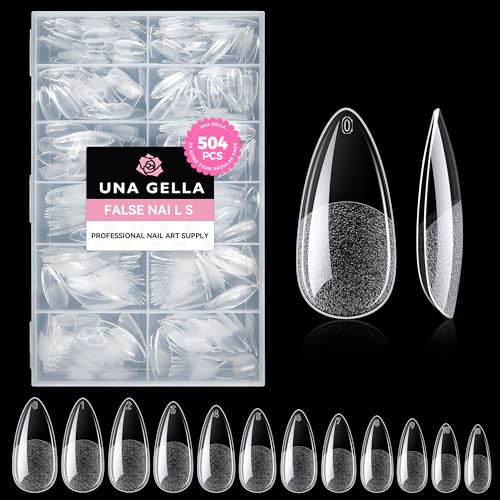
UNA GELLA Almond Gel Nail Tips, 504PCS Pre Etched Clear Fake Nails Tips Medium Almond Shape - 12 Sizes Full Cover Soft Acrylic Press On Nail Extensions No C Curve Gift for Diy at Home
$13.98
Amazon price as of Sep 30, 2026
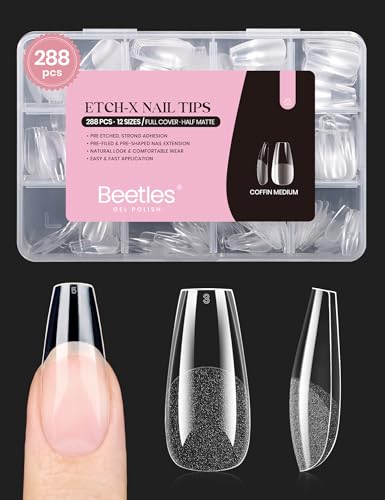
Beetles Soft Gel Nail Tips, Medium Coffin (288 pcs)
$9.99
Amazon price as of Sep 30, 2026

BTArtboxnails XCOATTIPS Gel Nail Kit - Short Squre French Tip Press on Nails Kit, Pink Soft Gel Nail Tips with Nail Gel, French Protecing Duo and Nail Lamp for Gift Home DIY
$43.99
Amazon price as of Sep 30, 2026
Scroll →
Product prices and availability are accurate as of Sep 30, 2026 and are subject to change.
A soft-gel tip is made of pre-cured gel — same chemistry family as builder gel. When you apply builder gel to the underside, the cured base of the tip fuses with the wet builder during the lamp cure, creating a structural bond as strong as a sculpted extension. Wear time: 14-21 days.
A plastic ABS tip is a different material. It is rigid, smooth, and chemically distinct from gel. Builder gel sits ON the plastic without bonding into it. The tip pops off in 2-5 days. For ABS press-on tips, you need cyanoacrylate nail glue, not builder gel.
This page is the workflow for each one — when builder gel is the right adhesive, when it is not, and the specific application order in each case.
How to Tell Which Kind of Tip You Have
Full-coverage tips come in two materials. Most kits make this clear on the package, but if yours did not:
- Soft-gel tips (Gel-X style): Slightly flexible when you bend them. The surface has a matte underside that looks slightly tacky. Translucent or milky white. Brand examples: Aprés Gel-X, BTartbox, Beetles Gel-X-style soft tips.
- Plastic ABS tips: Rigid. Glossy on both sides. Snap when you bend them past a small angle. Often opaque white or natural. Brand examples: Kiss press-on, Nailene full-coverage, drugstore "full nail tips."
If you can press a thumbnail into the tip and leave a slight mark, it is a soft gel. If it stays glossy and unmarked, it is plastic.
Use builder gel only with soft-gel tips. Use cyanoacrylate nail glue with plastic ABS tips. This is the entire decision.
When Builder Gel on Full Tips Is the Right Workflow
The combination of builder gel plus soft-gel full tips is what salons call Gel-X. The workflow:
- Prep the natural nail (push cuticles, buff to dull, dehydrate, primer)
- Size each tip to the natural nail. Most kits have 12 sizes; you want a tip that exactly matches the side-wall width.
- Apply a thin layer of builder gel (or a dedicated "extend gel") to the underside of the soft-gel tip
- Place the tip onto the natural nail at the cuticle line. Press down and forward to push the gel into a thin even layer.
- Flash-cure 5 seconds with the tip still pressed
- Full-cure 60 seconds in a 48W+ LED lamp
- File the tip down to your desired length and shape
- Apply an additional thin builder gel coat over the entire nail-plus-tip surface for structural reinforcement
- Cure that coat fully
- Top coat and cure
The bond from step 6 is the structural one — that is what holds the tip on for 14-21 days. The reinforcement coat in steps 8-9 is what blends the visible seam between natural nail and tip, and reinforces the apex of the joined structure.
If you specifically want to know how Gel-X compares to other builder-gel applications, the builder gel vs Gel-X comparison covers the broader landscape.
Read next
Builder Gel vs Gel-X in 2026: 6 Use Cases Where One Beats the Other
Builder gel vs Gel-X — six use cases where one clearly beats the other, plus the cost-per-year math, removal trade-offs, and when to use both together.
Continue readingThe Best Builder Gels for Soft-Gel Full Tips
Three Amazon-stocked options that pair specifically well with soft-gel tips. The key property is viscosity — too thin and the gel runs out from under the tip during placement; too thick and you can't get a clean even layer.
The dedicated Gel-X kit from Aprés (the brand that invented this category) ships with both the tips and the extend gel formulated for them:
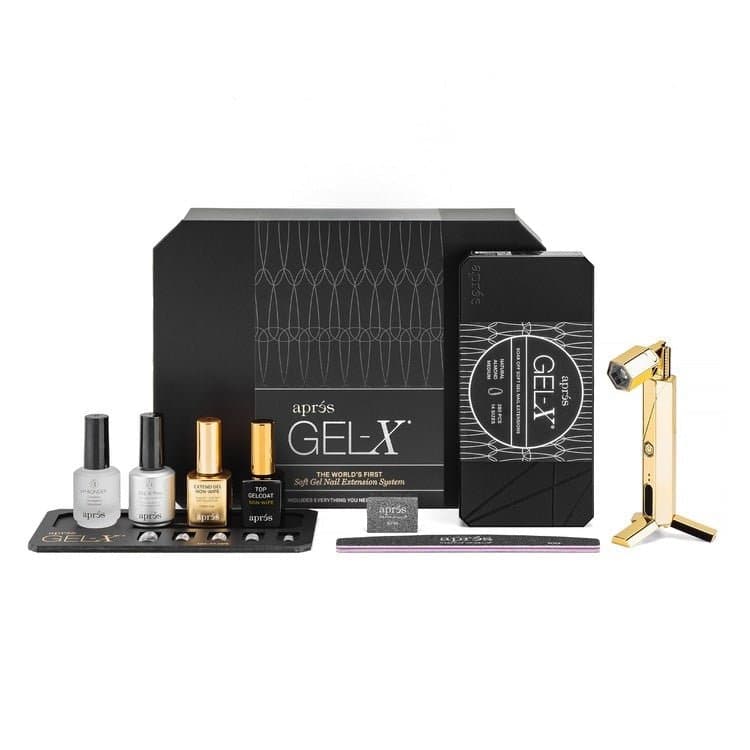
Aprés Gel-X Signature Kit
$50–$120
Also on Amazon
Beetles Hard Gel for Nails Kit (3 Colors)
$29.99★ 4.4
If you already have your own soft-gel tips and just need a builder gel to attach them, the Beetles 3-piece 15ml builder is the best Amazon-available option for this workflow — viscosity is in the right zone for tip attachment:

Beetles 3-Piece 15ml Builder Nail Gel Set
$11.79
Amazon price as of Sep 30, 2026
For a HEMA-free workflow (if you have sensitivity), the Beetles HEMA-free 8-in-1 also bonds soft-gel tips adequately, though with a slightly shorter wear time:

Beetles Builder Gel Nails Kit HEMA-Free 8-in-1
$21.99
Amazon price as of Sep 30, 2026
Why Builder Gel on Plastic Full Tips Fails
If you have ever applied builder gel to a plastic ABS press-on tip and watched it pop off after a few days, here is why:
The bond between cured builder gel and plastic ABS is a mechanical bond — the cured gel essentially clamps around the plastic but does not chemically fuse with it. ABS is non-reactive under UV/LED light. The cure does nothing to the plastic side of the bond.
Once you wear the tip and the natural nail flexes under daily use, the mechanical clamp loosens. By day 3-5 the tip starts to separate at the apex. By day 7 it usually pops off entirely.
This is not a bad-quality builder gel issue. Even the best builder gel on Amazon will fail on plastic ABS. The chemistry simply does not fuse.
If you want plastic press-on tips to last longer, use cyanoacrylate nail glue (like Kiss Glue Brush-On). Cyanoacrylate has a different mechanism — it polymerizes through micro-pores in both the plastic and the natural nail, creating a bond that does not depend on chemical fusion. The wear time on cyanoacrylate-attached plastic tips: 5-10 days.
For more on this comparison see can you use builder gel as nail glue.
Read next
Can You Use Builder Gel as Nail Glue? The Definitive Answer (2026)
Yes, builder gel can be used to attach nail tips — and in some cases it's better than traditional nail glue. Here's exactly when to use which, with the application differences between the two.
Continue readingCommon Mistakes With Builder Gel on Soft-Gel Tips
Even with the right materials, the workflow has 3-4 places where home users go wrong.
1. Tip not sized correctly. A tip that is slightly too narrow leaves a side-wall gap that fills with builder gel — and lifts in 3-5 days because the side-wall is the highest stress zone. Size for the widest natural-nail measurement, then file the tip narrower if needed. Never size narrower and try to fill the gap with gel.
2. Too much builder gel under the tip. Excess gel squeezes out around the edges of the tip during placement and floods the cuticle area. The cured overflow at the cuticle is where lifting starts. Use less gel — about a lentil-sized drop per tip, not a pea.
3. Skipping the reinforcement coat (steps 8-9). Many home tutorials end at "place tip, cure, top coat." That works visually but the bond is fragile because the seam between natural nail and tip has not been reinforced. The seam is the weakest point and the first place that fails. Always do a full-overlay reinforcement coat across the entire nail surface after the tip is placed.
4. Curing under an underpowered lamp. Soft-gel tips block more UV than they look like they should. A 36W lamp at 60 seconds will give you a soft-cure on the underside of the tip and a hard-cure on top. The soft underside is where the bond is — the bond will be weaker than it should be. Use a 48W+ LED lamp and cure for the FULL recommended time.
Removing Builder Gel + Soft-Gel Tips
Soft-gel tips attached with builder gel are removable by soaking off, the same as any builder gel set. The total soak time is slightly longer because the tip itself contributes additional gel mass.
The standard removal:
- File the top coat off
- File the tips to a shorter length first (optional but speeds removal)
- Acetone-soaked cotton + foil wrap
- Wait 25-35 minutes (longer than a plain builder gel overlay)
- Push the softened tips off gently with a wooden pusher
Do not pry the tips off when they are still firm. Wait until they slide off with light pressure.
For the full removal protocol, see builder gel remover and how to remove builder gel.
Read next
Builder Gel Remover: Acetone, Foils, Drill Bits, and Solvent-Free — What Actually Works in 2026
A builder gel remover is one of three things — a solvent (acetone), a mechanical tool (drill or file), or a wrap system. Here is which one to use, when, and why each one ruins or saves your natural nail.
Continue readingHow Wear Time Differs vs Sculpted Builder Gel Extensions
Three workflows to compare:
| Workflow | Wear time | Setup time | Skill required |
|---|---|---|---|
| Builder gel overlay (natural nail) | 21-28 days | 25-45 min | Low |
| Builder gel + soft-gel full tips | 14-21 days | 35-60 min | Medium |
| Sculpted builder gel extension on nail form | 21-28 days | 50-90 min | High |
Full tips give you a shortcut to length without the sculpting skill required for nail forms — but they wear slightly less than a sculpted extension because the bond between natural nail and tip is a seam, and seams are stress points.
Sculpted extensions on nail forms are seamless (the gel itself becomes the free edge). They wear longer but require more practice. For most home users, the soft-gel tip workflow is the right starting point for adding length.
If you want the sculpted-extension workflow instead, see nail forms for builder gel.
Read next
Nail Forms for Builder Gel: Paper vs Dual Forms vs Tip Forms (2026 Guide)
Three nail form types for builder gel — paper forms, dual forms, and tip forms. When each one fits, the application difference, and which forms beginners should start with.
Continue readingSafety Note on Tips and Cumulative Exposure
Doing tip-based sets back to back means more frequent removal cycles, which means more acetone exposure on the surrounding skin and more cumulative methacrylate exposure during application.
If you have ever had a sensitivity reaction to nail products, or are doing weekly tip changes, the American Academy of Dermatology's acrylate allergy page is worth reading. The risk is cumulative, not single-exposure.
Rest your natural nails 7-10 days between sets if you are doing 12+ tip cycles per year. The natural nail plate's ability to recover from buffing and acetone exposure compounds across cycles.
The Seam Trick That Makes a Full Tip Look Sculpted
The giveaway of a tip set is the step where the tip meets the natural nail — a visible ridge, or a shadow line under clear gel. On soft-gel full tips this is easy to erase, and the fix is where the builder earns its place.
After the tip is cured on, take a 180-grit file and knock the shine off the seam only, angling the file so you thin the tip's edge toward the cuticle rather than gouging the natural nail. Then, instead of building your apex bead in the usual place, place a slightly smaller bead directly over the seam and let it self-level in both directions before you move it back toward the apex. The gel fills the step, and the cured surface reads as one continuous nail. Flash-cure that bridge for ten seconds before you build the rest of the structure, or the extra weight over the seam will slump toward the cuticle.
I started doing this on every soft-tip set in 2025 after a client asked why her salon tips looked "glued on" and mine did not. The difference is entirely that one bridging bead. It adds about ninety seconds per hand and it is the single biggest upgrade to a full-tip set that most tutorials leave out.
Where Builder Gel on Full Tips Sits in the Bigger Picture
The "builder gel on full tips" workflow is one of three ways to add length:
- Soft-gel full tips (this page)
- Sculpted gel on nail forms (different page — nail forms for builder gel)
- Acrylic-based plastic tips (use cyanoacrylate glue, not builder gel)
For most home users, soft-gel tips are the right choice for adding length without the steep learning curve of sculpting. Builder gel is the right adhesive for soft-gel tips specifically.
For the broader picture of which length-adding workflow fits your situation, the Builder Gel Atlas pillar walks through each one.
Back to the homepage: BuilderGelNails.com.
Last updated September 2026. This article uses AI assistance for research and structure; the workflow comparisons reflect my own salon work and at-home testing across both tip types.