A builder gel remover is whatever you use to take off builder gel without damaging the natural nail underneath. That sounds simple. It is not. There are three completely different categories of remover, and using the wrong one is how most home users wreck their nails.
This page covers the categories, the products inside each one, what kind of builder gel each works on, and the failure modes. By the end you will know exactly which remover to buy for your specific gel.
The Three Remover Categories
1. Solvent removers (acetone-based). Work by chemically dissolving the gel matrix. Used with cotton balls and foil wraps. The standard for soak-off builder gels.
2. Mechanical removers (drill bits and files). Work by abrasion. Used on hard gels (which do not soak off) and for top-layer reduction before a soak.
3. Wrap kits and patches. Pre-formed foil/cotton combos that simplify the solvent method. Same chemistry as #1, faster setup.
The first thing to know about your own builder gel: is it soak-off or file-off? Most modern Amazon-sold builder gels (Modelones, Beetles, SAVILAND, Mia Secret, OPI GELement) are soak-off. Hard gels (Beetles Hard Gel, Light Elegance, Kokoist Excel hard variants) are file-off. The remover you need depends entirely on which one you have.
If your bottle says "soak-off," use solvent. If it says "hard gel" or "no soak-off," use mechanical. If it says nothing, test by soaking one nail for 15 minutes in acetone — if it lifts at the edges, you have a soak-off.
Category 1 — The Acetone Solvent Method
This is the standard for 90% of builder gels sold on Amazon. The process:
- File the top coat off with a 100-grit file. This breaks the seal so acetone can penetrate.
- Saturate a cotton ball with 100% acetone (not 80% acetone polish remover — the water content slows the soak).
- Place the cotton on the nail.
- Wrap with aluminum foil to trap heat.
- Wait 15-25 minutes.
- Push the gel off gently with a wooden pusher. Do not scrape with metal.
The product you need is 100% acetone plus aluminum foil plus cotton balls. You can buy all three at any drugstore for under $10 combined, or buy a pre-made wrap kit.
Why 100% Acetone, Not Standard Polish Remover
Standard nail polish remover is 70-80% acetone with conditioners and water. The water content reduces solvency, which means soak time goes from 20 minutes to 40+ minutes. Conditioners are great for skin but they slow the dissolve.
If your local drugstore does not stock 100% acetone, look for "professional" or "salon grade" — these are usually 100%.
Why Foil Wraps Matter
Acetone evaporates rapidly. Without a wrap, your cotton ball dries out in 5 minutes and the soak stalls. The foil traps both the solvent and your body heat — and the heat is half of what speeds the soak.
If you have ever tried soaking your fingers in a bowl of acetone instead of using wraps, you noticed two things: it takes 35-40 minutes instead of 20, and your skin dries out severely. Wraps are faster AND safer.
Category 2 — The Mechanical (E-File / Drill) Method
For hard gels that do not soak off. Also useful for reducing the top layer of a soak-off gel BEFORE you wrap it, which cuts total time from 25 minutes to 12-15 minutes.
You need a nail e-file with a fine-grit drill bit. Coarse bits will burn the natural nail; only use fine carbide or ceramic bits at low RPM for removal work.
The standard approach:
- File the top layer off with a coarse 100-grit hand file first.
- Use the e-file at low RPM (15,000-20,000) to thin the remaining gel.
- Leave a paper-thin layer of gel on the natural nail — DO NOT drill down to the natural nail.
- Soak the paper-thin remainder off with acetone wraps (15-20 minutes).
The reason you leave the thin layer is that the e-file cannot distinguish between gel and natural nail. Going all the way through with the drill is how most home users thin their natural nails.
If you want an all-in-one kit that includes both the gel AND the e-file (for the rare cases you need it), the SAVILAND builder kit ships with the drill included:

SAVILAND Builder Gel Kit with Nail Drill
$29.99
Amazon price as of Sep 30, 2026
For hard gel specifically, the file-off-only nature means you cannot avoid the drill. The Beetles Hard Gel kit and the SAVILAND hard gel kit are both file-off systems:
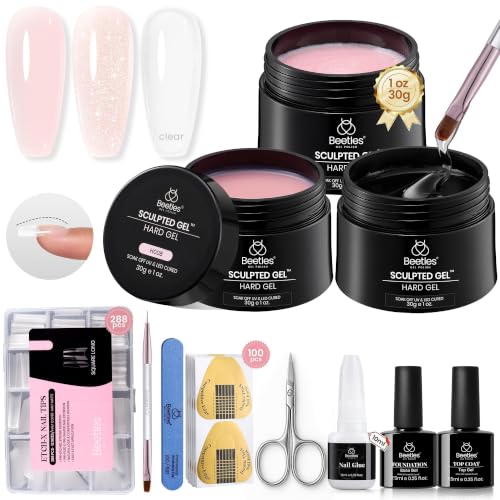
Beetles Hard Gel for Nails Kit (3 Colors)
$29.99
Amazon price as of Sep 30, 2026

SAVILAND Builder Nail Gel Kit (VE Castor Oil)
$37.99
Amazon price as of Sep 30, 2026
For the full coverage on drill-free removal (when you do not own an e-file), see how to remove builder gel without a drill.
Read next
How to Remove Builder Gel Without a Drill: The Complete File-and-Soak Method (2026)
You don't need a nail drill to remove builder gel safely at home. The file-and-soak method works with a simple hand file — and it's actually gentler on your natural nails than e-file removal in unskilled hands.
Continue readingCategory 3 — Pre-Made Wrap Kits and Patches
These are the path-of-least-resistance category for casual home users.
A pre-made wrap kit ships with foil-backed cotton pads pre-saturated with acetone (or with separate dry pads + a bottle). You peel the backing, wrap the nail, wait 20 minutes.
Pros:
- 30-second setup vs 5 minutes of cutting foil and saturating cotton
- Less acetone waste — no overflow drying out
- Travels well — single-use pads in a packet
Cons:
- Cost-per-set is 3-4x DIY acetone + foil + cotton
- Some kits ship with weak acetone (75-90%) — read the label
- One-use only — cannot be re-saturated
For people who remove gel only once every 2-4 weeks, the convenience is worth it. For people who change sets weekly, DIY acetone + foil + cotton is dramatically cheaper.
Choosing the Right Remover for Your Specific Gel
| Your gel type | Remover to buy | Time per set |
|---|---|---|
| Modelones / Beetles / SAVILAND soak-off | 100% acetone + foil + cotton | 20-25 min |
| OPI GELement | 100% acetone + foil + cotton | 20-25 min |
| Mia Secret Formagel | 100% acetone + foil + cotton | 20-25 min |
| The GelBottle BIAB™ | 100% acetone + foil + cotton | 25-30 min |
| Aprés Gel-X | 100% acetone + foil + cotton (longer wait — 30-35 min) | 30-35 min |
| Beetles Hard Gel | E-file with fine bit (file-off only) | 25-35 min |
| Light Elegance hard variants | E-file with fine bit | 25-35 min |
| Kokoist hard variants | E-file with fine bit | 25-35 min |
| Polygel | E-file recommended; acetone slow | 30-40 min |
If you do not yet own a builder gel and are choosing one, prefer the soak-off systems for ease of removal. The Modelones 3-piece clear builder is the easiest soak-off on Amazon, in my testing — average wrap time about 18 minutes vs 22-25 for most competitors.
Editor's Easiest-Removal Picks
Soak-off builder gels with the fastest dissolve
Three Amazon builder gels with above-average soak-off times in my testing. All work with the standard foil-wrap method.

MelodySusie Pen-Shaped Portable Nail Drill with AC Adapter, PC120B 20000RPM Electric File with Compact Design for All Nail Care, Manicure Polishing, Shaping & Gel Removal at Home for Beginners
$14.99
Amazon price as of Sep 30, 2026

Sally Hansen Instant Cuticle Remover™, Nail Treatment, Fast Drying, Contains Aloe and Chamomile
$4.52
Amazon price as of Sep 30, 2026

Cutex Gel Nail Polish Remover, Ultra-Powerful & Removes Glitter and Dark Colored Paints, Paraben Free, 6.76 Fl Oz
$2.79
Amazon price as of Sep 30, 2026

Pronto Quick Peel Off Gel Nail Polish Remover - Fast Acting, No Soaking, Salon Quality for Nail Glue & Polish Removal - Easy, Peel Off Magic in 3-5 Minutes, Friendly Formula for Salon-Quality Results
$9.99
Amazon price as of Sep 30, 2026
Scroll →
Product prices and availability are accurate as of Sep 30, 2026 and are subject to change.
What to Avoid
Peeling builder gel off. The most common natural-nail damage I see in clients comes from peeling gel off when it gets loose. The gel takes a layer of nail plate with it. Always soak off — never peel.
Cuticle nippers as remover. Picking gel off with metal tools scrapes the natural nail. Wooden pushers only.
Acetone soak in a bowl. Slow, dries the skin badly, and the alcohol vapor concentration in a shallow bowl is uncomfortable to breathe. Wraps are dramatically better.
Heating acetone in a microwave or hot water bath. Acetone is flammable and the vapor is significantly worse when warm. Body heat from foil wraps is enough.
Polish remover labeled "non-acetone." Won't work. The active solvent there is ethyl acetate, which dissolves regular polish but not cured gel.
How Often Should You Remove and Re-Apply
There is a question I get often: "Should I remove builder gel every 2 weeks and re-apply, or fill in?"
For most home users, every 3-4 weeks is the right cadence — remove fully, re-prep, re-apply. Fills (where you apply new builder gel over a growing-out set) require more skill than the initial application and the boundary between old and new gel is a frequent lift point.
If you are doing weekly removes, you will damage your nail bed over time. The cumulative chemical exposure to acetone, plus repeated buffing, plus the natural plate's slow recovery from each cycle — that compounds. Most pros recommend a 7-10 day natural-nail rest between removal and re-application every 3-4 cycles.
The AAD covers cumulative chemical exposure and acrylate sensitivity in their resource on contact allergy from acrylates, which is worth reading if you are doing 12+ removes per year.
The "Builder Gel Remover" Product Category — What's Actually Sold Under That Label
Search "builder gel remover" on Amazon and you get five product categories:
- 100% acetone bottles — straight solvent. The base ingredient. $5-10 for 16oz.
- Wrap kits — pre-cut foils + cotton pads + acetone in one box. $10-15 for 10-20 wraps.
- Plastic clip-on caps — reusable plastic finger caps that hold acetone-soaked cotton against the nail without foil. $8-12 for 10 caps. Reusable.
- "Gel remover liquid" that claims to dissolve gel without acetone. Almost universally underperforming. The chemistry that dissolves cured methacrylate is acetone. Non-acetone "remover liquids" are a marketing category, not a chemistry one.
- E-files (electric nail drills) — for mechanical removal. $30-80 for entry-level.
If you are buying remover for the first time, start with #1 (a bottle of 100% acetone) plus standard household foil and cotton balls. You will spend $8 and get 40+ removes out of it. Upgrade to #3 (clip-on caps) if you remove weekly and the foil setup feels tedious.
Removing Different Layers — Top Coat vs Builder vs Base
A full builder gel set has three layers: base/slip, builder apex, top coat. They do not soak at the same rate.
- Top coat: Cures hardest. File off mechanically before starting the soak (this is what breaks the seal).
- Builder apex: Soaks in 15-25 minutes with a foil wrap.
- Base/slip layer: Soaks last, the thinnest layer, often comes off with the apex once that releases.
If your builder is not soaking off after 25 minutes, the most common cause is that the top coat seal was not broken cleanly. File MORE before starting the soak — a fully-filed top coat dramatically speeds the soak underneath.
Quick FAQ
Can you use nail polish remover to remove builder gel? Only if the polish remover is 100% acetone. Standard polish remover (70-80% acetone + conditioners + water) will work but takes nearly 2x as long. Non-acetone remover (ethyl acetate-based) will not work at all.
Is there a builder gel remover without acetone? Not really. The chemistry that dissolves cured methacrylate is acetone or another ketone solvent. Products marketed as "acetone-free gel remover" generally use ethyl acetate, which is effective on regular polish but inadequate for cured gel. For acetone-free removal, your option is mechanical (e-file).
How long does builder gel remover take? With 100% acetone and foil wraps, 20-25 minutes for a soak-off builder. With pre-made wrap kits, similar — the chemistry is the same. With an e-file, 5-12 minutes per hand for mechanical removal (without soak).
Will builder gel remover damage my nails? Acetone dries the natural nail and surrounding skin. It does not permanently damage the nail when used correctly (under 30 minutes, every 2-4 weeks). Damage comes from repeated weekly removal, peeling instead of soaking, or scraping with metal tools.
Can I make builder gel remover at home? The "homemade gel remover" recipes online generally combine acetone with a few drops of oil to reduce skin drying. This is fine but it does not add removal speed — it is just acetone with skin protection. You can equally well use plain acetone and apply cuticle oil after the soak.
Where to Go Next
If you are setting up to remove your first set, the step-by-step process is at how to remove builder gel — the same chemistry covered here, in execution order.
If you want to avoid removal altogether by extending wear time, see builder gel lifting fixes for the prep changes that get most sets to 21-28 days.
For the broader product landscape and which builder gels are easiest to remove out of the box, the Builder Gel Atlas pillar has the full comparison.
Read next
How to Remove Builder Gel at Home Safely: 3 Methods Compared (2026)
Three methods to remove builder gel — file-and-soak, file-only, and salon e-file — compared on time, safety, and nail-health impact. Plus a detailed step-by-step for the safest at-home method.
Continue readingRead next
Builder Gel Lifting? When It Lifts Tells You Why It's Lifting (2026)
When your builder gel lifts tells you exactly what went wrong. Day 1-3 means prep failed. Day 4-7 means cure failed. Day 8+ usually means impact or natural regrowth.
Continue readingLast updated May 2026. This article uses AI assistance for research and structure; remover comparisons reflect my own salon work and at-home testing.