If you want to know how to soak off builder gel at home without an e-file, drill, or salon visit, this is the exact method I teach DIY clients — the same protocol that takes me 35 minutes start to finish and leaves natural nails intact. It works for any soak-off builder gel (Modelones, Beetles, Olive & June, BIAB, Gelish Structure, OPI). It does NOT work for hard gels or polygel; those need an e-file regardless. Confirm your product label says "soak-off" before you start.
Editor Picks — Amazon
Top picks for how to soak off builder gel at home
Curated from current Amazon ratings and review counts.

Cutex Gel Nail Polish Remover, Ultra-Powerful & Removes Glitter and Dark Colored Paints, Paraben Free, 6.76 Fl Oz
$2.79
Amazon price as of Oct 19, 2026

Pronto 100% Acetone Gel Nail Polish Remover - Gel Polish Remover for Nails | Acetone Nail Polish Remover For Nails for Removal of Glue, Gel, Acrylic & Dip | Gel Polish Remover, 8 Fl oz
$8.99
Amazon price as of Oct 19, 2026

Teenitor Nail Polish Gel Remover Tools Kit with Nail Clips Nail Remover Pads Cuticle Pusher Nail Brushes Nail File Grits 120/180 Buffer Block Grits 400/4000, 6 Pack Purple
$6.64
Amazon price as of Oct 19, 2026
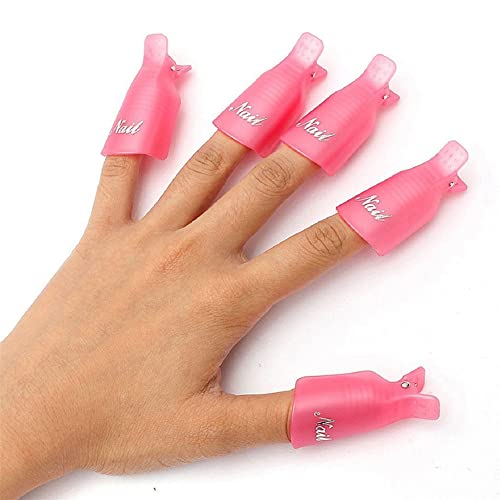
HiMo 10PC Plastic Acrylic Nail Art Soak Off Cap Clip UV Gel Polish Remover Wrap Tool (Pink)
$4.99
Amazon price as of Oct 19, 2026
Scroll →
Product prices and availability are accurate as of Oct 19, 2026 and are subject to change.
The number one mistake people make: peeling. Peeling builder gel rips off the top layer of your nail plate with it. One peel and your nail is paper-thin for the next 4-6 months while it grows out. Acetone soaking, done right, removes the product without that damage.
What You Need Before You Start
Gather everything before you begin — once your nails are wrapped, you cannot exactly run to the store.
- Pure acetone (100% — not "nail polish remover" which is diluted). A 16 oz bottle is plenty for several removals. Drugstore brand is fine.
- Aluminum foil — kitchen foil cut into 10 squares roughly 3" x 3"
- Cotton balls or cotton pads — 10 cotton balls work, or 5 pads cut in half
- 100/180 grit nail file — for breaking the top seal
- 220-grit buffer — for the final smoothing
- Cuticle oil — jojoba, almond, or specialty cuticle oil
- Hand cream — your hands will be dry from the acetone
Optional but recommended:
- Petroleum jelly or thick balm — to protect cuticles and skin from the acetone
- Rubber finger cots or thin gloves — speed the soak by trapping heat
- A timer — phone alarm works
Step 1 — File the Top Seal (3 minutes)
The first job is breaking through the glossy top coat so acetone can penetrate. Without this step, you can soak for two hours and nothing will happen — top coats are designed to resist solvents.
Use the rough side of your 100/180 file in long strokes across the entire nail surface. You're looking for a uniform matte finish — no shiny patches left. File until the surface looks dull but you can still see the gel color underneath. Do NOT file all the way through to the natural nail. Three to five passes per nail is plenty.
If you have a thick set (sculpted extension, full build), file off the bulk of the gel first. The thinner the remaining gel layer, the faster acetone can dissolve it. For thick sets, I'll often spend 8-10 minutes filing down before soaking begins.
Step 2 — Protect Your Skin (2 minutes)
Acetone is harsh on skin and cuticles. Smear a thin layer of petroleum jelly or thick balm around the cuticle line and the surrounding skin of each finger. Don't get it on the nail surface itself — that blocks acetone from working. Just the skin perimeter.
This step prevents the white, dehydrated, painfully dry finger pads that plague people who skip it.
Step 3 — Saturate the Cotton, Wrap the Foil (5 minutes)
For each nail:
- Soak a cotton ball or pad in pure acetone until it's dripping but not pooling
- Press it directly onto the filed nail surface
- Wrap a square of aluminum foil tightly around the fingertip — the foil's job is to hold the cotton in place AND trap heat (acetone works faster warm)
- Crimp the foil edges so the cotton stays pressed against the nail
Do all ten fingers this way. Some people do five at a time per hand to keep one hand free, but it's faster and more even to do all ten at once and use your phone hands-free.
If you have a heating pad or a warm towel, lay your hands on it during the soak. The reaction rate roughly doubles for every 10°C of warming, so a warmed soak takes 15-20 minutes instead of 25-30.
Step 4 — Wait 20 to 30 Minutes
Set a timer for 20 minutes. Most soak-off builder gels (Modelones, Beetles, generic Amazon brands) are fully dissolved in 20-25 minutes. Premium brushy formulas (BIAB, Gelish Structure) sometimes need 30 minutes because they're more crosslinked.
Resist the urge to peek at 10 minutes. Every time you unwrap and check, you lose acetone (evaporation) and heat. If you must check at 15 minutes, only unwrap one finger — leave the other nine sealed.
What you're waiting for: the gel should look soft, lifted, and gooey when you finally unwrap. If it looks the same as when you wrapped it, file more aggressively next time (Step 1 wasn't deep enough).
Step 5 — Push Off, Don't Scrape (5 minutes)
Unwrap one finger. The gel should look like wet clay. Use a wooden orange stick or a metal cuticle pusher (gently) to push the softened gel off the nail in one direction — from cuticle toward tip. It should come off in soft sheets or curls.
If it doesn't push off easily, REWRAP THAT FINGER for another 5-10 minutes. Do not force it. Forcing it is when you damage your nail plate.
Work one finger at a time. By the time you get to the tenth finger, the first finger's acetone has fully evaporated, but the gel was already removed — you're good.
Step 6 — Buff, Oil, Rehydrate (5 minutes)
After all ten nails are clean, your natural nail will look matte and slightly rough. That's the keratin surface — totally normal.
- Buff lightly with a 220-grit buffer to smooth the surface — 3-4 passes per nail max. Over-buffing thins your natural nail.
- Wash hands with soap to remove acetone residue
- Apply cuticle oil to each nail and the surrounding skin — let it absorb 2-3 minutes
- Apply hand cream over the top
Your nails will feel dry for 24-48 hours. That's the acetone. The fix is more cuticle oil — at least twice daily for the next 3 days. By day 4 your nails should feel normal again.
How Long Does It Really Take?
Total time, soup to nuts:
- Filing: 3 minutes (8-10 for thick sets)
- Skin prep: 2 minutes
- Wrapping: 5 minutes
- Soaking: 20-30 minutes
- Push-off: 5 minutes
- Buff + oil: 5 minutes
Total: 40-55 minutes for the whole removal. The 35-minute claim in the title is achievable if you're efficient with a warmed soak. Plan for 50 minutes on your first try and you'll be fine.
For the comparison method using an e-file, see my builder gel remover guide and the broader how to remove builder gel without drill walkthrough.
Read next
How to Remove Builder Gel Without a Drill: The Complete File-and-Soak Method (2026)
You don't need a nail drill to remove builder gel safely at home. The file-and-soak method works with a simple hand file — and it's actually gentler on your natural nails than e-file removal in unskilled hands.
Continue readingWhat If the Gel Won't Come Off?
If after 30 minutes the gel still looks hard and won't push off, one of these is wrong:
- You didn't file the top coat enough — rewrap for 15 more minutes after additional filing
- Your acetone is old or contaminated — 100% acetone goes off if left open. Buy fresh.
- It's not actually soak-off — some hard gels are sold mislabeled. If you bought a "polygel" or "hard gel" formula, soaking won't work. You need an e-file.
- The acetone is too cold — warm the cotton in your hands for 30 seconds before applying
A Soak-Off Removal Tool Recommendation
If you do this regularly, a pre-cut soak-off cap system saves time over kitchen foil. The Modelones kit linked below includes a removal-friendly clear builder and is one of the gentlest formulas to soak off in my experience.

Modelones Builder Nail Gel 3-Pack with Top Coat
$13.98
Amazon price as of Oct 19, 2026
For full removal tool comparisons, see the builder gel remover guide. For the underlying technique and product context, return to the Builder Gel Nails pillar guide.
Caring for Your Nails After Removal
Don't immediately apply another builder gel set. Your nails need 24-48 hours minimum to rehydrate. If you reapply too soon, the gel doesn't bond well to dehydrated keratin and lifts within a week.
What to do in that 24-48 hour window:
- Cuticle oil every few hours
- Hand cream after every wash
- Avoid hot water/dish soap if possible
- Skip the polish — let nails breathe
When you do reapply, prep matters more than the gel itself. See builder gel lifting fixes for the prep checklist that prevents lifting on your next set.
Read next
Builder Gel Lifting? When It Lifts Tells You Why It's Lifting (2026)
When your builder gel lifts tells you exactly what went wrong. Day 1-3 means prep failed. Day 4-7 means cure failed. Day 8+ usually means impact or natural regrowth.
Continue readingA Note on Acetone Safety
Pure acetone is flammable — keep it away from open flames, candles, gas stoves. It's also a respiratory irritant in poorly ventilated rooms. Soak off near an open window, not in a sealed bathroom.
The American Academy of Dermatology covers acetone exposure and nail health — repeated exposure can dry skin and contribute to cuticle damage, which is why the protective petroleum jelly step matters.
Frequently Asked Questions
How long do you soak builder gel at home? 20 to 30 minutes in pure acetone with foil wraps, after filing off the top coat. Soak time depends on the brand and how thick your application was — premium gels (BIAB, Gelish) sit at the upper end.
Can you soak off builder gel without acetone? Not effectively. Some products advertise "non-acetone removers" but those are formulated for regular polish, not crosslinked gel. Pure acetone is the only reliable solvent.
Will soaking damage my natural nails? The soak itself doesn't damage nails — the damage comes from peeling or scraping prematurely. If you wait until the gel is fully softened and push it off gently, your nail plate is fine. Repeated removals dry the nails, which is why cuticle oil afterward matters.
Why won't my builder gel soak off? Either it's not actually soak-off (some hard gels masquerade as builder gels), you didn't file the top coat enough, your acetone is old, or you didn't soak long enough. Refile and rewrap with fresh acetone.
Can I soak off builder gel in nail polish remover? No. Drugstore "nail polish remover" is typically 60-70% acetone diluted with water and conditioners. You need 100% pure acetone for builder gel.
How do I soak off builder gel without ruining my nails? Follow the 6 steps above precisely. The critical rules: file the top coat off first, soak until the gel softens completely, push (don't scrape) the softened gel off, and rehydrate with oil after. Peeling is the only thing that actually ruins nails.
Is it safe to soak off builder gel every 3-4 weeks? Yes, with proper aftercare. Cuticle oil daily, hand cream after washing, and a 24-48 hour rest between removal and reapplication is the standard rhythm.
What's better: soak-off or e-file removal? Soak-off is gentler and safer for beginners. E-file is faster (5-8 minutes vs 35-50) but requires skill — too much pressure and you grind into the natural nail. If you're DIY and unsure, soak.
Last updated May 2026. This article uses AI assistance for research and structure; the protocol described is the one I use on my own clients and have refined over 6 years.