BIAB not curing — staying tacky, gummy, smudgy, or fully wet after the lamp cycle ends — means you're hitting one of nine specific failure modes. I've diagnosed all nine on real client nails over the years, and I'm going to walk through them in the order they actually happen, not the order Google's first three results think they happen. The number one cause is almost never what beginners assume. The fix usually takes 30 seconds once you identify the problem.
Editor Picks — Amazon
Top picks for biab not curing
Curated from current Amazon ratings and review counts.

Mia Secret 15 ml Nail Dehydrator and Primer, Acid Free Base Coat Natural Prep Dehydrate & Bond Primer Kit, Acrylic Nail Supplies
$14.85
Amazon price as of Oct 19, 2026

Morovan Professional Natural Nail Prep Dehydrate and Acid-Free Primer, Dehydrator for Acrylic and Gel Nail Polish, Non Acid Primer for UV Gels Fast Dry Superior Bonding Agent Gift Box Set
$6.99
Amazon price as of Oct 19, 2026

Young Nails Protein Bond - Non-Acidic Nail Primer, Enhanced Adhesion for Gel Polish & Acrylic, Nail Dehydrator, PH Bonder for Gel Nails, 0.25 oz
$14.95
Amazon price as of Oct 19, 2026
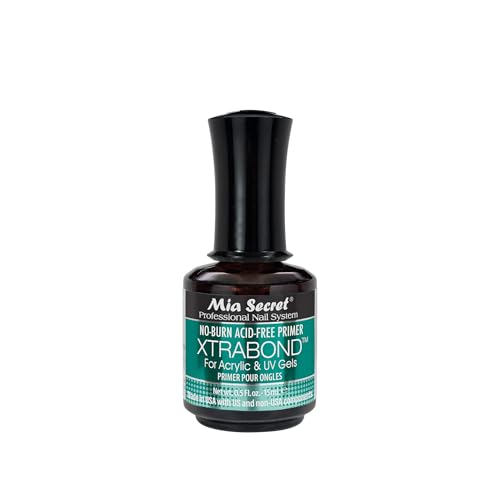
Mia Secret XTRABOND No-Burn Acid-free Primer 1/2 oz. for Acrylic and UV Gels
$9.93
Amazon price as of Oct 19, 2026
Scroll →
Product prices and availability are accurate as of Oct 19, 2026 and are subject to change.
A quick technical note before we start: BIAB and other bottle-format builder gels are LED-cure formulas that need both the right wavelength (365/405nm) and the right time-and-watt combination to fully polymerize. A "tacky" cured surface is normal — that's the inhibition layer, which wipes off with isopropyl alcohol. A "still wet" or "gummy underneath" cured surface is NOT normal — that's actual undercure, and one of the issues below is causing it.
For the broader builder-gel-not-curing diagnostic across all brands, see builder gel not curing. This page is the BIAB-specific deep dive.
How to Tell Inhibition Layer from Undercure
Before troubleshooting, confirm which problem you have. The two look similar but are completely different.
Inhibition layer (normal): After lamp cure, the surface feels slick-tacky like a freshly waxed car. Wipe with 91% isopropyl alcohol on a lint-free pad — surface becomes hard, glossy, fully cured underneath. This is correct behavior on most builder gels.
Undercure (problem): After lamp cure, the surface is gummy, smears under finger pressure, indents when touched, or the gel slides when you press the brush. Wiping with alcohol either does nothing or pulls the gel off the nail. This is the failure mode this article addresses.
If yours is just inhibition layer, you're done — wipe and move on. If yours is true undercure, continue.
Cause #1 — Lamp Wattage Too Low
By far the most common reason BIAB doesn't cure: the lamp isn't powerful enough. BIAB's manufacturer recommends a 48W+ LED lamp. Many home users (especially those using lamps that came bundled with cheap kits) have 24W or 36W lamps.
A 24W lamp on BIAB will undercure every time, regardless of how long you leave the hand in. The wavelength reaches the gel but the intensity is too low to drive complete polymerization through the thicker builder gel layer.
Fix: Upgrade to a 48W+ LED lamp. The standard SUN UV9X or SUN5 at 48W costs $20-30 on Amazon and solves this overnight. Don't bother trying to compensate with longer cure times on a low-wattage lamp — beyond a point, more time doesn't help if the intensity is wrong.
Cause #2 — UV-Only Lamp on LED-Cure Formula
Older lamps from the 2010s and some cheap imports are UV-only (using fluorescent tubes), while BIAB is engineered for LED cure (using LED beads at 365/405nm wavelength). UV lamps emit a broader spectrum that includes the right wavelengths, but at much lower intensity at the specific peaks BIAB needs.
Fix: Check your lamp. If it has thin glass tubes inside that look like fluorescent bulbs, it's UV-only. If it has rows of small LED dots, it's LED. For BIAB, use LED (or a dual UV+LED lamp set to LED mode).
If you only have a UV lamp, you can usually get BIAB to cure by tripling the cure time (60 sec → 180 sec) and applying in two thinner layers. Better long-term: buy a proper LED lamp.
Cause #3 — Cure Time Too Short
BIAB needs 60 seconds in a 48W+ LED lamp for clear and lightly tinted shades. Heavily pigmented shades (deep colors, opaque whites) need 90 seconds.
Many people set their lamp to 30 seconds because that's what the lamp's default button shows, or because that's what their gel polish needs. Builder gel is thicker and needs more cure time per layer than thin gel polish.
Fix: Manually set the lamp timer to 60 seconds for BIAB clear and standard shades, 90 seconds for pigmented colors. If your lamp only has 10/30/60/120 second presets, use 60 minimum.
Cause #4 — Layer Too Thick
BIAB self-levels well, but if you apply too much in one layer (more than about 1mm thick), the bottom of the layer can undercure even when the top is fully cured. LED light penetrates a finite depth, and beyond about 1mm in thick builder gel, the cure becomes inconsistent.
Fix: Apply in two thinner layers instead of one thick layer. First layer: thin, just enough to coat the nail evenly. Cure 60 seconds. Second layer: build the apex shape on top. Cure 60 seconds. Top coat after.
If you absolutely need a thick single layer (for sculpted apex correction), extend cure to 120 seconds.
Cause #5 — Lamp Bulbs Aging or Failing
LED beads degrade over time, especially in lamps used heavily. After 2-3 years of regular use, individual LED beads can fail, leaving cold spots in the lamp's interior. Your hand position relative to the bad beads determines whether BIAB cures.
Fix: Inspect your lamp. Look inside while it's on (briefly — don't stare at the LEDs). Count working beads. If multiple beads are dead, the lamp is degraded. Replacement is cheaper than repair.
Some people notice this only on certain fingers — usually pinky and thumb, which sit at the edges of the lamp's coverage area. Position your hand so the affected nail sits in the center of the lamp.
Cause #6 — Cap or Cover Blocking Light
Some lamps have a removable cover or shield over the LED beads. If yours is cloudy, scratched, or has product residue baked onto it, light transmission drops significantly.
Fix: Wipe the inside of the lamp with a soft cloth dampened with 91% isopropyl alcohol. Don't soak — just wipe. Cured gel splatters and dust accumulate over months and create a frosted-glass effect that cuts cure power.
Some lamps have a reflective interior lining (silver/white). If yours has yellowed or accumulated dust, that also reduces cure intensity.
Cause #7 — Wrong Lamp Mode Selected
Many modern LED lamps have multiple modes — "gel polish" (30 sec), "builder gel" (60 sec), "low-heat" (longer time at reduced intensity). The low-heat mode (designed to prevent heat spikes on sensitive nails) cures at reduced power, which is fine for thin gel polish but undercures BIAB.
Fix: Use the lamp's standard high-power mode for BIAB. The low-heat mode is for clients who experience heat spikes on freshly applied builder gel — if you don't have heat issues, use full power.
Cause #8 — Old or Contaminated Bottle
BIAB and other builder gels have a shelf life of roughly 18-24 months unopened, less once the bottle is open and exposed to ambient light. Old gel loses photoinitiator efficiency, which means the chemical that converts UV/LED light into cure energy is degraded.
Signs your BIAB is going bad:
- Color has shifted (clear gels yellow noticeably)
- Viscosity feels different from when new (thicker or grainy)
- Top of the bottle has a hard skin that re-forms even after wiping
- Cure was reliable before and now isn't
Fix: Replace the bottle. Builder gel doesn't have a clean expiration printed on the bottle, but if you've had it more than 18 months or it's showing the signs above, that's the cause.
Cause #9 — Wiping with Acetone Instead of Isopropyl Alcohol
This one fools beginners regularly. If you "remove the tacky layer" by wiping with acetone instead of 91% isopropyl alcohol, you're actually dissolving the top of your cured gel — which makes the surface look uncured even when the cure underneath is fine.
Fix: Wipe inhibition layer with 91% isopropyl alcohol on a lint-free pad. Acetone is for removal, not for inhibition-layer wiping. If you've been wiping with acetone, try alcohol on your next set — your "cure problem" may not be a cure problem at all.
Quick Diagnostic Table
| Symptom | Most Likely Cause | Fast Test |
|---|---|---|
| All nails tacky after lamp | Lamp wattage / cure time | Try 90 sec at full power |
| Only edge nails tacky | Bad beads in lamp / hand position | Move hand to center |
| Only pigmented nails tacky | Cure time too short for color | 90 sec for pigments |
| Thick layer is gummy below | Layer too thick | Apply two thinner layers |
| Surface dissolves when wiped | Wiping with acetone | Use isopropyl alcohol |
| Gel feels grainy | Old bottle | Replace BIAB |
| Sudden change with same setup | Lamp aging | Check LED beads |
| New lamp suddenly | UV-only or wrong mode | Verify LED, full power |
What to Do Right Now
If you're staring at uncured BIAB on your nails as you read this, here's the immediate triage:
-
Wipe one nail with 91% isopropyl alcohol on a lint-free pad. If it becomes hard and glossy, you only had inhibition layer (not actual undercure). The other 9 nails are also fine.
-
If the alcohol wipe didn't fix it, the gel actually didn't cure. Re-cure for another 60-90 seconds in your lamp at full power. Most undercures fix with a second cure cycle.
-
If a second cure still leaves nails tacky, work through the table above. The lamp is the most common culprit, so check it first.
For full removal if you can't fix it, see how to soak off builder gel at home.
Read next
How to Soak Off Builder Gel at Home: The 35-Minute Method That Won't Wreck Your Nails
How to soak off builder gel at home without trashing your natural nails — the 35-minute acetone foil method I use on clients who refuse the e-file.
Continue readingA Trusted Lamp for BIAB
If you've diagnosed your lamp as the problem and want a replacement that handles BIAB reliably, look for 48W+ LED with at least 24 LED beads. The bundled lamps in budget builder gel kits (sometimes marked "48W" but actually 36W) often fail.
The Modelones 3-piece clear builder set is what I recommend for anyone wanting a complete reliable system at low cost — the formula is forgiving and pairs with any decent 48W+ lamp.

Modelones Builder Nail Gel 3-Pack with Top Coat
$13.98
Amazon price as of Oct 19, 2026
For complete kit options that include verified-wattage lamps, see best builder gel kit with lamp.
Why BIAB Is Trickier Than Some Builder Gels
BIAB's formula is engineered for a specific cure profile — it's slightly more sensitive to lamp wattage and cure time than the very forgiving budget formulas (Modelones, Beetles standard). The upside of BIAB's engineering is better wear consistency when cured correctly; the downside is less margin for error if your lamp is marginal.
This is why I often recommend Modelones for true beginners with unknown-quality lamps — the formula tolerates undercure better. Once you've confirmed your lamp is solid, BIAB delivers slightly better wear.
For the comparison, see biab vs builder gel.
Read next
BIAB vs Builder Gel: Are They Actually Different, or Is It Just Marketing?
BIAB vs builder gel — the honest answer from someone who uses both. They're related but not identical, and the difference matters for wear, application, and price.
Continue readingWhen the Problem Is Really Your Technique
Two technique issues that look like cure problems but aren't:
You touched the gel before cure. If you brushed against the gel with your other hand or a tool right before placing the hand in the lamp, you displaced a thin film of gel onto your skin/tool. That moved gel cures separately from the main body. Looks like undercure on the nail because there's now a tacky smear next to it.
You overcured. Believe it or not, overcuring can also cause surface issues. Curing for 5+ minutes at full power can cause the top layer to chemically lock differently than the bottom, creating a tacky-looking but actually overcured surface. Stick to 60-90 seconds per layer.
For broader prep and technique fixes, see builder gel lifting fixes and builder gel mistakes to avoid.
Safety Note on Lamp Use
Cheap UV/LED lamps from unknown brands sometimes emit at unusual wavelengths or operate without proper safety shielding. The American Academy of Dermatology covers UV exposure from nail lamps — the consumer guidance is to use lamps from reputable brands (SUN, Gelish, OPI, Olive & June, Modelones, Beetles) and apply sunscreen to the back of your hands if you do builder gel weekly.
A properly engineered 48W LED lamp from a known brand will cure BIAB reliably and won't pose meaningful skin risk. A cheap unbranded lamp from an unknown seller might cure unreliably AND expose you to off-spec wavelengths.
For the Builder Gel Pillar
For the big-picture context, see the Builder Gel Nails pillar guide and is builder gel good for your nails.
Frequently Asked Questions
Why is my BIAB not curing? Most often: lamp wattage too low (need 48W+ LED), cure time too short (60 sec minimum for clear), or layer applied too thick. Other causes include old gel, wrong lamp mode, or aging LED beads. Work through the 9 causes above to identify your specific issue.
Why is my BIAB still tacky after the lamp? If alcohol wipe removes the tackiness and reveals a hard glossy surface underneath, that's normal inhibition layer. If the tackiness persists or the gel smears, that's true undercure — see the lamp and time issues above.
How long should I cure BIAB? 60 seconds in a 48W+ LED lamp for clear and lightly tinted shades. 90 seconds for pigmented colors. Specific shades may have manufacturer-recommended times printed on the bottle — follow those when available.
Can I cure BIAB in a UV lamp? Technically yes, but the cure will be slow and unreliable. UV-only lamps need 3x the cure time vs LED for BIAB. Better: use a proper LED (or dual UV+LED) lamp at 48W or higher.
Does BIAB need a specific lamp? Any 48W+ LED lamp from a reputable brand will cure BIAB reliably. BIAB doesn't require its own proprietary lamp — but a quality lamp from any brand is necessary. The bundled lamps in some kits are underpowered.
Why does BIAB cure on some nails but not others? Bad LED beads in your lamp create cold spots, or your hand position varies between nails. Move the underperforming nail to the center of the lamp.
Can I re-cure BIAB if it didn't cure the first time? Yes. Place the hand back in the lamp for another 60-90 seconds at full power. Most undercures fix with a second cure cycle. Beyond two cycles, address the root cause (lamp, time, layer thickness) rather than keeping cure-after-the-fact.
Why does my BIAB cure under the lamp but feel gummy underneath? Layer too thick. LED light penetrates a finite depth in builder gel — beyond about 1mm thickness, the bottom layer doesn't get enough light. Apply in two thinner layers instead of one thick layer.
Does old BIAB still cure? Up to about 18-24 months from manufacture, yes. Beyond that, the photoinitiator in the formula degrades and cure becomes unreliable. If your BIAB is several years old, replace it.
Is it safe to use uncured BIAB? No. Uncured gel is reactive monomer that can cause skin sensitization if it contacts the surrounding skin. If a set didn't cure, soak it off or fully re-cure — don't leave nails with partially cured gel.
Does BIAB cure differently than other builder gels? BIAB is more sensitive to cure conditions than budget builder gels like Modelones. The formula is engineered for a specific cure profile that rewards a quality lamp and standardized timing. Modelones tolerates undercure better; BIAB rewards correct cure with longer wear.
Should I switch from BIAB to a different builder gel if it keeps not curing? First, troubleshoot your lamp. If your lamp can't cure BIAB reliably, it probably can't cure any premium builder gel reliably either. A 48W+ LED lamp from a known brand is a one-time $20-40 fix that solves cure problems across all builder gels.
For the comprehensive troubleshooting guide across all builder gel brands, see builder gel not curing.
Read next
Builder Gel Not Curing? The 5 Real Causes and How to Fix Each (2026)
Builder gel not curing is almost always one of five specific causes — lamp wattage, bead thickness, pigment density, finger geometry, or bulb degradation. Diagnose which one and the fix is direct.
Continue readingLast updated May 2026. This article uses AI assistance for research and structure; the diagnostic sequence is from my own client troubleshooting over 6 years.