The reason to learn how to apply builder gel on natural nails — as opposed to applying it for length or extensions — is almost always the same: your nails are bendy, splitting, peeling at the tips, and you want them strong without acrylic. A thin builder gel overlay on the natural plate is the closest thing to armor you can put on a fingernail. It adds structural support, prevents lateral splits, and lets brittle nails grow out underneath without breaking off at the free edge.
Editor Picks — Amazon
Top picks for how to apply builder gel on natural nails
Curated from current Amazon ratings and review counts.

BTArtboxnails Nail Tips Builder Gel - Long Lasting 15ml Builder Gel with Portable Nail Lamp for French XCOATTIPS, 30+Days French Protection Duo Nail Extension Tool for Nail Art
$25.99
Amazon price as of Oct 19, 2026

modelones Builder Nail Gel, 7-in-One Clear Builder for Nails, LED Lamp Cured Color Rubber Base Gel Polish Coat Strengthener Thickening Extension Rhinestone Glue in a Bottle for DIY Home Salon Gifts
$8.49
Amazon price as of Oct 19, 2026
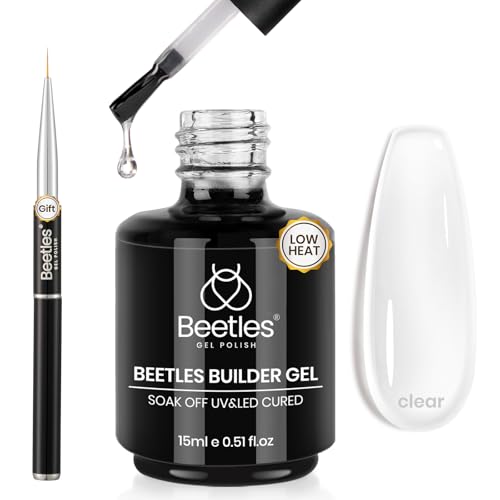
Beetles Builder Gel Low Heat,0.5 oz Clear Gel Builder for Natural Nails Building Apex & Strengthener Extension with Detachable Liner Nail Brush for Beginner DIY Salon at Home Gifts,UV&LED Lamp Needed
$8.99
Amazon price as of Oct 19, 2026

Orly Builder In A Bottle Soak-Off Sculpting Gel For Quick Nail Extension, Repair And Strengthening | Long-Lasting Builder Gel With Brush-On Application | Salon-Quality Nails At Home (18ml)
$17.92
Amazon price as of Oct 19, 2026
Scroll →
Product prices and availability are accurate as of Oct 19, 2026 and are subject to change.
But applying builder gel as a natural-nail overlay is a completely different skill from sculpting extensions. You're not building length, not constructing an apex out of nothing — you're laying down a wafer-thin protective shell that needs to bond to your nail plate without lifting and without making your nails look like Lego pieces. This guide is the version of that technique I teach clients who come in with split, peeling nails and want them strong by month two.
Why Natural-Nail Overlays Are Different
Three things change when you're applying builder gel to natural nails rather than extending or sculpting:
The bead is smaller. For an extension you place a fat bead that flows into the form. For a natural overlay you want a small bead — about half the size — because excess gel pools at the cuticle and creates lifting.
The apex moves higher. On an extension, the apex is at the stress point (about a third of the way from the cuticle along a long nail). On a short natural-nail overlay, the apex sits at the center of the nail plate and is barely raised — just enough to give the nail a subtle dome.
Filing is minimal. On extensions you file to shape — perimeter, sidewall, apex refinement. On natural-nail overlays you barely touch the file. Aggressive filing on a thin overlay grinds through to the natural nail. Three passes max with a 220-grit buffer is the right amount.
Once you internalize those three differences, the actual application is fast.
What "Natural Nail" Actually Means Here
Before going further, be honest about which "natural nail" you have. The technique changes slightly:
For thin, peeling, layer-prone nails (the most common reason people come to me for an overlay), use a soft, self-leveling builder gel. Modelones, Beetles, and Olive & June all qualify. These flow smoothly across the plate and don't fight the nail's natural shape.
For thick, healthy nails that are just splitting at the free edge from chores or lifestyle, you can use a firmer builder gel — Mia Secret or Gelish Structure. The firmer formula adds more structural resistance.
For nails recovering from acrylic damage (the bumpy, ridged, post-removal mess), you want the softest possible builder gel and the thinnest possible application. Don't try to fill ridges with thick gel — let the nail grow out flat over 4-6 months.
The Prep That Decides Everything
Prep on a natural nail is even more important than on an extension, because there's so little gel to absorb adhesion failures. The prep checklist:
Push back cuticles with a wooden orange stick. Don't cut — just push.
Remove non-living cuticle (pterygium) from the nail plate surface with a scraper or the back of the orange stick. This is the most-skipped step and the number one cause of cuticle-area lifting.
Buff the entire nail plate lightly with a 220-grit buffer. Three passes per nail in one direction, looking for a uniform matte finish. Stop when shine is gone — over-buffing thins the nail.
Dehydrate with 91% isopropyl alcohol on a lint-free wipe. Press, don't rub. Let air-dry 30 seconds. Don't touch your face or any surface between dehydration and base coat — oil from skin contact ruins the bond.
If your nails are oily-prone (genetic — some people just have it), use a dehydrator product like KBShimmer Dehydrate or any salon-grade prep. Two passes — alcohol first, dehydrator second.
If you skip or rush prep, no builder gel on earth will stay on your nails for three weeks. The product is not your problem; prep is.
Step-by-Step Application
Apply base coat. A thin layer over the entire nail plate. Wipe the brush on the bottle neck so you have a controlled amount. Cap the free edge (drag the brush down the front edge of the nail) to seal. Cure 60 seconds in a 48W+ LED lamp.
Place a small bead at the apex zone. For natural-nail overlays, the apex sits roughly at the center of the nail plate (slightly closer to the cuticle than the free edge). Pick up about half the gel you'd use for an extension. Place it on the nail without touching the cuticle or sidewalls.
Flip the nail upside down. Hold your finger pointed at the ceiling, then turn it so the nail faces down. Gravity pulls the gel into a natural dome over 5-10 seconds. This is the self-leveling step that makes builder gel different from acrylic — let physics work for you.
Refine with the brush. Right the nail. Use the brush to push the gel toward the cuticle and sidewalls in tiny strokes — not flooding, just shaping. Leave a 0.5mm gap at the cuticle and sidewalls (no gel touching skin). Cap the free edge again with whatever excess is on the brush.
Flash cure 10 seconds. Just enough to set the shape so it doesn't flow. Don't full-cure yet.
Inspect the profile. Look at the nail from the side. The apex should be in the middle, the curve should look like a gentle dome (not a hill). If anything is off, you have 10 seconds before the flash sets — adjust now.
Full cure 60 seconds. Standard for clear/light shades. Tinted shades need 90 seconds. Use the lamp's correct mode if it has one.
Repeat for the other hand. Don't try to do both hands worth of nails per beadtake — gel can flow if you wait too long.
Apply top coat. A thin layer for the entire surface, cap the free edge. Cure per top coat instructions (usually 60 seconds).
Wipe inhibition layer if needed. Most top coats leave a tacky residue. Wipe with 91% isopropyl alcohol on a lint-free pad. Some no-wipe top coats skip this step.
That's it. From prep through cured top coat, 35-45 minutes for ten nails once you're practiced.
For the broader walkthrough including extension techniques, see how to do builder gel nails.
Read next
How to Do Builder Gel Nails: A Beginner's Roadmap (2026)
A beginner's roadmap to doing builder gel nails — what to buy first, what skill to master before extensions, and the realistic 5-set learning curve from your first messy attempt to a salon-quality set.
Continue readingMy Product Pick for Natural-Nail Overlays
For thin, peeling natural nails, the softest self-leveling builder gels work best. The Modelones 3-piece clear builder set is what I recommend most often for at-home overlays — the formula flows gently and the price means practice failures don't sting.

Modelones Builder Nail Gel 3-Pack with Top Coat
$13.98
Amazon price as of Oct 19, 2026
If you want something HEMA-free (worth it for anyone with reactive skin or who plans to do builder gel for years), the Beetles HEMA-free 8-in-1 is the value pick.

Beetles Builder Gel Nails Kit HEMA-Free 8-in-1
$21.98
Amazon price as of Oct 19, 2026
A Word on Lamp Choice
The single biggest cause of natural-nail overlay failure I see isn't the gel — it's a lamp that doesn't cure deeply enough. Builder gel, even thin overlay layers, needs a 48W+ LED lamp to cure all the way through. Underpowered lamps (24W, 36W) leave a partially cured layer underneath the visibly-cured top surface, and that under-layer is what fails first.
If the lamp that came with your kit is anything less than 48W, replace it. Standalone 48W+ LED lamps cost $20-30 on Amazon — far cheaper than the alternative, which is a set that lifts after 5 days.
For complete kit options with verified-wattage lamps, see best builder gel kit with lamp.
Filing the Cured Overlay (If Needed)
Most well-placed overlays don't need any filing after cure. But if your bead landed slightly off — too thick at the cuticle, uneven sidewalls, asymmetric apex — you can correct after the top coat is on.
Use a 220-grit buffer or fine file, light strokes, in one direction. Three to five passes per problem area is plenty. After filing, wipe dust off with a lint-free pad, then apply one thin pass of top coat over the filed area and re-cure 60 seconds. The fresh top coat re-seals the surface and restores shine.
Heavy filing is for sculpted extensions, not natural-nail overlays. If you find yourself filing aggressively to correct shape, your bead placement was off — practice the bead placement and self-leveling steps until filing becomes optional.
What Wear Looks Like on a Natural Overlay
A well-applied natural-nail builder gel overlay should:
- Last 18-22 days on the average person
- Grow out naturally — you'll see the regrowth gap at the cuticle by day 14
- Not lift if prep was right
- Feel like part of your nail, not a separate object
- Allow nails to keep growing underneath (they will grow noticeably)
If your overlay only lasts 7-10 days before peeling or lifting, it's almost always prep — not the product. See builder gel lifting fixes for the prep diagnostic.
Read next
Builder Gel Lifting? When It Lifts Tells You Why It's Lifting (2026)
When your builder gel lifts tells you exactly what went wrong. Day 1-3 means prep failed. Day 4-7 means cure failed. Day 8+ usually means impact or natural regrowth.
Continue readingWhen to Fill vs. When to Remove
By week 2-3, your overlay will have a regrowth gap at the cuticle. You have two choices:
Fill it. File down the existing gel at the apex to a thin layer, fill the regrowth gap with fresh builder gel, blend the new layer over the old. This extends wear to 4-6 weeks total before any soak-off is needed.
Remove and reapply. Soak off the entire set per how to soak off builder gel at home, let nails rest 24 hours, reapply fresh. Cleaner result, but more product use.
I fill twice, then full-remove on the third cycle. That gives me about 9-12 weeks per soak-off, which is gentle on the nails.
For the fill technique specifically, see how to fill builder gel.
On Builder Gel and Nail Health Long-Term
A common worry: does builder gel hurt my natural nails? The honest answer is that the gel itself doesn't harm nails when applied and removed properly. Damage almost always traces back to either filing too aggressively, peeling instead of soaking off, or skin contact triggering acrylate sensitization.
The American Academy of Dermatology covers nail care and gel safety — their guidance lines up with what I tell clients: regular nail oil application, no peeling, and breaks between cycles. People who follow that have stronger nails after a year of builder gel overlays than they had before.
See also is builder gel bad for your nails for the full risk discussion.
For the foundational technique guide, return to the Builder Gel Nails pillar — it links to every related how-to and product roundup on this site.
Last updated May 2026. This article uses AI assistance for research and structure; the technique described is what I personally use on clients seeking natural-nail overlays.