Why Fill Instead of Redo
Editor Picks — Amazon
Top picks for how to fill builder gel
Curated from current Amazon ratings and review counts.

modelones Builder Nail Gel, 7-in-One Clear Builder for Nails, LED Lamp Cured Color Rubber Base Gel Polish Coat Strengthener Thickening Extension Rhinestone Glue in a Bottle for DIY Home Salon Gifts
$8.48
Amazon price as of Sep 30, 2026

Beetles Builder Gel for Nails,0.51 oz 8 in 1 Strengthening Nails Enhancement Building Apex for Beginners & DIY Salon Manicure,Clear Builder Nail Gel,LED & UV Lamp Needed,Gifts for Women
$8.49
Amazon price as of Sep 30, 2026

Orly Builder In A Bottle Soak-Off Sculpting Gel For Quick Nail Extension, Repair And Strengthening | Long-Lasting Builder Gel With Brush-On Application | Salon-Quality Nails At Home (18ml)
$17.92
Amazon price as of Sep 30, 2026

IBD Building Gel Clear – Hard Builder Gel for Nails Extensions, Soak-Off UV/LED for Sculpting & Strengthening, Nail Enhancement Gels, 0.5 oz
$9.02
Amazon price as of Sep 30, 2026
Scroll →
Product prices and availability are accurate as of Sep 30, 2026 and are subject to change.
Filling builder gel is the technique that turns a 2-week set into a 4-6 week set. Instead of removing the whole thing and starting over, you address the new growth at the cuticle, refresh the surface, and the existing structural gel keeps doing its job.
Two reasons to learn how to fill builder gel:
- Time. A fill takes 30-45 minutes vs 90+ minutes for a full removal + redo.
- Nail health. Repeated full removals expose your natural nail to acetone every 2-3 weeks. Filling reduces that to once every 4-6 weeks.
This page covers the refill protocol — when to do it, how to blend the seam between old gel and new growth, and the three signs that mean it's time to remove instead of refill.
When to Fill (and When Not To)
A fill is appropriate when the existing set is structurally fine but the cuticle line has visible new growth (typically 2-3 mm) and the gel is still bonded to the nail everywhere else.
A fill is NOT appropriate when:
- More than one nail is lifting
- Cracks have reached past the apex
- The free edge is wearing through to the natural nail
- The natural nail underneath has separated from the gel (you'll feel a hollow when you tap)
- The set is more than 4 weeks old (gel-to-nail bond at the OLD growth area gets brittle)
If any of those apply, remove and redo. See how to remove builder gel.
Tool Checklist Before You Start
- 100/180-grit file (for blending the old gel down)
- 220-grit buffer (for surface smoothing)
- Soft buffer block (180/240) for final polish
- Builder gel (same brand/clarity as original set if possible)
- Base coat
- Top coat
- Cuticle pusher (wooden)
- 91 percent isopropyl alcohol
- Lint-free wipes
- LED lamp (48 W+)
- Cuticle oil
If your fill is going on a different brand of builder gel than the original set, prefer a clear, soak-off, brush-on formula for compatibility:
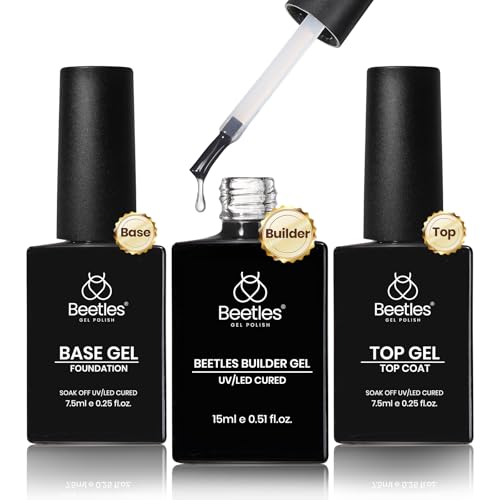
Beetles 3-Piece Clear Builder Gel with Base & Top
$9.99
Amazon price as of Sep 30, 2026

Modelones Builder Nail Gel 3-Pack with Top Coat
$13.99
Amazon price as of Sep 30, 2026
The Six-Phase Refill Protocol
Phase 1 — Inspect and Decide
Look at each nail before doing anything else. Make a mental note:
- Which nails have grown out 2-3 mm and need a fill?
- Are any nails lifting? (If lifting, see lifting fixes before filling.)
- Any cracks reaching past the apex? (If so, that nail needs full removal, not a fill.)
- Is the free edge intact? (If wearing through, do free-edge repair as part of the fill.)
Decide per-nail what each one needs. You may end up filling 8 nails and fully removing/redoing 2.
Phase 2 — File Down the Apex and Surface
This is the part that makes or breaks a fill. The goal is to file the existing gel into a smooth, gradual slope that BLENDS with the natural nail at the cuticle.
- Start at the apex with the 100/180-grit file
- File the old gel DOWN — not off — until the apex is reduced by about 30-40 percent of its original height
- Continue the slope toward the cuticle so the gel feathers out smoothly where it meets the natural nail
- Stop when the seam between old gel and natural nail can't be felt with a fingernail
Crucial: do NOT file the natural nail. File the old gel only. If you feel the file biting into nail rather than gel, you've gone too far.
Phase 3 — Prep the New Growth
The exposed strip of natural nail at the cuticle needs the same prep as a fresh set:
- Push cuticles back with wooden pusher
- Lift any cuticle film off the new-growth area
- Light buff with 220-grit (just the natural nail strip — don't re-roughen the old gel)
- Alcohol-wipe the entire nail (new growth + filed gel)
Phase 4 — Base Coat on New Growth
Thin base coat layer applied ONLY to the new-growth strip. Don't re-base over the existing builder gel. Cure 30 seconds.
This step is what most DIY fills skip and it's why their fills lift at the cuticle in week 1.
Phase 5 — Builder Gel Application
Apply builder gel in a way that blends with the filed-down original set:
- Small bead near the cuticle (smaller than your first-application bead)
- Push the gel from cuticle outward, blending over the filed slope of the original set
- Build the apex back up to its original height — usually adding gel right where you filed the old apex down
- Cap the free edge if you reduced free-edge thickness while filing
- Cure 60 seconds (90 for thumbs separately)
The blend stroke matters: feather the new gel into the old, no hard seam. If you can see or feel a line between the old and new gel after curing, the fill will lift along that line in week 2.
Phase 6 — Top Coat and Finish
Apply top coat over the ENTIRE nail (new growth + original set + free edge). Cure 60 seconds (90 for thumbs). Wipe inhibition layer with alcohol. Cuticle oil.
The whole-nail top coat is what makes a fill invisible — the top layer is uniform even though the structural layer underneath has new + old gel.
What a Good Fill Looks Like
When the fill is done well:
- No visible line between original gel and new growth
- Apex is back at original height
- Surface feels uniform when you run your fingernail across it
- Cuticle area has no flooding, no skin contact
- Free edge is sealed
- Overall wear time from fill: 2-3 more weeks before removal or next fill
When the fill is done poorly:
- Visible step where old gel ends and new gel begins
- Lumpy apex (filed unevenly, then built back unevenly)
- Lifting at the cuticle within a week (skipped base coat on new growth)
- Set fails at the seam (didn't blend the new gel into the old)
How Many Fills Before Full Removal
Most builder gel sets can take 1-2 fills before a full removal is needed.
| Sets stage | What to do |
|---|---|
| Original set, week 0-2 | Wear |
| Week 2-3 (new growth visible) | Fill #1 |
| Week 4-5 (more growth) | Fill #2 |
| Week 5-6 | Remove + redo |
Beyond 2 fills, the bond at the OLD growth area (now sitting under 4-6 weeks of gel) gets brittle and the whole set becomes more prone to cracking. Better to do a clean removal at the 5-6 week mark and start fresh.
Filling Color Builder Gel
If the original set was a color builder gel, fills are harder because matching the exact shade is rare. Two approaches:
Approach A — Match the color. Fill with the same color builder gel. If you can find the exact bottle, this works well. If the color is even slightly off, the seam will be visible.
Approach B — Clear over color. Fill with clear builder gel structurally, then apply gel polish over the entire nail to unify the color. This is what salons usually do for fills on color sets. The color polish hides any seam.
For inspiration on color choices that fill well, see builder gel nails ideas.
Filling Extensions vs Overlays
Overlay fills are easier — no free-edge structural worry, just blend at the cuticle.
Extension fills add a complication: the free edge of an extension thins over time as you file. After 2 fills, the free edge may be too thin to support the length. At that point, either reduce the length during the fill, or do a full removal + new extension.
If your set was done with nail forms or Gel-X tips, see nail forms for builder gel and builder gel vs Gel-X for the extension-specific context.
A Safety Note
The same HEMA-sensitization risk applies during fills as during fresh applications — possibly more, because fills tend to be done in a hurry. Skin contact during the fill is just as likely to sensitize as skin contact during the initial set. The American Academy of Dermatology's acrylate-allergy reference is the same reading whether you're applying or refilling.
For HEMA-free formulas that pair well with sensitive skin, see best HEMA-free builder gel.

Beetles Builder Gel Nails Kit HEMA-Free 8-in-1
$21.99
Amazon price as of Sep 30, 2026
Common Fill Mistakes
| Mistake | Symptom | Fix |
|---|---|---|
| Skipped base coat on new growth | Lifting at cuticle in week 1 | Always re-base the new growth strip |
| Didn't reduce apex during file-down | Stacked thickness after fill | File the old apex 30-40% before building |
| Hard seam between old and new | Set splits at seam in week 2 | Feather-blend the new gel over old |
| Filed natural nail not gel | Thin, sensitive nail | File gel only; stop when you feel nail |
| Same color mismatch | Visible color line | Use clear builder + color polish on top |
For broader troubleshooting after a fill, see cracking fixes and lifting fixes.
Read next
Builder Gel Lifting? When It Lifts Tells You Why It's Lifting (2026)
When your builder gel lifts tells you exactly what went wrong. Day 1-3 means prep failed. Day 4-7 means cure failed. Day 8+ usually means impact or natural regrowth.
Continue readingTime Investment for a Fill
- Inspect: 2-3 minutes
- File down: 8-10 minutes
- Prep new growth: 3-5 minutes
- Base coat new growth: 2 minutes
- Builder gel application + cure: 12-15 minutes (one or two nails at a time)
- Top coat + finish: 5-7 minutes
- Cuticle oil: 1 minute
Total: 30-45 minutes for a 10-nail fill. About half the time of a fresh set.
FAQ
How to fill builder gel that's grown out 3 mm? Standard refill protocol — file old gel down (don't remove it), prep + base-coat the new growth strip, apply builder gel blending over the filed slope, top coat the whole nail, finish. 30-45 minutes total.
How to fill builder gel without removing the existing set? That's the entire point of filling vs removing — you keep the existing set in place. File the apex down 30-40%, build new gel at the cuticle, blend the seam. Full protocol above.
When should I fill vs remove and redo? Fill when the set is structurally sound and only the cuticle has grown out. Remove and redo when multiple nails are lifting, cracks have reached the apex, or the set is past 5-6 weeks total wear.
Can I fill builder gel myself at home? Yes — the protocol is the same as in a salon. The hardest part is the file-down phase (blending the old gel into a smooth slope). The rest is similar to a fresh application on just the new-growth strip.
How many times can you fill builder gel? 1-2 fills before full removal is recommended. Beyond that, the old gel at the original growth area is too thick and brittle.
Why does my fill lift at the cuticle after a week? Almost always one of two things: (a) you skipped base coat on the new growth, or (b) cuticle film wasn't fully removed from the new growth strip during prep. Both are recoverable on the next fill.
Do I need a different builder gel for fills vs fresh sets? No — use the same formula. Continuity helps the bond between old and new gel.
Where to Go Next
If you've done your first fill and it went well, you've effectively doubled the wear value of every builder gel kit you buy. The next thing to learn is reading nail health between fills:
- Is builder gel bad for your nails — what to watch for on the natural nail underneath
- Is builder gel good for your nails — the supportive case
- Builder gel on natural nails — the overlay-specific context
For the full system context, the Builder Gel Atlas. For the project's current product picks, the homepage.
Final Notes from Sara
Filling is the underrated skill. Most DIYers learn application, learn removal, then never learn the fill — and end up doing full removals every 2-3 weeks. Their natural nails take the acetone hit over and over.
The fill is a 30-minute investment that adds 2-3 weeks of wear per set. Over a year that's the difference between 26 full removals and 12 — half the acetone exposure, half the prep work, more consistent results.
Learn the file-down phase well and the rest follows. Most fill failures trace back to either filing too little (visible seam after) or filing too much (into the natural nail). The blend phase is the whole game.
Last updated May 2026. This article uses AI assistance for research and structure; the refill protocol is what I use on my own nails between full sets.