The Eleven Steps in One Glance
The builder gel application steps, in the sequence I run them on clients:
- Sanitize and shape
- Push and tidy cuticles
- Buff to dull
- Dehydrate
- Primer (acid-free)
- Slip layer
- Apex bead
- Self-leveling and shaping
- Final cure
- File and refine
- Top coat
Eleven steps sounds like a lot. In practice the whole flow is 25-35 minutes for a competent operator and 50-70 minutes for someone learning. The reason most home users get poor results is they skip steps 4, 5, and 6 — the prep stack that controls whether the gel even has a chance.
This page covers each phase with the timing, the rationale, and the failure mode if you skip it. If you want a simpler first-pass walkthrough instead, the builder gel tutorial is the lower-friction version of this same content.
Phase 1 — Sanitize and Shape (3-5 min)
Wash hands with soap and water. Dry fully. File the natural nail to the shape you want — square, oval, almond, round. Do this BEFORE you touch the cuticle area, because filing the free edge is the loudest, dustiest step and you do not want dust falling onto a prepped cuticle line.
The shape you file at this stage is roughly the final shape. You will refine slightly at phase 10. Do not skip this and try to file shape AFTER applying — filing through cured builder gel takes 5x longer than filing the natural nail.
Phase 2 — Push and Tidy Cuticles (2-4 min)
Wooden cuticle pusher, not metal. Push back the eponychium gently. The dead cuticle that comes loose can be nipped or left.
Do not over-push. The eponychium is living skin — pushing too hard tears the seal between skin and nail and creates a lifting risk for the next 14 days. Light pressure only.
Phase 3 — Buff to Dull (1-2 min)
Use the white side of a buffer block. The goal is to dull the shine across the entire nail plate. Two passes per nail, light pressure. If you press hard you thin the nail; if you press too lightly you do not break the glossy seal.
Test by looking at the nail under light. A buffed nail should look chalky, not reflective.
Phase 4 — Dehydrate (1 min)
Wipe each nail with isopropyl alcohol 70%+ or a dedicated dehydrator product. This pulls oil and water out of the nail plate, opening the keratin layers for the primer and slip layer to bond into.
If you skip this step, your gel adheres to a microscopic film of oil instead of to the nail. Lifting starts in 6-24 hours.
Phase 5 — Primer (1 min)
Use an acid-free primer (avoid methacrylic-acid primers — they are aggressive and old-school). Brush a paper-thin layer onto each nail. Let air-dry for 30-60 seconds. Do not cure primer — most acid-free primers are not photo-reactive.
Primer is optional with some modern builder gel systems (Modelones, Beetles claim no primer needed). I use it anyway. The cost is 30 seconds; the failure-rate reduction is meaningful.
Phase 6 — Slip Layer (2 min)
The slip layer is a paper-thin coat of builder gel that goes down BEFORE the apex bead. Its job is to fuse the gel chemistry into the nail plate and create a substrate for the bead to sit on.
Brush gel onto the nail, then wipe most of it off back into the jar. You want what is left on the brush, not what came out. Glide one slow pass per nail from cuticle to free edge. The nail should look freshly polished, not gel-coated.
Cure 60 seconds in a 48W+ LED lamp.
Phase 7 — Apex Bead (3-5 min for all 10 nails)
The apex is the high point on the finished nail — the dome of structural reinforcement. It sits at the midpoint between cuticle and free edge, slightly closer to the cuticle.
Pick up a pea-sized bead of gel on the brush tip. Place (do not paint) the bead at the apex location. Use the brush tip to nudge it gently into a dome — never drag.
| Nail length | Bead size | Apex position |
|---|---|---|
| Short (free edge ≤2mm) | Lentil-size | Center of nail |
| Medium (3-5mm) | Pea-size | Midpoint, slight cuticle bias |
| Long extension | 1.5x pea | One-third from cuticle |
| Pinky / small nails | Half pea | Center, slight cuticle bias |
This is the step that takes practice. Bead placement is the difference between a strong set and a weak one.
Phase 8 — Self-Leveling and Shaping (1-2 min per nail)
Tilt the finger downward so gravity pulls the bead toward the free edge. Then sideways each way. Then slightly upward to encourage the bead away from the cuticle.
The bead self-levels for 20-90 seconds depending on viscosity. Thicker gels need more nudging; self-leveling gels do most of the work themselves.
If the bead floods the cuticle, flip the finger upside down and let gravity reverse it. If the bead is too thin, add another small drop on top.
When the dome looks right, flash-cure 5 seconds with the finger pointed down. This locks the shape so it cannot move during full cure.
Phase 9 — Final Cure (60-90 seconds)
Full cure in the lamp. 60 seconds for clear gels under a 48W+ LED; 90 seconds for color builders (pigment slows light penetration). If you have a 36W lamp, double these times — and seriously consider upgrading. Underpowered lamps are the #2 cause of sticky cure and lifting after Phase 4 (dehydration).
Phase 10 — File and Refine (3-5 min per hand)
After full cure, your domes will have small high spots and side-wall overflow. Use a 180-grit file on the side walls to clean overflow. Use it across the apex only to knock down high spots, not to thin the dome.
Wipe with alcohol to remove dust. Inspect under light. If the apex is in the right position and side walls are clean, move to phase 11.
Common refinement mistake: filing the apex flat. The apex needs to remain a dome. If you file it flat, you have removed the structural reinforcement. The set will crack at the apex within 7 days.
Phase 11 — Top Coat (2-3 min)
Apply a thin layer of top coat. Cure 60 seconds. If you used a wipe top coat, wipe with alcohol after cure to remove the inhibition layer. If you used a no-wipe top coat, do not wipe.
Finish with cuticle oil. Massage into the skin around each nail. The oil helps the cuticle reseal against the gel edge — reducing lifting risk for the next two weeks.
The Three Steps Most Tutorials Skip
- Step 4 — Dehydration. Most YouTube tutorials buff and go straight to gel. This works for the demonstrator (they have salon-grade prep oils stripped from their nails already). It does not work for you.
- Step 5 — Primer. Skipped because newer kits claim "no primer needed." Use it anyway. Cost is negligible.
- Step 8 — Sideways tilt during self-leveling. Most tutorials only tilt downward. Sideways tilt is what creates symmetric side walls. Skip it and your sides will be uneven.
The Tools That Make Each Phase Easier
A few tool decisions cut the time per phase noticeably.
Tools That Speed Up Each Phase
The kit components that actually matter
The lamp, gel, and accessory choices that change application time per nail.

modelones Builder Nail Gel, 7-in-One Clear Builder for Nails, LED Lamp Cured Color Rubber Base Gel Polish Coat Strengthener Thickening Extension Rhinestone Glue in a Bottle for DIY Home Salon Gifts
$8.48
Amazon price as of Sep 30, 2026
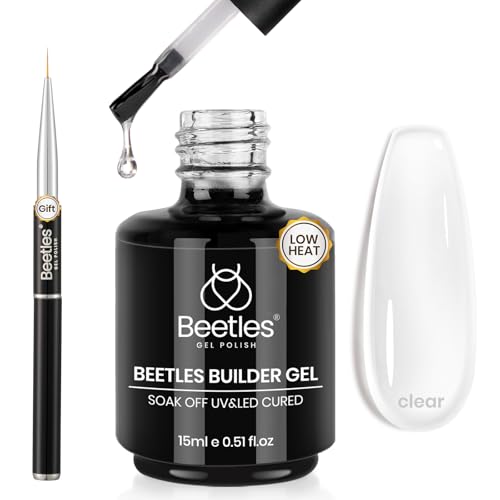
Beetles Builder Gel Low Heat,0.5 oz Clear Gel Builder for Natural Nails Building Apex & Strengthener Extension with Detachable Liner Nail Brush for Beginner DIY Salon at Home Gifts,UV&LED Lamp Needed
$9.99
Amazon price as of Sep 30, 2026

Orly Builder In A Bottle Soak-Off Sculpting Gel For Quick Nail Extension, Repair And Strengthening | Long-Lasting Builder Gel With Brush-On Application | Salon-Quality Nails At Home (18ml)
$17.92
Amazon price as of Sep 30, 2026
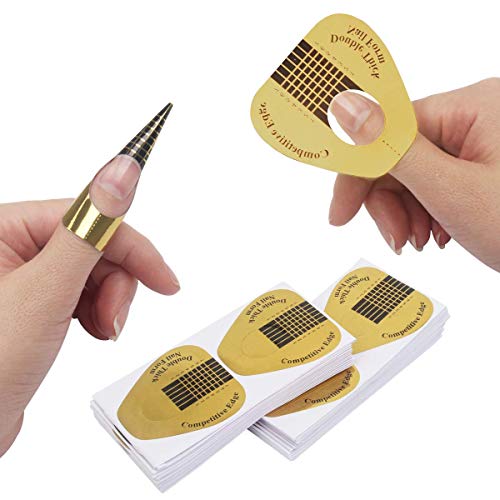
200 PCS Nail Forms for Builder Gel, AHIER Self-adhesive Nail Extension Forms for DIY at Home Professional Nails Art Supplies
$4.99
Amazon price as of Sep 30, 2026
Scroll →
Product prices and availability are accurate as of Sep 30, 2026 and are subject to change.
The biggest gains come from:
- A 48W+ LED lamp with 4 timer settings. The 36W bargain lamps undercure clear builders and dramatically undercure color builders.
- A pre-paired gel + base + top set. Three-piece sets (gel, base, top from same brand) have matching cure times. Mixing brands across base/top/builder creates timing mismatches that you do not need on your first set.
- A medium-grit file (180) AND a finer one (220). The 180 is for shaping cured gel. The 220 is for the side walls so you do not over-thin.
If you want the all-in-one starter that includes a drill bit (helpful when removing your first set), the SAVILAND combo is the lowest-friction option:

SAVILAND Builder Gel Kit with Nail Drill
$29.99
Amazon price as of Sep 30, 2026
How Long the Whole Application Should Take
| Skill level | Total time | Per nail |
|---|---|---|
| First set | 50-75 min | 5-7 min |
| Sets 2-5 | 35-50 min | 3-5 min |
| Sets 6+ | 25-35 min | 2-3 min |
| Salon pro | 20-30 min | 2 min |
If your first set takes 90+ minutes, that is fine. The first set is partly about learning your own pace. Sets 2-5 are where speed comes in.
Application Failure Modes — What Each One Means
- Sticky after cure → lamp underpowered, or cure time too short. See why builder gel stays sticky.
- Lifting at the cuticle within 48h → skipped dehydration (phase 4) or buffed too lightly (phase 3).
- Cracking at the apex around day 7 → apex was filed flat in phase 10, or original bead was too thin.
- Yellowing after 10 days → top coat is too thin, or it was not a no-wipe with built-in UV inhibitor.
- Free edge chipping → did not cap the free edge during phase 6 (slip layer). Always brush a tiny amount of slip layer onto the underside of the free edge.
The full diagnostic for not-curing issues is at builder gel not curing.
Read next
Builder Gel Not Curing? The 5 Real Causes and How to Fix Each (2026)
Builder gel not curing is almost always one of five specific causes — lamp wattage, bead thickness, pigment density, finger geometry, or bulb degradation. Diagnose which one and the fix is direct.
Continue readingWhen to Use a Base Coat vs No Base Coat
Some builder gel systems include a separate base coat layer between the slip layer (phase 6) and the apex bead (phase 7). Others do not.
Use base coat if:
- Your builder is HEMA-free (HEMA-free formulas bond less aggressively without the base)
- You have a history of lifting after 7 days
- You are using a brush-on BIAB™-style bottle (these are formulated for paint-on rather than build, so they want a base)
Skip base coat if:
- Your kit instructions explicitly say no base needed
- You are using a self-leveling jar builder from a modern brand (Modelones, Beetles, SAVILAND)
The dedicated page on this is builder gel before base coat.
Read next
Builder Gel Before Base Coat: Should You Apply It That Way? (2026)
Should builder gel go on before or after base coat? The short answer is base coat first, then builder gel — but there are three specific exceptions where the reverse works. Here's the technique and the reasoning.
Continue readingConnecting Application Back to Choosing a Product
The application steps above work with any soak-off builder gel. They do NOT work with hard gel (different chemistry, file-off only) or with extend gel (specifically formulated to attach soft tips, not to build).
If you are still choosing what product to apply, see:
- Best builder gel for beginners — most forgiving picks for the steps above
- Best clear builder gel — clear-only options
- Best HEMA-free builder gel — if you have sensitivity
- Best builder gel kits — all-in-one purchases
For acrylate sensitivity background — important if this is your first time using gel products — the American Academy of Dermatology resource on acrylate allergy is the definitive consumer reference.
Back to the Top: Where Application Fits
These eleven steps are the application portion. There are two phases on either side:
- Before: Choose the product, set up your station, prep your nails (see how to do builder gel nails).
- After: Maintain the set (cuticle oil daily), remove when needed (see how to remove builder gel), and re-evaluate fit (see the Builder Gel Atlas pillar).
The application steps themselves do not change. The skill is in executing them with steady hands and the right viscosity for your brush.
Last updated May 2026. This article uses AI assistance for research and structure; the application sequence reflects my own salon protocol and at-home testing.