A builder gel overlay is a thin, structured layer of builder gel applied over your natural nail at its existing length — no forms, no tips, nothing added past the free edge. It is the service that the phrases "structured manicure," "BIAB manicure" and "gel overlay" all describe, and it is the most-booked thing on my menu by a wide margin, because it does the one job most people actually want from nail enhancements: it makes the nails you already have strong enough to grow. This page is the overlay explained properly — what separates it from an extension and from gel polish, who it suits, how thick it should really be (thinner than you think), the eight-step method, and the maintenance cycle. For the chemistry behind the product, the Builder Gel Atlas is the reference.
Overlay vs Extension vs Gel Polish
The three services get confused constantly, including on salon menus, so here is the line between them.
| Gel polish manicure | Builder gel overlay | Builder gel extension | |
|---|---|---|---|
| What goes on the nail | Thin color gel, base and top | A structured layer of builder gel with an apex | Builder gel sculpted past the free edge over a form or tip |
| Adds length? | No | No | Yes, 2–8 mm |
| Adds strength? | Minimal | Yes — the point of it | Yes |
| Thickness at the apex | ~0.1 mm | 0.3–0.6 mm | 0.6–1 mm+ |
| Wear | 1–2 weeks | 2–3 weeks, fillable to 5–6 | 2–3 weeks, fillable |
| Skill | Low | Low–medium | Medium–high |
| Removal | Soak-off, 10–15 min | Soak-off, 20–30 min | Soak-off, 25–40 min |
An overlay sits in the middle: more than a manicure, less than an extension. The word "structured" is the tell — if a service builds an apex, it is an overlay; if it just paints, it is a manicure.
Who a Builder Gel Overlay Is For
Five kinds of nails walk into my chair and leave with an overlay, and between them they cover most people:
- Peeling or splitting nails. The overlay seals the free edge so the layers stop separating. This is the single most common reason for an overlay and the one where the result is most dramatic.
- Nails that never grow past the fingertip. They are not failing to grow; they are breaking at the edge before you notice. An overlay lets the length you are already growing survive.
- Nail biters. A smooth, hard surface with nothing to pick at, and the best builder gel for nail biters page covers the gels that suit that.
- Nails recovering from acrylic or hard gel. Thin, bendy, sore. A flexible soft overlay protects them while they thicken; the builder gel for weak nails guide is the recovery version of this page.
- People who want gel polish that lasts three weeks instead of one. An overlay under color is how salons get gel manicures to three weeks; the structure carries the color.
Who it is not for: anyone who wants length now (that is an extension), and anyone with an active nail infection, lifting nail plate, or a skin reaction to gel — those need a dermatologist before a tech.
How Thick Should a Builder Gel Overlay Be?
Thinner than almost everyone's first attempt. A good overlay is 0.3 to 0.6 millimetres at the apex — the highest point over the stress zone in the middle of the nail — and tapers to almost nothing at the cuticle and the free edge. In practice that means the finished nail looks like a slightly glossier, slightly more curved version of your own nail, not a thick shell. The two reasons this matters: a thick overlay does not cure through under a home lamp and stays soft underneath, and a thick overlay is rigid enough that it cracks instead of flexing. If your overlay looks bulky from the side, it is too much gel; the builder gel apex placement guide shows the profile from the side.
The 8-Step Builder Gel Overlay Method
This is the sequence I use on every overlay client and teach to every home user. It is the core of every builder gel tutorial on this site, condensed to the overlay case.
- Prep. Push back the cuticle, remove non-living tissue from the plate, buff the shine off with 240 grit, dehydrate with alcohol or a dehydrator. Ten minutes. Most lifting failures are here.
- Shape the free edge. File to the shape you want now; you will not be able to change it much after the overlay without thinning the cap.
- Base coat. Thin, cured fully. The overlay bonds to the base, not to the nail.
- Slip layer. A whisper-thin coat of builder over the whole nail, not cured — this is the wet surface the bead will float on, and skipping it is why beads refuse to self-level.
- The bead. One bead of builder — lentil-sized on a thumb, smaller on a pinky — placed just above the centre of the nail. Let it settle for a few seconds, then guide it: toward the cuticle without touching skin, out to each sidewall, and forward to the free edge, leaving it highest at the centre. The builder gel one bead method is this step in detail.
- Flash cure upside down. Turn the hand so the nails face the floor and cure for ten seconds. Gravity pulls the bead into a dome instead of toward the cuticle.
- Full cure. The time on the bottle under a 48W-class lamp — usually sixty seconds LED, plus thirty seconds for tinted builders. Thumbs separately, centred in the lamp.
- Refine, top coat, cap. Wipe the tacky layer, smooth any ridge with 240 grit without thinning the apex, top coat with the free edge wrapped, cure, wipe, oil.
A first overlay takes about eighty minutes both hands; by the fifth, forty-five. The full-length tutorial with timings and troubleshooting is how to use builder gel, and if you have never held the brush, first time using builder gel is the honest walkthrough.
Overlays on Short Nails and on Toes
Short nails are the best possible case for an overlay — there is no length to stress the structure, the apex is small, and the result is a strong nail that finally grows. The only adjustment is proportion: smaller bead, lower apex, and stop the gel a hair before the free edge so the cap is clean. The builder gel on short nails page explains why short is actually easier.
Toes take the same overlay with three changes: heavier prep, a slightly thicker and flatter structure to handle body weight, and cure angles that get the lamp over the big toe properly. The how to do builder gel on toes tutorial is the pedicure version.
Choosing a Gel for Overlays
The right gel for an overlay is a soft, soak-off, self-leveling builder — the opposite of what you want for an extension. Soft because it flexes with the natural nail, soak-off because you will be removing it every five or six weeks for years, and self-leveling because a thin, even layer is the goal and a gel that flows does most of that work for you. The clear bottles below are what I use on overlay clients; a tinted builder works the same way with a longer cure. The best builder gel for natural nails list ranks the options and names the two hard gels I would not put on a natural-nail overlay.
Overlay gels I use — Amazon
Soft, soak-off, self-leveling: the overlay trio
A clear-and-nude Modelones pair, the Beetles three-piece starter set, the IBD clear that is firmer for flat nails, and Orly's brush-on builder.

Modelones Clear & Cover Nude Builder Base, 2-Pack
$8.99
Amazon price as of Oct 22, 2026
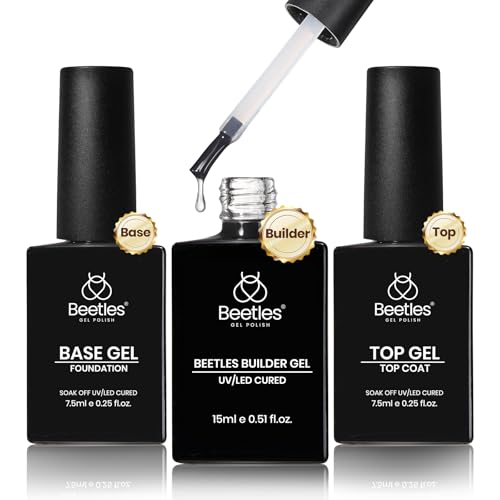
Beetles 3-Piece Clear Builder Gel with Base & Top
$9.99
Amazon price as of Oct 22, 2026

IBD Hard Gel LED/UV Builder Gel – Clear, Nail Extension & Overlay Gels, Strong Acrylic Finish, Professional Quality, 2 oz, 1 Pack
$19.13
Amazon price as of Oct 22, 2026

Orly Builder In A Bottle Soak-Off Sculpting Gel For Quick Nail Extension, Repair And Strengthening | Long-Lasting Builder Gel With Brush-On Application | Salon-Quality Nails At Home (18ml)
$17.92
Amazon price as of Oct 22, 2026
Scroll →
Product prices and availability are accurate as of Oct 22, 2026 and are subject to change.
Maintenance: Fills, Removal, and the Bare Week
An overlay is a cycle. At two to three weeks, the nail has grown and there is a gap at the cuticle: that is a fill — file the regrowth and the top coat smooth, rebuild a small bead over the new growth and the apex, cure, top coat. At four to six weeks, a second fill if the structure is still thin and sound. Somewhere after that the layers are too thick and it is time to soak off — twenty to thirty minutes in acetone and foil, flakes pushed off, no prying — and then, this is the part people skip, five to seven days bare with cuticle oil before the next overlay. That bare week is where the plate rehydrates and is the reason my long-term overlay clients have better nails than they started with. The how to fill builder gel and soak off builder gel pages cover both halves.
Read next
Builder Gel on Natural Nails: The Strengthen-and-Protect Guide (2026)
Builder gel is the gentlest enhancement option for weak, peeling, or recovering natural nails. Here's exactly when to use it, how to apply it differently than for extensions, and the recovery schedule that prevents long-term thinning.
Continue readingOverlay Under Color: Gel Polish or Tinted Builder?
Most overlay clients want color, and there are two ways to get it. The first is a clear overlay with gel polish on top — two thin coats of color and a top coat over the cured structure. It gives you any shade, and when you want to change color at the fill you can remove just the polish layer with a gentle file and re-color over the same structure. The second is a tinted builder — a nude, pink or milky builder used as the overlay itself — which gives you a finished, "clean girl" nail in one product with nothing to chip on top. Tinted builders need thirty seconds more in the lamp than clear because pigment blocks light, and they are harder to change: the color is the structure.
My rule at the table is polish over clear for anyone who changes their mind about color, and tinted builder for anyone who wants the same soft nude every time and the fastest possible fill. Whichever you choose, keep the color layers thin; a thick coat of polish over a thin overlay defeats the purpose, and a tinted builder applied thick is the one that stays soft underneath.
Three Questions Overlay Clients Ask
How long does a builder gel overlay last?
Two to three weeks before the first fill, and five to six weeks total with one or two fills, on well-prepped nails. The set does not so much fail as grow out; the fill is what resets it.
Can you do a builder gel overlay on very short nails?
Yes — short nails are the best case. There is no length stressing the structure, the apex is small, and the nail underneath finally grows because the edge stops breaking.
Is an overlay the same as BIAB?
Functionally, yes. BIAB is The GelBottle's trademarked brush-in-bottle builder, and a "BIAB manicure" is a builder gel overlay done with that product. The BIAB vs builder gel page covers the naming.
Does a Builder Gel Overlay Damage Natural Nails?
Applied thin, cured properly, and soaked off rather than pried, no — an overlay is the gentlest enhancement there is, and for peeling or thin nails it is actively protective. The damage people attribute to overlays comes from three things: prying or peeling the set off (which takes plate with it), over-filing at the refine or removal step, and skin contact with uncured gel, which over time can cause a sensitivity that makes every future gel product a problem. The American Academy of Dermatology's healthy nail tips are the baseline for the nail underneath, and the two-sided answer to whether builder gel is good or bad for nails lives at is builder gel bad for your nails. If you are choosing between an overlay and something more, the home page maps every comparison on the site.
Last updated October 2026. This article uses AI assistance for research and structure; the method, thickness numbers and maintenance cycle come from the overlays I do on clients every week.